Short answer: water in a C7H air circuit almost never comes from the atmosphere alone. It comes from two places: a desiccant cartridge that has stopped absorbing and regenerating properly, and compressor oil that has coated the desiccant so it can no longer absorb anything. Draining the tanks more often will not fix either. The fix is to confirm oil at the dryer inlet, replace the cartridge when the desiccant is saturated, and then bleed the whole circuit in the correct order.
Air brake moisture shows up as slow build-up on a cold morning, a sluggish first brake application, or a drain valve that spits white emulsion instead of air. On SITRAK C7H tractors pulling in humid or freezing conditions the symptom usually appears early in the shift, which is exactly when the driver has the least patience for it.
QUICK DIAGNOSIS — check these before replacing anything
- 1Desiccant saturated. Cartridge at end of life, or the regeneration cycle is not getting a reverse purge because a valve or line is restricted.
- 2Compressor passing oil. A thin oil film on the desiccant destroys absorption capacity within weeks. This is the most under-diagnosed cause.
- 3No daily drain routine, or the wrong order. Wet tanks drain first, dry tanks second. Reverse that and you push water downstream.
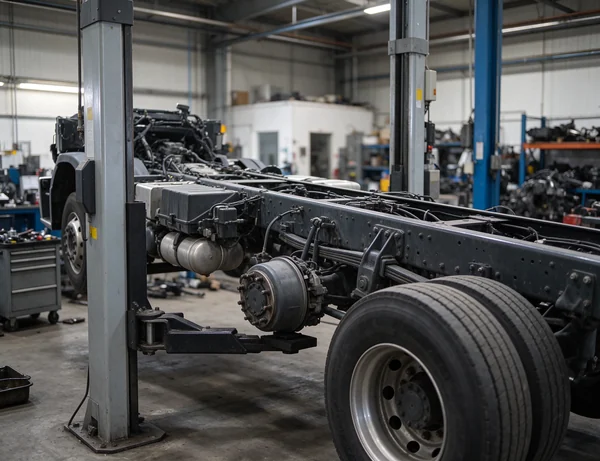
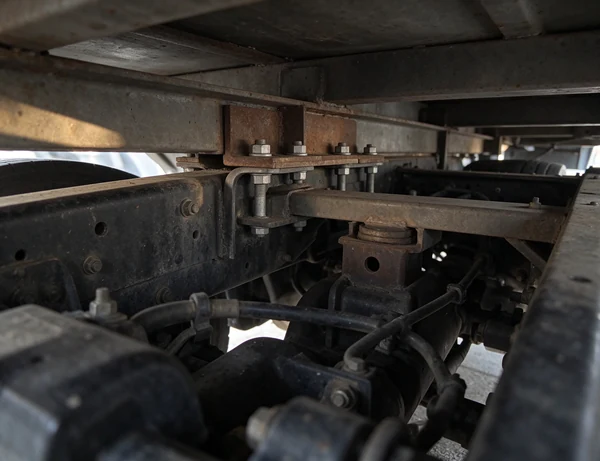
A C7H on the lift. Most air-brake moisture faults are diagnosed from the ground, not from the cab.
1. The four symptoms that mean water, not a leak
- Build-up is slow when cold and normal when warm. Moisture in the circuit freezes at the dryer outlet and the check valve, throttling flow until the air warms up.
- First application of the day is soft, later applications are normal. Water sits in the lowest part of the circuit and takes a moment to be pushed through.
- Drain valves spit emulsion. A white or milky spray is oil mixed with water — that is a compressor problem, not a weather problem.
- Pressure drops overnight with no audible leak. Moisture in a valve body can hold a port partly open, or freeze it open in winter.
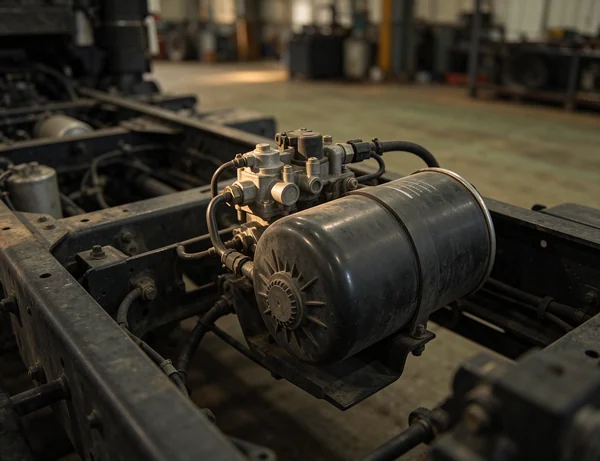
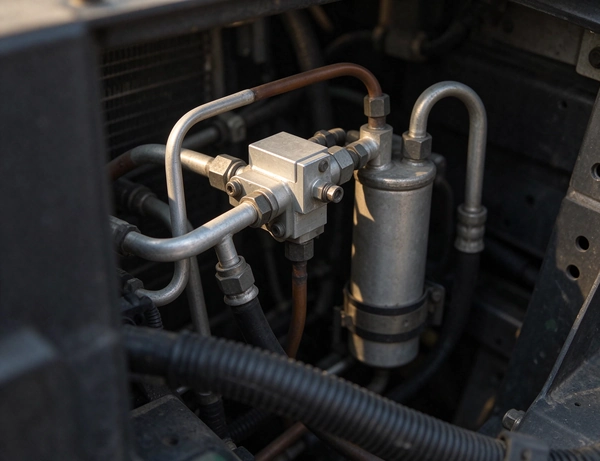
The dryer cartridge and its valve body on the frame rail — the single most important component in this circuit.
2. How the circuit actually dries itself
The dryer does two jobs and most people only know the first one:
- Absorption: hot, wet air from the compressor passes through the desiccant bed. The desiccant holds the water and dry air goes to the tanks.
- Regeneration: when the compressor unloads, a small volume of already-dry air from the wet tank is bled back through the desiccant and out to atmosphere, carrying the stored water with it. That reverse flow is what lets the cartridge survive thousands of cycles.
If regeneration is blocked — a plugged purge line, a failed purge valve, an iced-up exhaust port — the desiccant saturates and then stops working entirely, and the water goes straight into the tanks. If oil reaches the bed, the pores clog and the cartridge is finished regardless of age. That is why a cartridge can be “only six months old” and still be the cause.
Diagnostic shortcut: pull the drain on the wet tank first thing in the morning. Clear air means the dryer is still working. Water, and especially white emulsion, means the dryer is not — and emulsion means you also have an oil problem.
3. Eight-step service order
- Drain in the right order. Wet tank, then the secondary tanks, then the dry tank last. Never drain the dry tank first, and never drain with the engine running and the system charged above working pressure.
- Read what comes out. Clear water only: dryer service due. Water with a white tint: compressor oil. Water with rust particles: tank corrosion, inspect the tank internally.
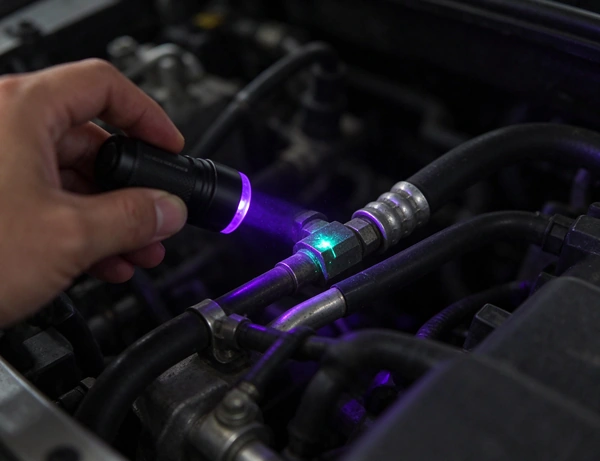
- Check the compressor outlet for oil. A dry paper towel held at the discharge union should stay mostly dry. A visible oil film means the compressor is passing oil and any new cartridge will be short-lived.
- Test the purge cycle. With the system charged, listen at the dryer exhaust when the compressor unloads. You should hear a distinct short blow-off. Silence, or a weak hiss, means the purge valve or line is restricted.
- Replace the cartridge, not just the filter bowl. The desiccant is the working part. Fit a new cartridge, clean the housing, and renew the seal.
- Pressure-test the repaired circuit. Charge the system, shut the engine down, and watch the gauges with all brakes released. A healthy circuit holds pressure for a long period; a significant drop within an hour sends you looking for a leaking valve, hose or brake chamber with soapy water, not with your ears.
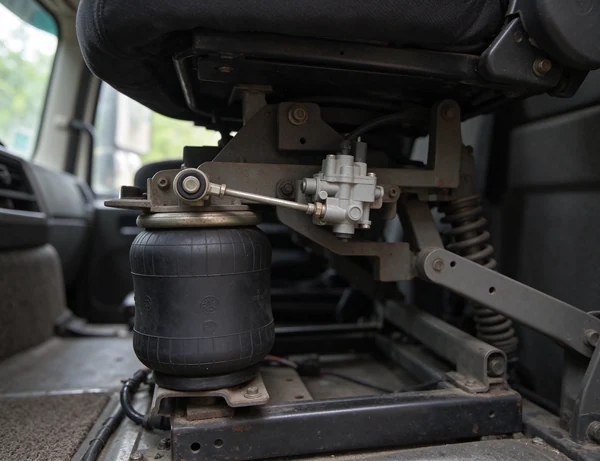
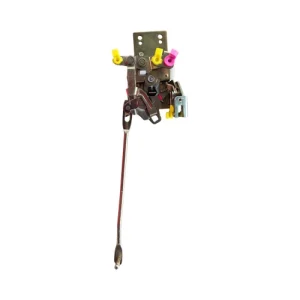
- Verify protection valve settings. The four-circuit protection valve should retain pressure in the intact circuits if one circuit fails. If one circuit drags the whole system down, the valve is suspect.
- Record the service. Write the date and the drain findings in the maintenance log. Future diagnosis becomes a comparison instead of a guess.
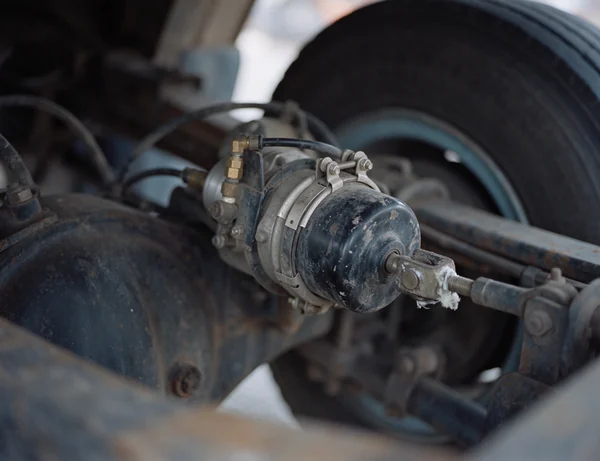
A brake chamber and its lines. Water pushed downstream ends up here, and a split diaphragm follows.
4. Symptom to cause, in one table
5. What damages the system faster than mileage
Do not pour alcohol or anti-freeze additives into the air circuit. They lower the dew point temporarily and destroy the desiccant, the rubber seals and the valve greases. A truck that “needs alcohol every winter” is a truck with a failed dryer that nobody has diagnosed.
- Washing the engine with a pressure jet into the dryer exhaust port — water enters the purge line directly.
- Replacing a cartridge without fixing the oil source — the new part fails in weeks and the fault gets blamed on the part.
- Never draining the tanks — water accumulates until it reaches the valves, and then the repair becomes a valve replacement instead of a drain routine.
- Ignoring a slow leak — the compressor runs longer and hotter, produces more condensate, and the dryer works harder for the same mileage.
6. Service intervals that actually work
7. Questions drivers ask most
Why is my air pressure slow to build only in winter?
Water in the circuit freezes at the narrowest points — the dryer outlet, check valves and the purge line. Until the air warms those passages, flow is restricted. Fix the moisture source; do not fit a bigger compressor.
How often should I drain the air tanks?
Every day at the end of the shift, wet tank first and dry tank last. If you find water every single time, the dryer is not doing its job and draining more often only hides the fault.
Can I just fit a new cartridge and be done?
Only if the compressor is not passing oil and the purge cycle works. Check both first, otherwise the new cartridge saturates again and you have spent money without fixing the truck.
What does the white residue in the drain tell me?
That oil is present in the air stream. Emulsion forms when oil mixes with condensate. Treat it as a compressor condition and inspect the discharge for oil before anything else.
Need a dryer cartridge, purge valve or four-circuit protection valve for your C7H? Send the chassis number and current part number.
Send your requestPressure figures quoted are typical working values for this truck family and are given as diagnostic reference points. Confirm cut-out pressure, protection valve settings and torque values against the OEM workshop manual for your chassis.