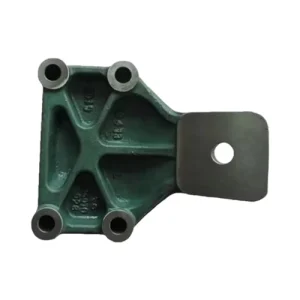
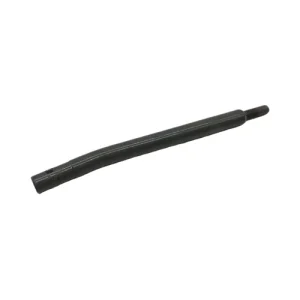
Short answer: oil leaking at a C7H rear hub is usually not a worn seal working alone. It is pressure: a blocked axle breather, an overfilled housing, or a hub bearing adjusted too tight so the hub runs hot and the seal hardens. And the most dangerous version of this fault is invisible from outside — when the inner hub seal fails, gear oil enters the brake drum and the rear brakes lose friction without any warning to the driver.
That second point is worth reading twice. A hub that “just looks oily” can be a brake that will not stop the truck on a long descent.
QUICK DIAGNOSIS — check the cheap causes first
- 1Breather blocked. Housing pressure rises with heat and pushes oil past every seal in the axle.
- 2Overfilled or wrong oil. Excess volume is forced out as the oil warms and foams.
- 3Hub bearing too tight or failing. Heat hardens the seal and thins the oil at the same time.
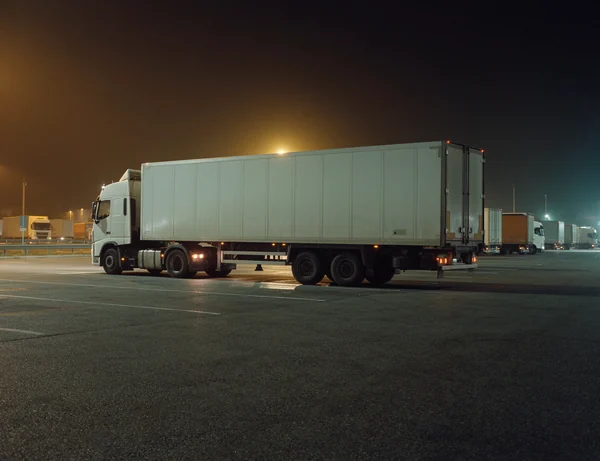
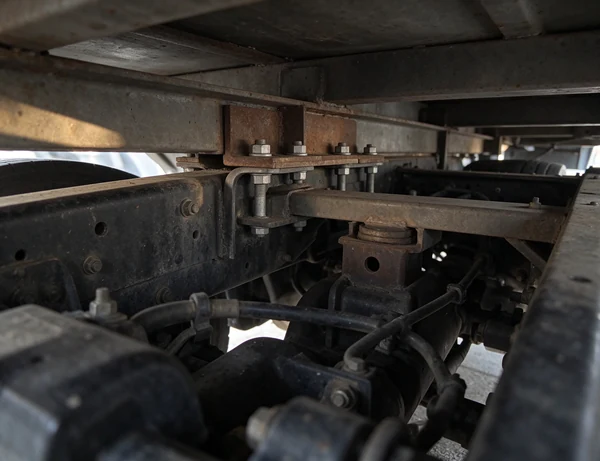
Long-haul C7H. The rear axle runs hot all day and cools overnight — that cycle is what finds a weak seal.
1. Separate the two leak paths before you order parts
There are two seals per hub and they fail for different reasons and with different consequences:
Never ignore oil at the back of a brake drum. Gear oil destroys friction material. A drum that has been contaminated must be cleaned and the lining replaced, not just wiped — otherwise the first hard stop on a descent will be much longer than the driver expects.
2. The five-step check
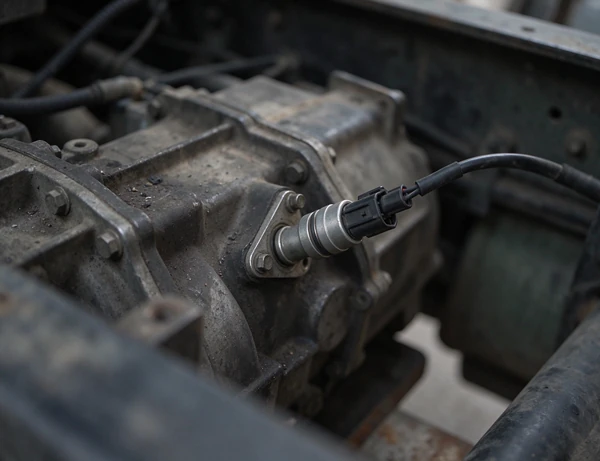
- Breather. Remove the axle breather and confirm it is open. A breather clogged with mud or paint allows pressure to build as the oil warms, and the seal becomes the vent. This is the cheapest fix on the list and the most frequently missed.
- Level, correctly measured. Fill to the fill-plug level with the truck level. Overfilling by even a small amount causes foaming and forced leakage at speed.
- Temperature comparison. After a loaded run, read both hubs with an infrared gun. A hub significantly hotter than its partner points to a bearing preload or lubrication problem on that side, not to the seal.
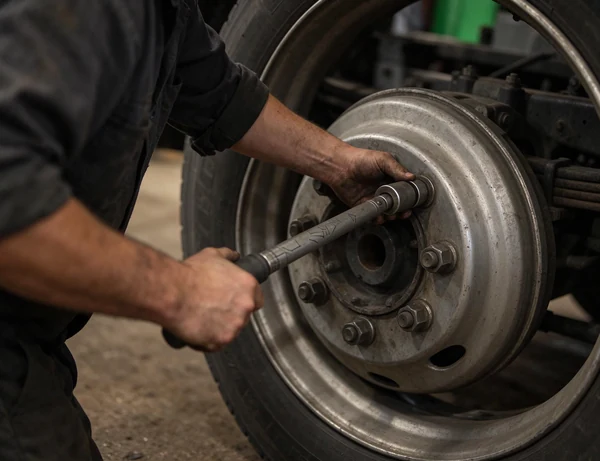
- Bearing adjustment. Check axial play against the manual figure. Too tight runs hot and hardens the seal; too loose lets the hub move and works the seal. Both shorten seal life and both are measurable.
- Oil condition. Milky oil means water, usually from condensate and a breather issue. Grey metallic paste means bearing or gear wear. Black with a burnt smell means overheating.
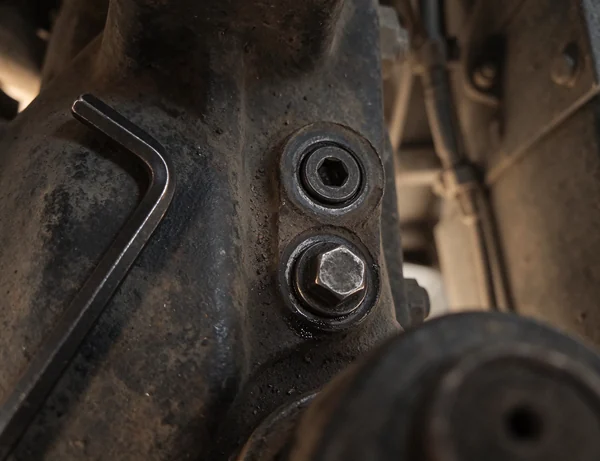
Fill and drain plugs. Always confirm the level with the truck sitting level, not on a slope.
3. Reducer noise: what the sound tells you
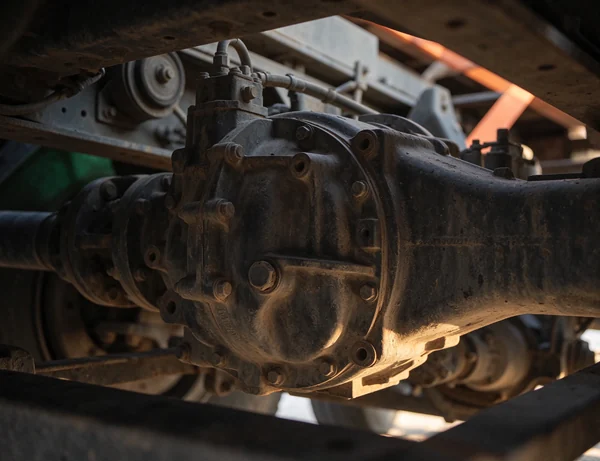
The reducer unit. Noise timing relative to throttle tells you whether it is the drive or coast side of the gear set.
- Noise on acceleration, quieter on coast — wear on the drive side of the gear teeth, or a pinion bearing losing preload.
- Noise on coast, quieter under power — coast-side wear, often after a long period of running with the wrong oil grade.
- Noise at all speeds, rising with speed — a bearing, usually a differential carrier or pinion bearing.
- Whine only in one turning direction — differential side gear or spider wear.
- Clunk when taking up drive — backlash too large, or a worn universal joint upstream. Check the joint before opening the axle.
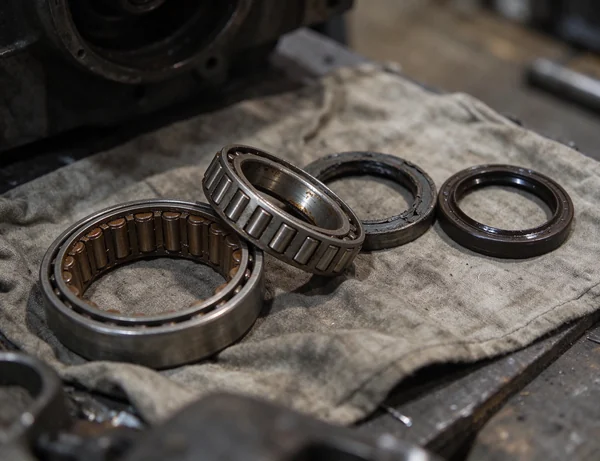
Hub bearing with its seal. A hardened, flattened seal lip is the signature of long-term heat.
4. Fresh oil against used oil: read the difference
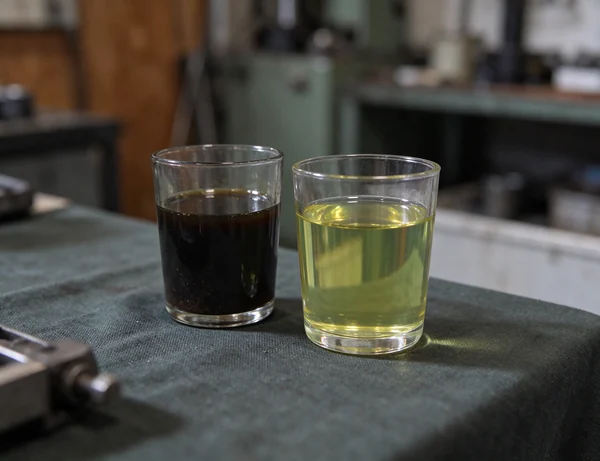
New oil on one side, used on the other. Milky, grey or black-with-smell each point to a different fault.
5. Common errors
- Replacing the seal without checking the breather. The new seal leaks within a few thousand kilometres because the pressure that pushed the old one out is still there.
- Packing the hub with extra grease “for safety”. Excess grease is pushed into the brake drum as it expands and contaminates the lining.
- Mixing oil grades between the centre housing and the hubs. Some hub reductions specify a different lubricant from the centre differential. Confirm both.
- Setting bearing preload by feel. On a heavy hub, “feels right” is not a measurement, and both too tight and too loose end in a leaking seal.
6. Questions drivers ask most
Oil on the inside of the rear wheel — can I keep driving?
Only to the nearest workshop. If the oil is coming from the inner seal it is already entering the drum, and braking will degrade progressively. Have the drum checked for contamination, not just the seal replaced.
How often should rear axle oil be changed?
Follow the interval in the manual, and shorten it for heavy haul or dusty work. After any water crossing or deep mud, change it regardless of distance — water in a rear axle destroys bearings quickly.
One hub runs hotter than the other. What does that mean?
Usually bearing preload on that side, or a brake dragging. Compare the brake drum temperature too — if the drum is also hot, the problem is the brake, not the hub bearing.
Can a blocked breather really cause a seal leak?
Yes, and it is one of the most common causes. As the oil warms it expands and the housing needs to vent. If it cannot, the pressure finds the weakest seal. Always check the breather before fitting a new seal.
Need hub seals, bearings, breathers or the correct gear oil for your C7H axle? Send the axle model from the plate.
Send your requestOil grades, capacities and bearing preload figures vary by axle build. Confirm the specification for your chassis in the OEM workshop manual before servicing.