

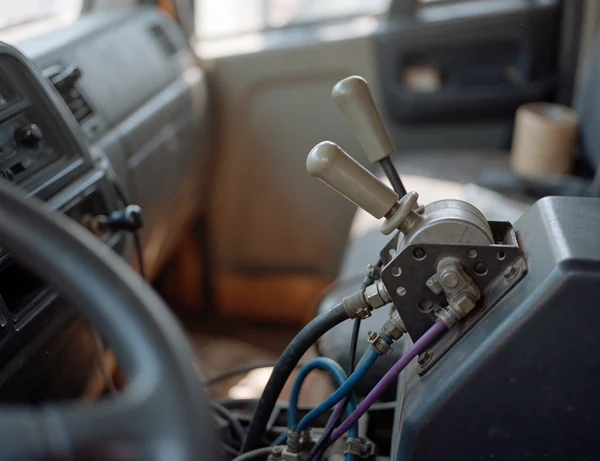
Short answer: a SITRAK C7H that will not move in the morning has almost certainly lost release pressure to the spring brake chambers, not lost its brakes. The parking brake works by air pressure, so when pressure is missing, the springs apply the brakes and hold them. Check the hand valve supply, the release pressure at each chamber, and the trailer line before you touch an axle — nine times in ten the fault is in the air circuit or in frozen moisture, not in a chamber.
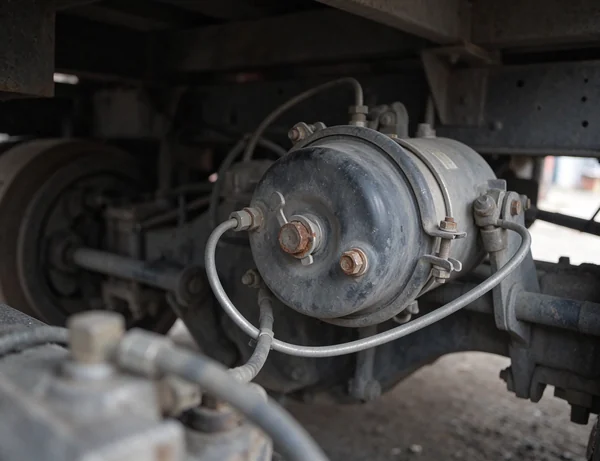
Spring brake chambers are deliberately fail-safe: a mechanical spring applies the brake, and air pressure compresses that spring to release it. That design is why a truck with low air is a truck that will not roll, and why a driver who hears the brake release hiss but still cannot move is dealing with something else — a seized slack adjuster, a frozen valve, or a chamber whose spring is not being compressed far enough.
Spring brakes need a specific minimum pressure to release fully. Below that figure the spring is only partly compressed, and the brake drags even though the driver heard something release. Put a gauge on the release line at the chamber and read it while a helper operates the parking valve. If the gauge sits below the release figure in your manual, stop there: you have found the fault and it is upstream.
The usual upstream causes, in the order they actually occur:
| What the driver reports | Likely cause | Test that proves it |
|---|---|---|
| Hiss heard, truck creeps then stops | Low release pressure or a partly caged chamber | Gauge on the release line at the chamber |
| No hiss, no movement, system pressure normal | Parking valve not supplying, blocked release line | Crack the chamber inlet fitting and watch for air |
| One wheel hot after a short run | Slack adjuster seized, chamber not releasing | Compare drum temperatures across the axle after a short drive |
| Trailer brakes will not release | Trailer control valve, supply line coupling, or a blocked trailer line | Check pressure at the trailer coupling with the valve released |
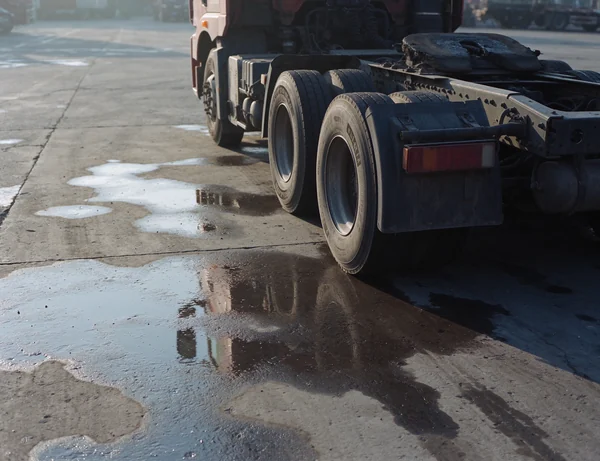
In freezing conditions the release circuit is the first place moisture collects, because it is the line that is emptied and refilled most often. A truck that released fine in the afternoon and will not release the next morning is reporting ice, not wear. Fit a working air dryer with a fresh cartridge, drain the reservoirs at the end of each shift, and if the truck already has ice in the system, warm the affected valves gently and dry the circuit before the next cold start. Alcohol injection is a temporary measure; it does not fix a saturated dryer.
Release pressure figures and chamber part numbers differ by axle build and by market. Confirm the values for your chassis in the OEM workshop manual. Spring brake chambers must only be replaced as complete units by trained personnel.
Please contact our team for personalized maintenance guidance and technical support for your Sinotruk HOWO, A7, or T7 trucks. We provide professional advice and recommendations for genuine parts to help ensure the reliable operation of your fleet.
Contact Us
Whenever your truck needs repair, you don’t know how to buy the right parts?
Don’t worry, we have already done this job for you. We have a complete parts list catalog for different models of each truck assembly, you can choose the right catalog to download and collect according to your truck configuration.
When you have a need, you can send us your required list based on this catalog.
Obtain the complete Howo truck parts catalog PDF file and pricing.
Contact Us
2001-2026 Shandong Yimo Auto Sales Co., Ltd. © All rights reserved.


