

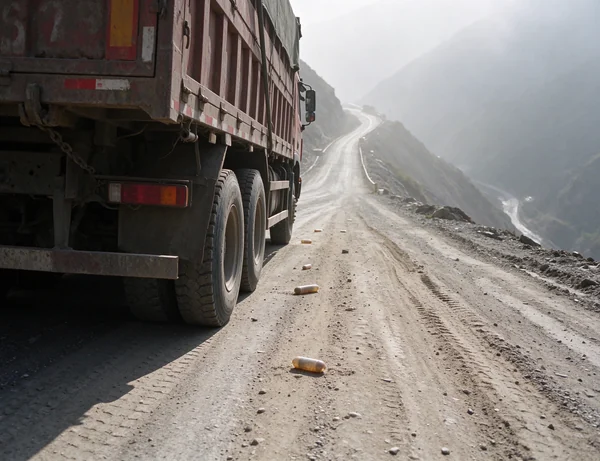
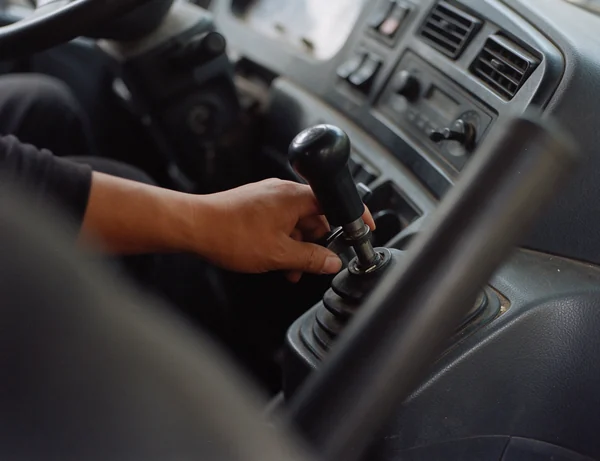
Short answer: brake fade on a long descent is not a brake failure — it is the brake doing exactly what heat does to friction material. The pads or linings glaze, the friction coefficient drops, and the pedal goes longer while the retardation goes away. The remedy is a technique, not a part: descend in a gear low enough that the engine and the retarder hold the truck, use the service brakes in short firm applications rather than continuous light pressure, and never ride the pedal down a mountain. Fade that does not recover after the brakes cool is a replacement.
The physics is simple and unforgiving. Brakes convert motion into heat, and heat has to go somewhere. On a long descent, continuous light braking gives the drums no time to cool and the linings no chance to recover their surface. Once the surface glazes, the same pedal pressure produces less braking, which tempts the driver to press harder, which adds more heat. That is the loop that ends with no brakes at all.
| Condition | What happens | After cooling |
|---|---|---|
| Glazing | Surface hardens and the coefficient drops | Often recovers, sometimes needs light sanding |
| Fading during use | Resin in the lining vaporises | Recovers when cool; indicates the wrong technique |
| Blue drums or discs | Overheated metal, hardness changed | Does not recover — replace |
| Cracked drums or discs | Thermal shock | Replace immediately, this is a safety failure |
| Boiled fluid | Moisture vaporised, pedal spongy | Bleed and replace fluid; find why it boiled |
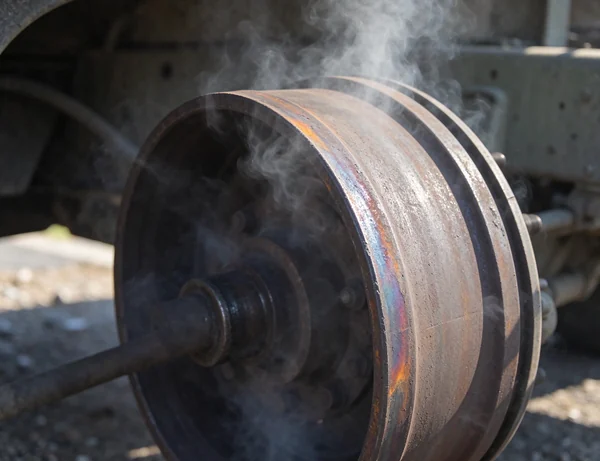
Fade resistance depends on the friction material being correct and on the brake being able to release. A dragging brake, a seized caliper or a partly applied park brake generates heat continuously and leaves the wheel already hot before the descent begins. Checking for even drum temperatures after a normal run, and confirming that every wheel rolls freely when jacked, is how you find a dragging brake before it costs you a set of drums. Fluid condition matters too: brake fluid absorbs moisture, and wet fluid boils at a lower temperature.
Brake specifications, fluid types and retarder operation are model-specific. Confirm them in the OEM manual, and treat any brake defect as a safety issue that stops the truck.
Please contact our team for personalized maintenance guidance and technical support for your Sinotruk HOWO, A7, or T7 trucks. We provide professional advice and recommendations for genuine parts to help ensure the reliable operation of your fleet.
Contact Us
Whenever your truck needs repair, you don’t know how to buy the right parts?
Don’t worry, we have already done this job for you. We have a complete parts list catalog for different models of each truck assembly, you can choose the right catalog to download and collect according to your truck configuration.
When you have a need, you can send us your required list based on this catalog.
Obtain the complete Howo truck parts catalog PDF file and pricing.
Contact Us
2001-2026 Shandong Yimo Auto Sales Co., Ltd. © All rights reserved.


