banner-news1
REPAIR FAQ
Back

SITRAK C9H AMT Clutch Slip: Wear, Air and Calibration

Short answer: clutch slip on a SITRAK C9H automated gearbox is a measured condition, not a feeling. The transmission already logs clutch position, actuator stroke and slip during take-up, so the first job is to read what it recorded — wear value, engagement point and any recent self-learn — before ordering a clutch. If the wear value is inside range but the engagement point has drifted, a calibration often restores the drive. If the wear value is out of range, or the friction surface is contaminated with oil, no calibration will help and the clutch has to come out.

Automated manual transmissions wear differently from a manual box because the clutch is always operated by the actuator, at the same rate and the same bite point, whatever the driver does. That consistency is an advantage for diagnosis: slip on an AMT usually shows up as a repeatable pattern in one of three places — heavy take-off under load, upshift under power, or a hot restart after a long climb.

QUICK DIAGNOSIS — where the slip happens tells you what failed
  1. 1Slip only on a loaded take-off or a steep grade — genuine friction wear, or a bite point that has moved as the clutch wore.
  2. 2Slip right after start-up, then fine — actuator or air supply slow to build; the clutch is not being released cleanly.
  3. 3Slip only when hot, with a smell — oil contamination from the rear main seal, or a clutch that has been cooked by repeated heavy starts.
SITRAK C9H tractor unit parked at a motorway service area at night with tail lights lit, after a slip complaint on a long run

Slip complaints usually arrive after a loaded run, not in the yard. Note the load, the grade and the gear it happened in.

1. Read the transmission before you drive it

Connect the diagnostic tool and pull three things: the clutch wear value, the clutch engagement point or bite position, and the history of self-learn events. Then compare them with what the driver reports.
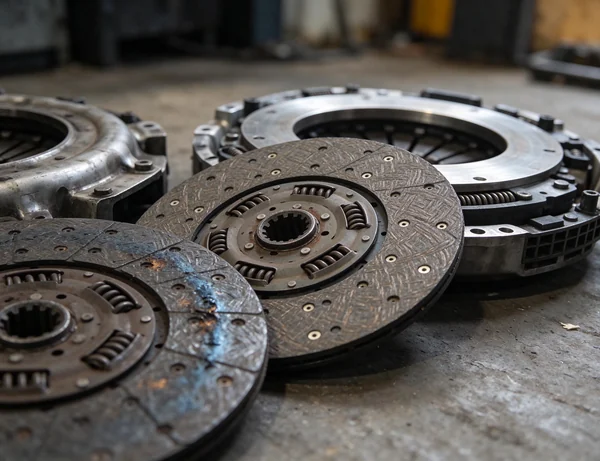
  • Wear value inside range, engagement point drifted. The friction material is still serviceable but the control unit is applying the clutch at the wrong position. Re-run the learn procedure on level ground, with the transmission at operating temperature and system air at full pressure.
  • Wear value at or past the limit. The clutch is mechanically finished. Replacing it is the only correct repair, and the flywheel surface has to be checked for heat cracks and for the wear step left by the old disc.
  • Wear value fine but slip recorded at random points. Look for an intermittent signal fault before touching the mechanism: actuator stroke sensor, wiring chafe, or a corroded connector.
Clutch pressure plate and friction disc from a SITRAK C9H, the burnt disc shown beside a new one

A cooked disc beside a new one. Blue heat marks mean the clutch was slipped hot, not just worn out.

2. Check the actuator side before condemning the clutch

  1. Air supply. The clutch actuator needs full system pressure. A truck with a tired compressor, a restricted line or a saturated dryer will show a slow, dragging release that the control unit may interpret as slip during take-up.
  2. Actuator stroke and return. Watch the actuator through a full apply and release with the engine off. It should move smoothly to both ends with no hesitation and return fully. A sticky return leaves the clutch partly engaged.
  3. Stroke sensor signal. Compare the reported stroke with the physical stroke, marked on the actuator rod with a paint pen. A reading that does not follow the rod is a sensor or wiring fault, and the control unit will keep mis-timing the shift.
  4. Oil at the bell housing. Look for oil tracking out of the bell housing drain or hanging on the clutch housing bolts. A rear main seal that has started to weep will destroy a new clutch in a few thousand kilometres, and it is cheaper to fix before the clutch goes in than after.
Do not “fix” slip by raising the bite point. Adjusting the controller to engage harder hides the wear for a while and then shock-loads the driveline when it does bite. On a loaded C9H that ends in a broken prop shaft or a cracked gearbox mount, not a cheaper repair.

3. Deciding between calibration and replacement

Evidence Meaning Action
Wear value inside limit, consistent slip on take-off Engagement point drifted Re-learn on level ground at operating temperature
Wear value past limit Friction material consumed Replace clutch, inspect flywheel wear step
Oil in the bell housing Rear main seal leaking Fix the seal, then replace the contaminated clutch
Blue heat marks, burnt smell, low mileage Driver-induced slipping or a dragging release Replace clutch and correct the release fault that caused it
Slip logged only when cold Air or actuator response Check pressure build, actuator return, dryer condition
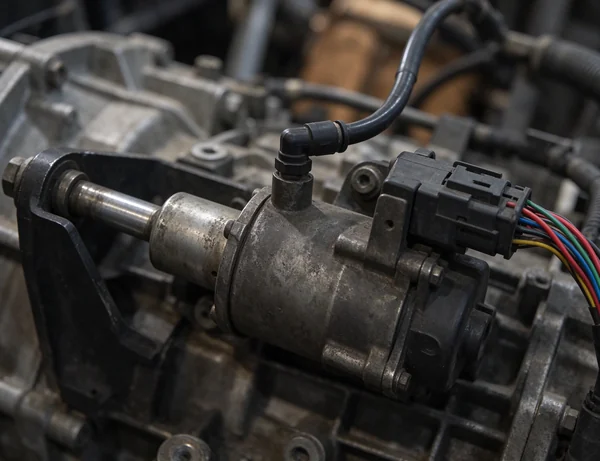
Clutch actuator cylinder and wiring harness on an automated manual transmission in a SITRAK C9H

The clutch actuator. Its return and its stroke signal decide whether the control unit can time a shift correctly.

4. Why a new clutch slips again in three months

Almost always one of two reasons. Either the release mechanism was never corrected, so the new clutch is being partly held open and overheated from the first trip, or the flywheel was not resurfaced or replaced and the old wear step let the new disc seat on only part of its face. A third, less common cause is a driver who holds the truck on the handbrake with the clutch at bite on a grade; the AMT will not protect a clutch from that, because it follows the accelerator.

5. Questions drivers ask most

Will re-learning the gearbox fix a worn clutch?
No. Calibration only repositions the bite point the controller uses. If the friction material is below the wear limit, the clutch will still slip once the load exceeds what is left of it.
Why does it only slip when fully loaded?
Because slip is a torque limit, not a speed problem. The clutch can carry the empty truck comfortably and cannot carry the loaded one. That is the classic signature of a clutch at the end of its wear range.
Can I keep driving with a light slip?
Only briefly and unladen. Every slip event adds heat to the flywheel and the pressure plate, and heat is what turns a clutch replacement into a flywheel replacement as well.
Does the gearbox oil affect clutch slip?
Not the clutch itself, but low or degraded oil changes shift quality and can make the controller hold the clutch longer during a shift, which feels like slip. Check the oil level and condition at the same time.
Need a clutch kit, release actuator or stroke sensor for your C9H AMT? Send the transmission model and the clutch wear reading and we will confirm the correct specification. Send your request

Clutch wear limits, learn procedures and actuator dimensions are specific to the transmission variant fitted. Confirm them in the OEM transmission manual before replacing or re-calibrating any component.

Need Help or Want More Detailed Maintenance Information?

Please contact our team for personalized maintenance guidance and technical support for your Sinotruk HOWO, A7, or T7 trucks. We provide professional advice and recommendations for genuine parts to help ensure the reliable operation of your fleet.

Contact Us
More Articles

Howo Sinotruk Parts & Catalog PDF

Whenever your truck needs repair, you don’t know how to buy the right parts?

Don’t worry, we have already done this job for you. We have a complete parts list catalog for different models of each truck assembly, you can choose the right catalog to download and collect according to your truck configuration.

When you have a need, you can send us your required list based on this catalog.

Obtain the complete Howo truck parts catalog PDF file and pricing.

Contact Us
Hot-Selling Replacement Parts

whatsapp-4