banner-news1
REPAIR FAQ
Back

SITRAK C9H DPF Blocked: Pressure Signals and Regeneration Limits

Short answer: a blocked DPF on a SITRAK C9H announces itself with three numbers before it strands the truck: rising exhaust back pressure, a dropping regeneration frequency, and a rising exhaust temperature under load. Read those first. Then decide whether the filter can be regenerated or has to come off — and understand that a forced regeneration on a filter that is already at its limit is how a filter becomes a fire hazard or a cracked substrate. Soot load is the symptom; the cause is usually a fault that has stopped regeneration from completing.

Diesel particulate filters do not fill because the truck is old. They fill because regeneration is not finishing — a failed burn, a low exhaust temperature from short-cycle duty, a faulty dosing system or a sensor that lies. If you clean or replace the filter without finding out why regeneration stopped, the next filter fills the same way.
QUICK DIAGNOSIS — read the signals in this order
  1. 1Back pressure above the normal range at load — soot load. Confirm with the differential pressure reading, not a guess.
  2. 2Regeneration keeps starting and aborting — exhaust temperature, dosing, or an interrupt from the duty cycle.
  3. 3Derate with a filter warning — the ECU has already decided the filter is at its limit. A road regeneration will not clear it.
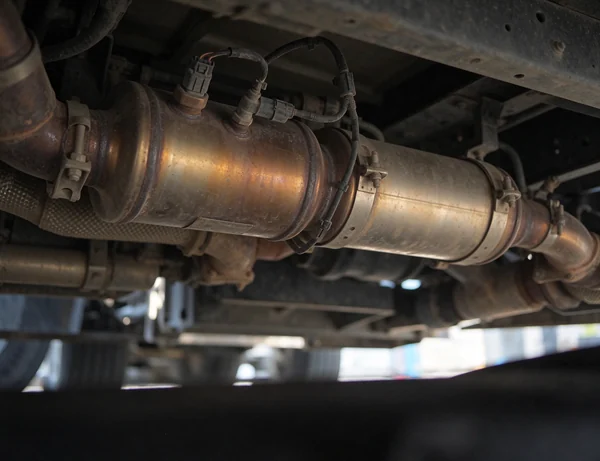
Exhaust aftertreatment box under a SITRAK C9H chassis with DOC and SCR sections and sensor connections

Aftertreatment box with its sensors. The differential pressure reading is the one that matters most.

1. The three readings that decide the repair

  1. Differential pressure across the filter. Read it at a defined condition — idle, then a fixed load. A filter at its limit read high even at idle is past the point where a road regeneration will help.
  2. Exhaust temperature before and during a regeneration attempt. Regeneration needs a sustained temperature. If the temperature never reaches the threshold, the soot never burns, and every attempt adds fuel without removing carbon.
  3. Soot mass estimate and the history of completed regenerations. A truck that has not completed a regeneration in a long time has a cause, and that cause is not the filter.
Reading Meaning Action
Differential pressure moderately high, regenerations complete Normal loading, working system Continue; monitor at service
Differential pressure high, regenerations abort Temperature or dosing fault Fix the cause, then regenerate
Differential pressure very high at idle, derate active Filter at limit Removal for cleaning or replacement
Pressure normal but a filter code present Sensor or wiring fault Test the sensor before touching the filter
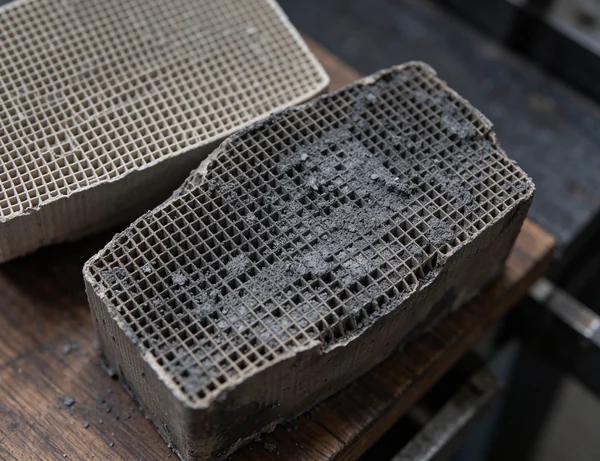
Cut-open diesel particulate filter section showing blocked channels compared with a clean core

A cut-open filter: blocked channels beside a clean core. This is the stage where cleaning is still possible.
Do not force a regeneration on a filter that is already saturated, and never regenerate indoors. A saturated filter can reach temperatures that crack the substrate, and the exhaust outlet becomes hot enough to ignite anything near it. Regeneration is done outdoors, on a truck with no leaks, with the area around the tailpipe clear.

2. Why regeneration stops completing

Four causes account for most aborted regenerations on this engine family:
  • The duty cycle. Stop-start work never gives the exhaust the sustained temperature a passive regeneration needs, so the filter only fills. Short-cycle trucks need an active regeneration on a schedule, not when the light comes on.
  • The dosing system. A blocked injector, a failed pump or a poor spray pattern reduces the heat the system can generate.
  • Air and fuel quality. A restricted intake or a leaking charge-air system lowers exhaust temperature. High sulphur fuel or the wrong engine oil raises ash and soot load.
  • Sensors. A temperature or pressure sensor reading low stops the regeneration before it starts. Test the sensor, not the filter.
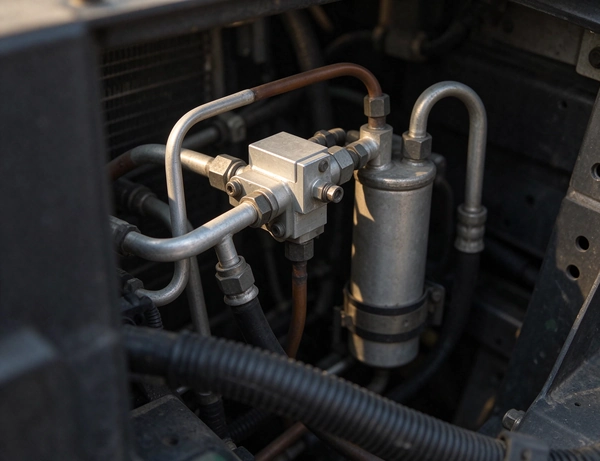
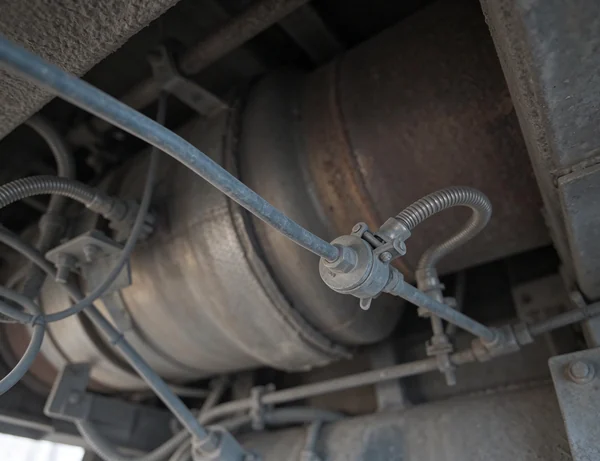
Differential pressure lines and sensor connections on a SITRAK C9H aftertreatment unit

Pressure lines at the aftertreatment unit. A blocked or cracked line gives a false reading and a false diagnosis.

3. Cleaning, replacing, or removing

Cleaning is viable when the substrate is intact and the blockage is soot. It is not viable when the substrate is cracked, melted or ash-loaded — ash does not burn off and cannot be washed out of a full filter. Before deciding, inspect the core and check the ash level, because a filter that has been through many regenerations accumulates ash that never leaves, and no amount of regeneration recovers capacity lost to ash.

4. Questions drivers ask most

Can I keep driving with the filter light on?
Until the derate starts, usually yes, but plan the repair. Once the ECU derates, the truck is limited and a further ignored warning can leave it unable to move under its own power.
Does city driving cause this?
Yes, and it is the most common cause on short-cycle trucks. Passive regeneration needs sustained exhaust temperature, which city work never provides.
Is removing the filter an option?
No. It is illegal in most markets, it sets codes and derates, and it is unsafe. The correct route is repair and correct operation.
Why did the filter block right after a service?
Wrong engine oil is the usual reason — an oil that does not meet the low-ash specification raises ash loading, which never burns off. Check the oil specification used at that service.
Need a DPF, DOC or SCR unit, dosing components, sensors or the correct low-ash oil for your C9H? Send the chassis number and emissions build and we will confirm the correct aftertreatment parts. Send your request

Soot load limits, regeneration procedures and aftertreatment part numbers are emissions-build specific. Confirm them in the OEM manual, and follow local emissions regulations on any aftertreatment repair.

Need Help or Want More Detailed Maintenance Information?

Please contact our team for personalized maintenance guidance and technical support for your Sinotruk HOWO, A7, or T7 trucks. We provide professional advice and recommendations for genuine parts to help ensure the reliable operation of your fleet.

Contact Us

More Articles

Howo Sinotruk Parts & Catalog PDF

Whenever your truck needs repair, you don’t know how to buy the right parts?

Don’t worry, we have already done this job for you. We have a complete parts list catalog for different models of each truck assembly, you can choose the right catalog to download and collect according to your truck configuration.

When you have a need, you can send us your required list based on this catalog.

Obtain the complete Howo truck parts catalog PDF file and pricing.

Contact Us
Hot-Selling Replacement Parts

whatsapp-4