

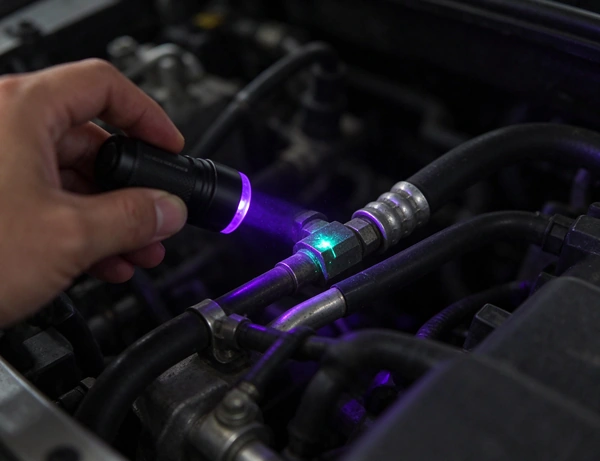
Short answer: a HOWO T7H that has lost power and started smoking black under load is losing boost, and a split charge-air cooler is one of the most common reasons. Boost leaks are nearly free to find: pressurise the system with a leak tester or a controlled air supply, then listen and soap the joints. A cooler that leaks internally shows coolant loss instead, and a cooler that leaks externally at a tank seam shows oil mist that has been collecting dust for weeks. Prove the leak before you consider the turbo.
Charge-air leaks reduce the mass of oxygen the engine receives while the fuel map keeps injecting for the air it thinks it has. The result is exactly what a worn turbo produces — black smoke, high exhaust temperature and a truck that feels flat on a climb. The difference is that a leaking cooler or pipe costs a fraction of a turbo to fix.
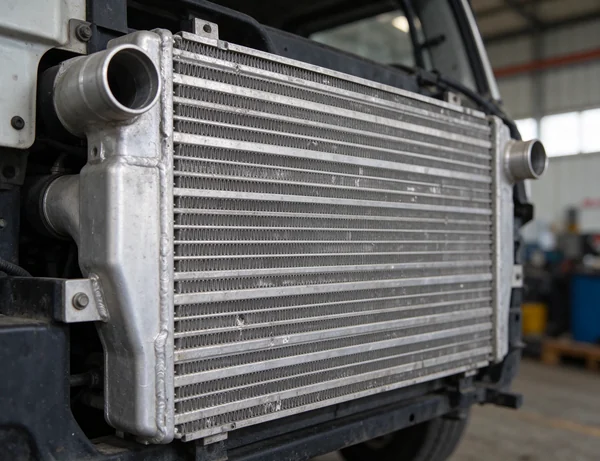
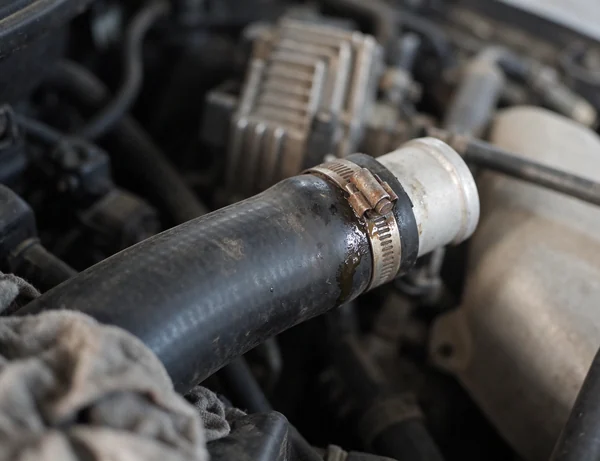
Most cooler failures are mechanical, not thermal. The pipe that runs from the cooler to the manifold rubs against a bracket or a frame edge, the cooler itself is mounted in rubber cushions that have collapsed so the core moves against the radiator frame, or a clamp has been overtightened until the hose wall is cut. When you find the leak, look at what it was touching — replacing the part without correcting the rub is how a truck gets the same leak twice.
| Leak location | Typical cause | Repair |
|---|---|---|
| Hose to manifold | Overtightened clamp, hardened hose | New hose and clamp, correct torque, check clearance |
| Cooler end tank seam | Vibration, collapsed mounting cushions | Replace cooler and cushions together |
| Cooler core face | Stone damage, fan contact | Replace, and check engine mounts and fan clearance |
| Internal leak | Corrosion from poor coolant quality | Replace cooler, flush the system, fix coolant chemistry |
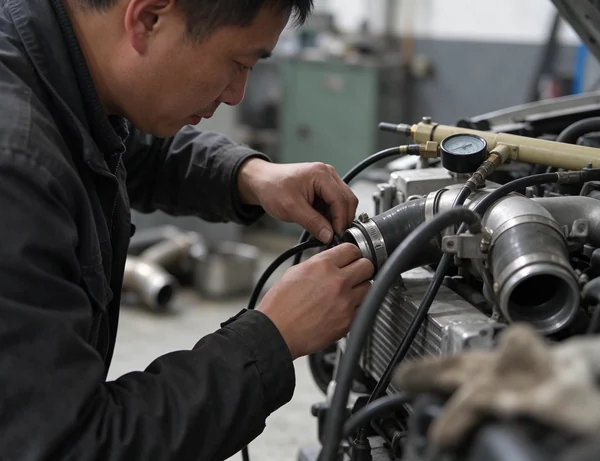
If the system holds pressure and the truck is still flat, then look at the turbo itself: axial and radial play at the compressor wheel, oil in the compressor housing, and boost pressure measured against the specified figure at a fixed engine speed. A turbo that is passing oil, or one whose wastegate or VGT mechanism is stuck, produces the same complaint and needs a different repair. Measuring boost with a gauge is the step that separates them, and it should always come before a turbo is ordered.
Boost pressure figures, cooler part numbers and mounting specifications are build-specific. Confirm them in the OEM workshop manual before testing or replacing charge-air components.
Please contact our team for personalized maintenance guidance and technical support for your Sinotruk HOWO, A7, or T7 trucks. We provide professional advice and recommendations for genuine parts to help ensure the reliable operation of your fleet.
Contact Us
Whenever your truck needs repair, you don’t know how to buy the right parts?
Don’t worry, we have already done this job for you. We have a complete parts list catalog for different models of each truck assembly, you can choose the right catalog to download and collect according to your truck configuration.
When you have a need, you can send us your required list based on this catalog.
Obtain the complete Howo truck parts catalog PDF file and pricing.
Contact Us
2001-2026 Shandong Yimo Auto Sales Co., Ltd. © All rights reserved.


