

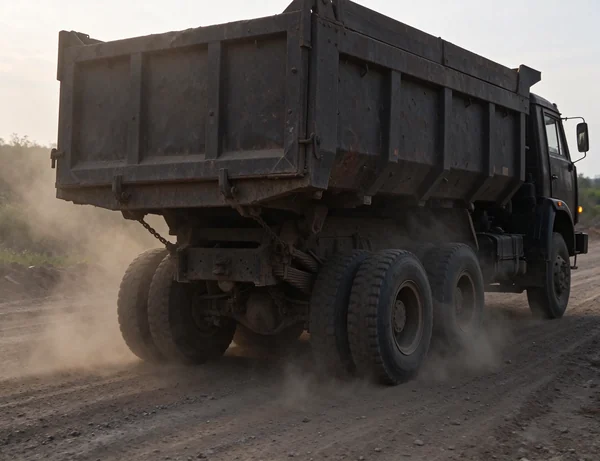
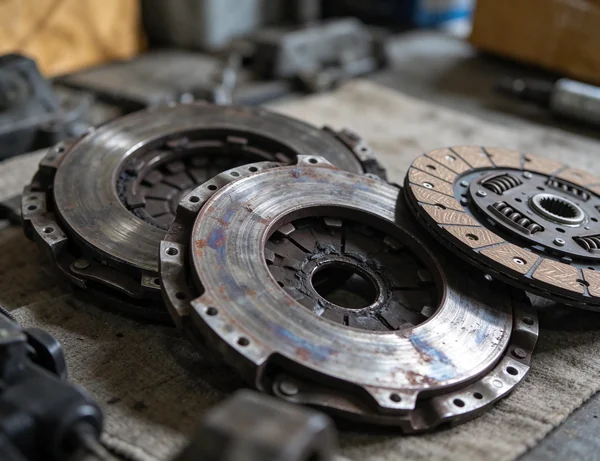
Short answer: when a truck is overloaded, the clutch and the rear axle are the two components that pay first, and both fail in a pattern you can recognise. The clutch goes early because it has to transmit more torque than it was rated for at every start on a grade, and the axle goes because the gears carry load beyond their design and the oil stops protecting them. Neither failure is sudden — both begin with heat, and both give you a warning in the form of smell, noise or oil condition long before the breakdown.
The load rating on the plate is a design limit for the whole driveline, not a suggestion about the body. Every component from the clutch to the hub is sized for the same number, and when the truck runs above it, the weakest link in the chain fails first. That is why an overloaded truck often keeps running for months and then fails on a climb in hot weather: the margin was consumed gradually.
| Evidence | What it means | Action |
|---|---|---|
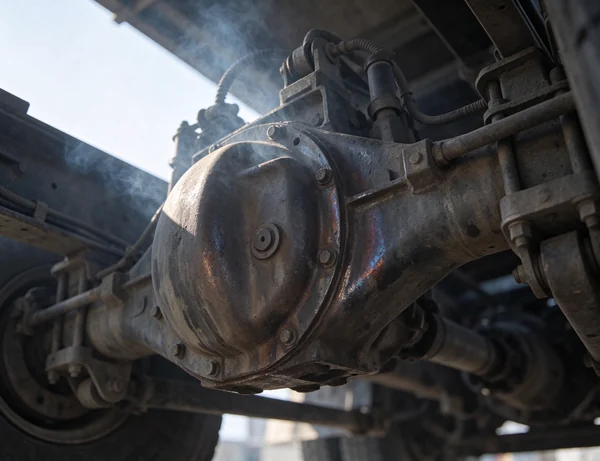
| Whine that rises with load | Gear contact load beyond design, or a bearing starting to fail | Drain and inspect the oil; check for metal |
| Very hot axle after a loaded run | Heat input above what the oil can carry away | Check oil level and grade; reduce the load |
| Dark oil with a metallic sheen at low distance | Accelerated wear from overload | Change the oil, sample it, and inspect the gears |
| Oil pushing out of the breather | Heat and pressure; a blocked breather makes it worse | Clean the breather, check the level, find the heat source |
| Wheel seal leaking | Heat from the hub, often with bearing damage | Inspect the bearing before replacing the seal |
Overloading rarely saves money over a year. The clutch, the axle, the brakes, the tyres and the fuel consumption all move in the wrong direction, and the failures arrive at inconvenient times, often far from a workshop. A truck working inside its rating costs more per trip on paper and considerably less per kilometre in reality, because the components reach their service interval instead of failing before it. When a driver reports repeated clutch or axle failures on the same truck, the load history is worth checking before another part is fitted.
Load ratings, clutch torque capacities and axle specifications are model-specific. Confirm them in the OEM manual, and never exceed the rated gross vehicle weight.
Please contact our team for personalized maintenance guidance and technical support for your Sinotruk HOWO, A7, or T7 trucks. We provide professional advice and recommendations for genuine parts to help ensure the reliable operation of your fleet.
Contact Us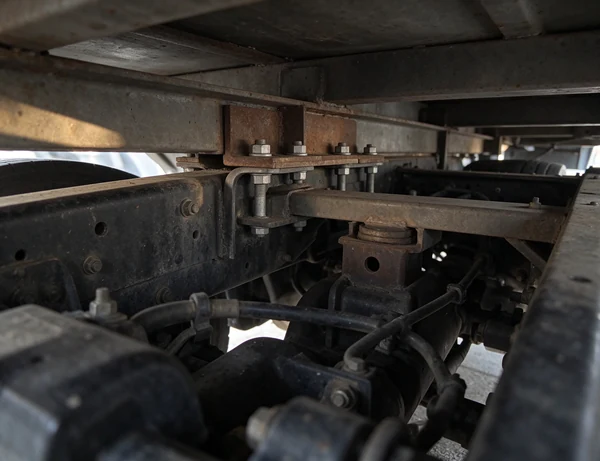

Whenever your truck needs repair, you don’t know how to buy the right parts?
Don’t worry, we have already done this job for you. We have a complete parts list catalog for different models of each truck assembly, you can choose the right catalog to download and collect according to your truck configuration.
When you have a need, you can send us your required list based on this catalog.
Obtain the complete Howo truck parts catalog PDF file and pricing.
Contact Us
2001-2026 Shandong Yimo Auto Sales Co., Ltd. © All rights reserved.


