

Short answer: Engine mounts fail slowly and their symptoms are blamed on everything else. A collapsed front mount lets the fan tip touch the shroud on a hard stop. A failed rear mount shows as driveline vibration at idle and a judder when the clutch takes up. The test is a pry bar and a jack, five minutes, engine off, and it tells you which of the three mounts has lost its rubber.
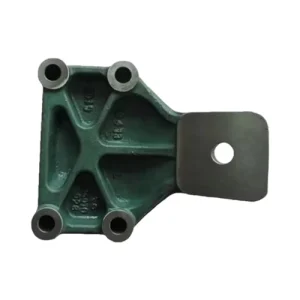
On a heavy truck the engine sits on two front mounts and a transmission mount or a rear crossmember. The rubber in each one carries load, damps vibration and limits movement. When it perishes, the engine moves further than it was designed to, and the parts around it pay the bill.
Drivers rarely describe it as a mount problem. They report a vibration, a noise when braking, or a clutch that grabs.
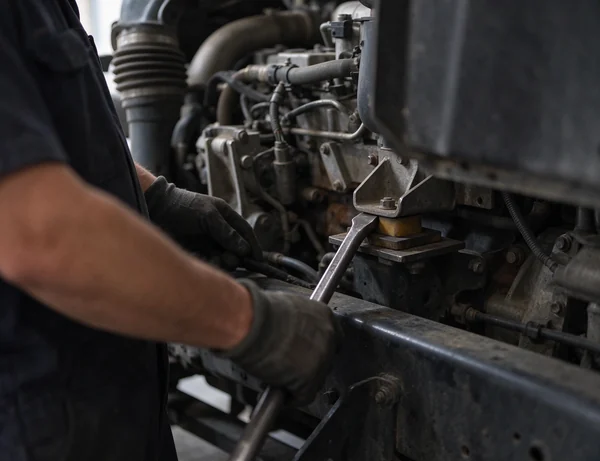
Engine off and cold, place a pry bar between the mount bracket and the frame and lever gently. A mount that is still serviceable will resist and return. A collapsed mount moves easily and stays where you put it, because the rubber has separated from the steel or the bonded centre has torn.
Check all three mounting points, and check the bolts as well as the rubber. A loose bolt produces the same clunk as a failed mount and costs nothing to tighten.
Heat, oil and overload are the three killers. A mount that sits under an exhaust leak cooks its rubber; one that is washed by an oil leak from the front cover swells and perishes; one that is loaded beyond its rating after a front axle or suspension change fails within months.
Wrong installation is the fourth. A mount fitted with the engine hanging on it, rather than with the engine supported in its designed position, is pre-loaded from the first kilometre.
| Symptom | Mount involved | Confirms as |
|---|---|---|
| Idle vibration, gone at speed | Front left or right | Rubber collapsed or bolt loose |
| Fan contact on braking | Front mount | Excess fore-aft movement |
| Clutch judder under load | Rear mount | Driveline twist beyond limit |
| Clunk on throttle change | Any mount | Bolt, rubber or a cracked bracket |
| Vibration worse after a repair | New mount installed pre-loaded | Refit with the engine supported |
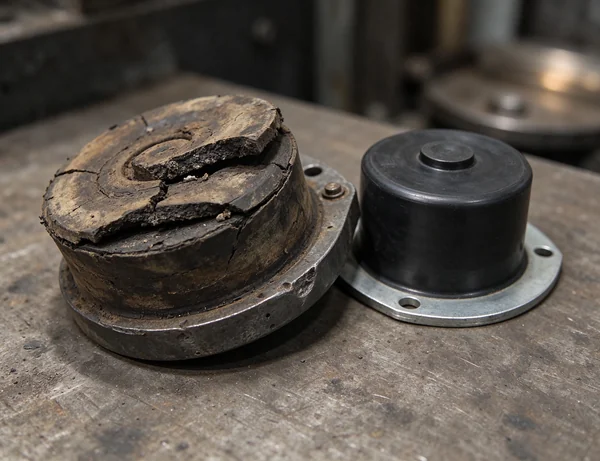
Support the engine on a jack with a block under the sump, never on the oil pan drain plug, and replace mounts one at a time. Fit the bolts loosely, lower the engine into its natural position, then tighten in the specified order. Tightening a mount with the engine hanging on it pre-loads the rubber and shortens its life.
After replacement, check the fan clearance, the exhaust joint alignment and the wiring harness to the engine. A mount that has been collapsed for months usually has a chafed harness or a strained pipe somewhere.
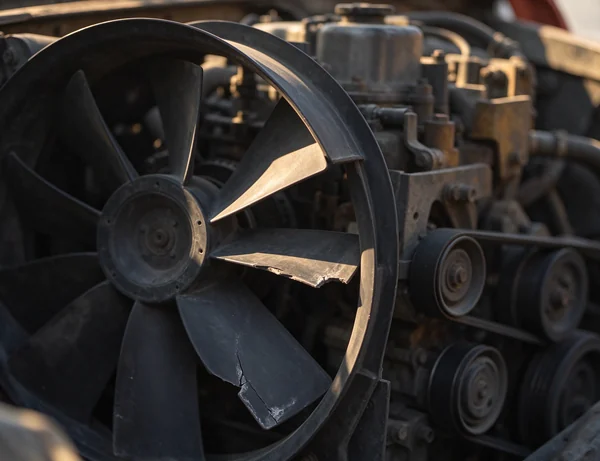
Mount part numbers and tightening sequences are model specific. Confirm them in the OEM manual before replacing.
Please contact our team for personalized maintenance guidance and technical support for your Sinotruk HOWO, A7, or T7 trucks. We provide professional advice and recommendations for genuine parts to help ensure the reliable operation of your fleet.
Contact Us
Whenever your truck needs repair, you don’t know how to buy the right parts?
Don’t worry, we have already done this job for you. We have a complete parts list catalog for different models of each truck assembly, you can choose the right catalog to download and collect according to your truck configuration.
When you have a need, you can send us your required list based on this catalog.
Obtain the complete Howo truck parts catalog PDF file and pricing.
Contact Us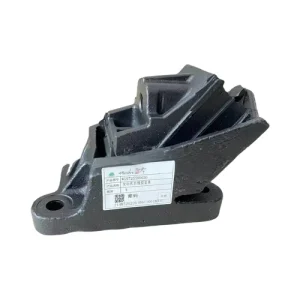
2001-2026 Shandong Yimo Auto Sales Co., Ltd. © All rights reserved.


