

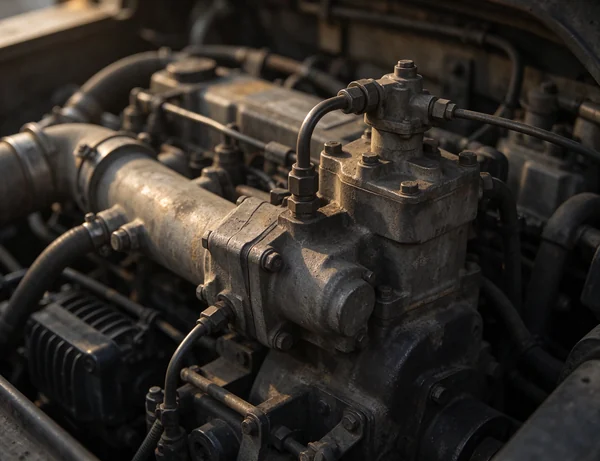
Short answer: The air compressor on a truck takes its intake from the engine’s charge air, so when its piston rings or valves wear, oil is pushed into the intake system and ends up in the intercooler and the cylinders. The result is oily charge air that the turbocharger is blamed for, a wet intercooler and, in the worst case, an engine that runs on its own oil. Separate the two sources before replacing anything.
Oil in the intake can come from the turbo seal or from the compressor. The difference matters: one is a turbo replacement, the other is a compressor or a repair kit, and the price difference is large.
The compressor is usually the source when the oil appears at the compressor discharge or in the air dryer, or when the air tank drain produces oily water.
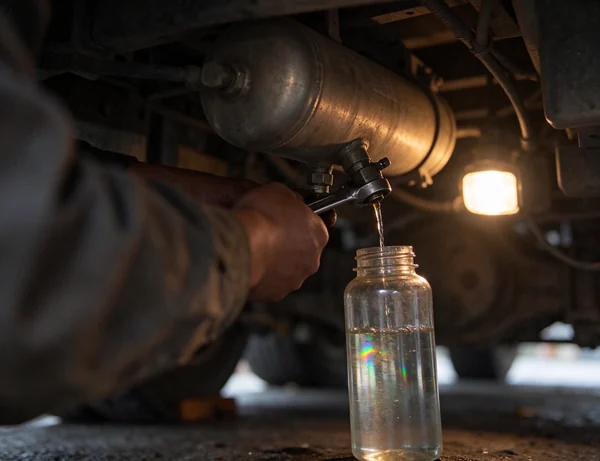
Drain the air tanks into a clear container and look for oil. A healthy system produces water with little or no oil film. Oil in the drain points at the compressor.
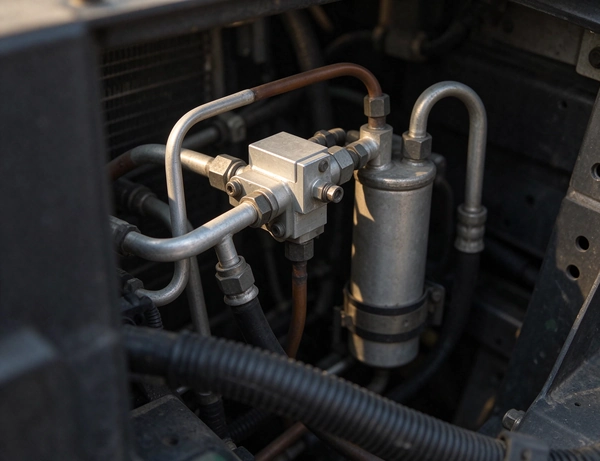
Then inspect the compressor discharge line and the air dryer element. An element that is saturated with oil confirms the compressor, and the turbo is not responsible.
A compressor with worn rings can sometimes be rebuilt with a kit, but on a truck that works every day the replacement is usually the better commercial decision. A rebuilt compressor that fails again costs more in downtime than the part.
After repair, clean the air system: drain and flush the tanks, replace the dryer element and check the unloader valve. Oil left in the system damages the valves and the dryer.
| Evidence | Source | Action |
|---|---|---|
| Oil in tank drain | Compressor | Repair or replace |
| Saturated dryer element | Compressor | Replace element and compressor |
| Oil at turbo compressor inlet | Turbo seal | Turbo inspection |
| Oily charge air, correct turbo play | Compressor path | Check compressor first |
Oil accumulating in the intercooler can be drawn into the cylinders and the engine can run on that oil instead of diesel. This is called run-away, the engine cannot be shut down with the key and it usually destroys itself.
Any truck with oily charge air and an unexplained rise in idle speed should be stopped and the intake inspected before it is driven again.
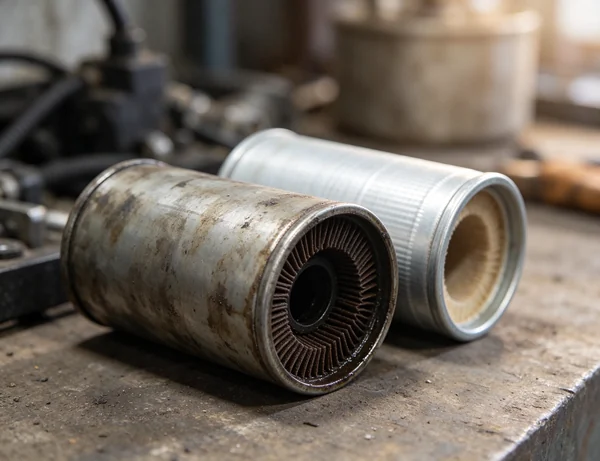
Compressor models and dryer part numbers vary by vehicle configuration. Confirm them in the OEM parts list.
Please contact our team for personalized maintenance guidance and technical support for your Sinotruk HOWO, A7, or T7 trucks. We provide professional advice and recommendations for genuine parts to help ensure the reliable operation of your fleet.
Contact Us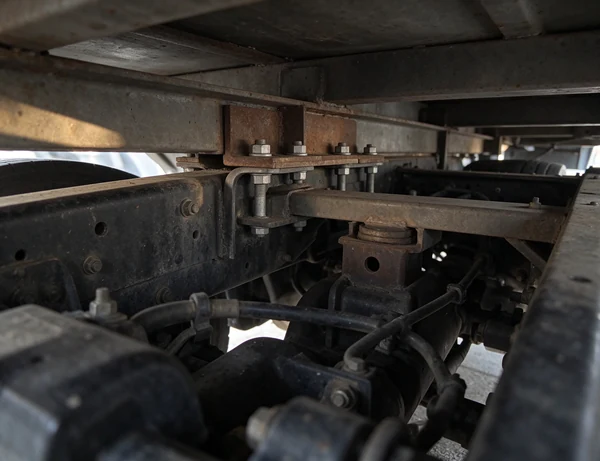

Whenever your truck needs repair, you don’t know how to buy the right parts?
Don’t worry, we have already done this job for you. We have a complete parts list catalog for different models of each truck assembly, you can choose the right catalog to download and collect according to your truck configuration.
When you have a need, you can send us your required list based on this catalog.
Obtain the complete Howo truck parts catalog PDF file and pricing.
Contact Us
2001-2026 Shandong Yimo Auto Sales Co., Ltd. © All rights reserved.


