

Short answer: A forced regeneration raises the exhaust temperature and holds it until the soot in the filter is burnt. It is a service function, and it is safe only when the filter is within its loading limit, the temperature sensors are healthy and the dosing system is working. Performed on a filter that is too far loaded, or on an engine with a fault, it overheats the filter and can crack it.
The function exists because trucks that never reach highway temperature cannot regenerate on their own. City work, tipper work and short haul cycles all need scheduled forced regenerations, and doing them properly is ordinary maintenance.
The failure stories all have the same shape: a filter that was already blocked, a sensor that was reading wrong, and a technician holding the function on because it had not completed.

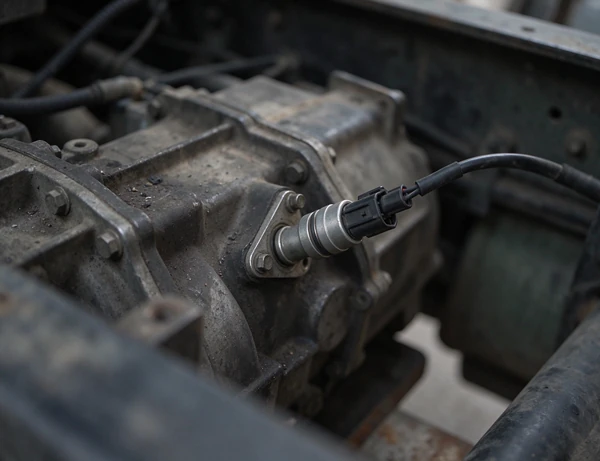
Check the filter loading against the service limit, the four exhaust temperature channels, the differential pressure reading and any dosing or SCR fault. If any of these is outside the expected range, repair it before running the function.
Then confirm the vehicle conditions the manual specifies: parked on a safe surface, nothing flammable near the exhaust, fuel level sufficient and the battery able to support the fan and the burn.
Monitor the temperature channels throughout and stop if the values behave abnormally. A cycle that repeatedly aborts is telling you the system cannot control the burn, and forcing it again is the wrong response.
After completion, check the differential pressure and the loading value again. A successful regeneration drops both. If they do not change, the burn did not happen, whatever the tool reported.
| Reading | Before | After a good cycle |
|---|---|---|
| Differential pressure | High | Lower |
| Filter loading | Above service threshold | Reduced |
| Temperature during cycle | Rises to target | Returns after completion |
| Exhaust note and smoke | Normal | Clean, no visible smoke |
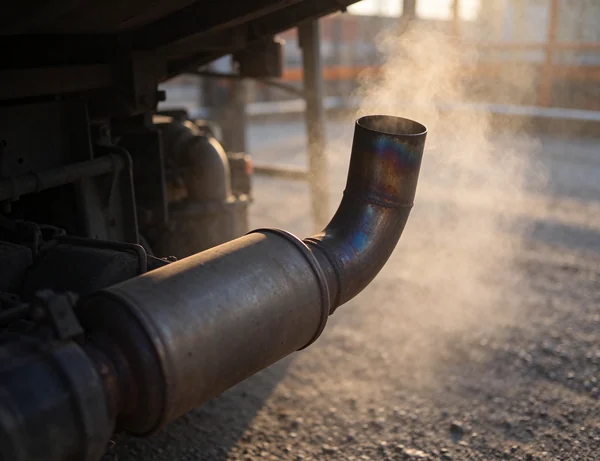
Do not force a regeneration on a filter that is beyond its service loading, on an engine with a misfire or an injector fault adding soot, or on a truck with a dosing fault. In each case the burn either cannot be controlled or will simply be undone by the next duty cycle.
If a filter has been forced repeatedly without success, the correct next step is to measure backpressure and inspect the filter, not to run the function again.
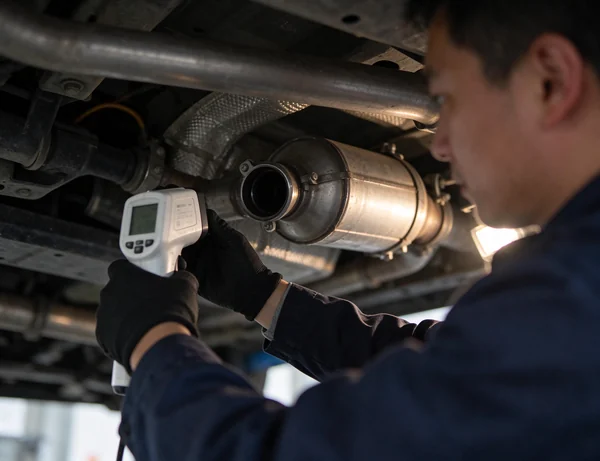
Forced regeneration conditions, limits and procedures are system specific. Always follow the OEM manual.
Please contact our team for personalized maintenance guidance and technical support for your Sinotruk HOWO, A7, or T7 trucks. We provide professional advice and recommendations for genuine parts to help ensure the reliable operation of your fleet.
Contact Us

Whenever your truck needs repair, you don’t know how to buy the right parts?
Don’t worry, we have already done this job for you. We have a complete parts list catalog for different models of each truck assembly, you can choose the right catalog to download and collect according to your truck configuration.
When you have a need, you can send us your required list based on this catalog.
Obtain the complete Howo truck parts catalog PDF file and pricing.
Contact Us
2001-2026 Shandong Yimo Auto Sales Co., Ltd. © All rights reserved.


