

Short answer: Valve clearance on an MC13 is measured and set with the engine cold, never warm. The value itself lives in the workshop manual for your engine variant, but the method is fixed: bring each cylinder to top dead centre on compression, check both rockers on that cylinder, and adjust only the ones that are out. Doing it in firing order stops you losing track of which cylinder you have already set, which is the most common cause of a noisy engine after a valve job.
A tight valve clearance holds a valve slightly open, and the first sign is a rough idle or a miss that appears when the engine is hot. A loose clearance makes a sharp metallic tick that is loudest at idle and disappears as the engine warms. Both change the way the engine breathes, and both are cheap to correct if they are caught before the valve face burns.
On a 24 valve six cylinder engine the adjustment is done at the rocker, and the clearances for intake and exhaust are different. Mixing them up is the second most common mistake, after setting the clearance with the engine still warm.
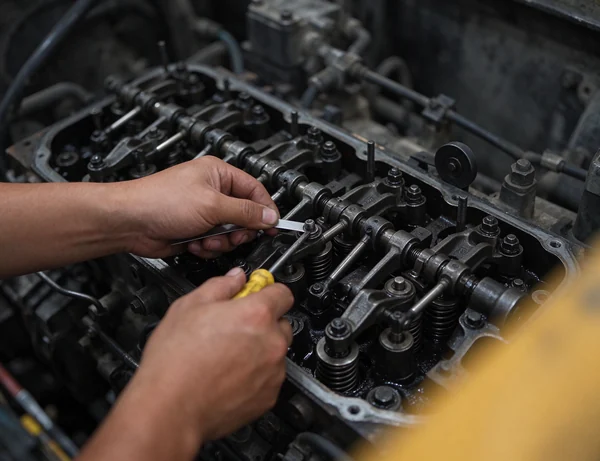
The engine must be cold, meaning at ambient temperature and not run for several hours. A warm engine grows the metal and every clearance you set will be too tight once it cools.
Clean the rocker area before you open anything. Dirt that falls into the oil return is dirt that will circulate, and a valve job that starts with a dirty cover is a valve job that ends with a scored rocker shaft.
Print the firing order on a sheet and mark each cylinder as it is completed, with the intake and exhaust values written beside it. On a six cylinder engine you will turn the crank six times and each turn will set two valves; the sheet is what stops a double-check from becoming a guess.
At the end, turn the crank through two full revolutions by hand and listen. A rocker that is binding or a pushrod that is not seated will show up as a tight spot long before the engine runs.
| Symptom | Clearance | Effect on the engine |
|---|---|---|
| Metallic tick, loudest cold | Too wide | Lost lift, noisy, valve face hammered |
| Rough idle, miss when hot | Too tight | Valve held open, risk of burning the seat |
| One cylinder noisy only | Wide at that rocker | Rocker pad or cam wear |
| Even noise across all cylinders | All wide | Set cold and adjusted to the wrong value |
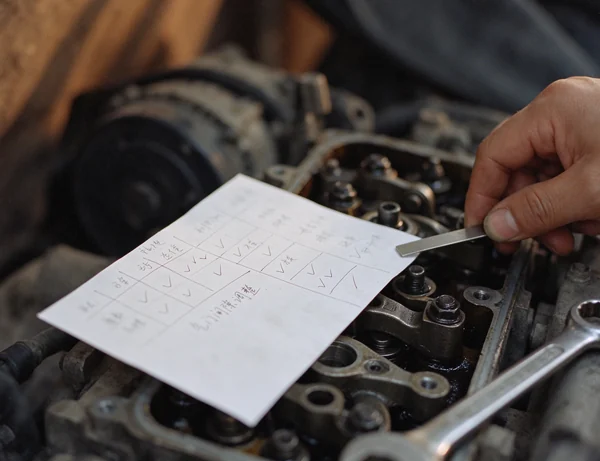
Run the engine for twenty minutes, let it cool completely, and check the clearances again on the cylinders that were adjusted. A rocker that has moved is either a lock nut that was not tightened or a screw that is worn, and both will keep moving.
Change the oil if the work was done with the cover open for a long period, and check the valve cover gasket for a leak within the first week. A small oil leak onto the exhaust side is a fire risk on a long climb, not just a nuisance.
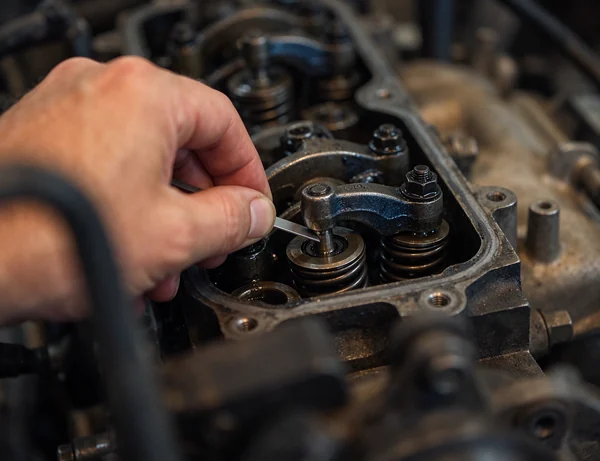
Clearance figures and adjustment intervals are engine variant specific. Confirm them in the OEM manual before setting anything.
Please contact our team for personalized maintenance guidance and technical support for your Sinotruk HOWO, A7, or T7 trucks. We provide professional advice and recommendations for genuine parts to help ensure the reliable operation of your fleet.
Contact Us

Whenever your truck needs repair, you don’t know how to buy the right parts?
Don’t worry, we have already done this job for you. We have a complete parts list catalog for different models of each truck assembly, you can choose the right catalog to download and collect according to your truck configuration.
When you have a need, you can send us your required list based on this catalog.
Obtain the complete Howo truck parts catalog PDF file and pricing.
Contact Us
2001-2026 Shandong Yimo Auto Sales Co., Ltd. © All rights reserved.


