

Short answer: The urea dosing nozzle sits in the exhaust, where it gets hot and where urea dries whenever the engine stops mid-dose. The result is white crystal build-up on the tip and inside the spray orifice, which changes the spray pattern and produces efficiency and reagent quality faults. Cleaning is straightforward with warm water and time, and almost every nozzle damaged in the field was damaged by the method used to clean it.
Crystals form when urea dries without being sprayed. A blocked nozzle then sprays a jet instead of a mist, the reagent hits the pipe wall instead of the catalyst, and the efficiency sensor reports a fault.
The nozzle is a precision component. The orifice is small and the seal is delicate, so cleaning method matters more than cleaning effort.
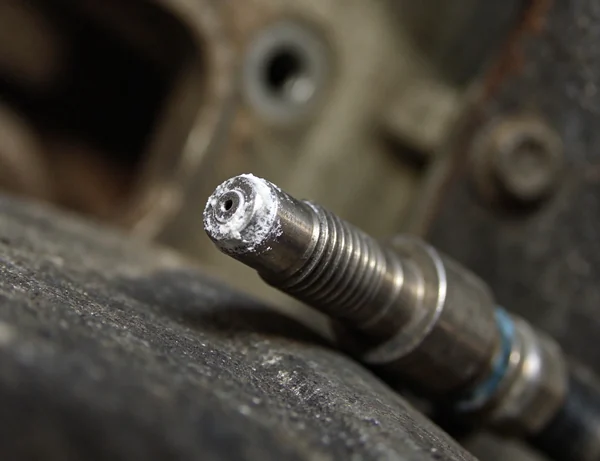
Remove the nozzle with the system depressurised and the ignition off. Do not pull it out hot, and do not lever it with a screwdriver against the pipe.
Soak the tip in warm water, not boiling, until the deposit softens. Change the water if it becomes saturated. This can take twenty minutes for a light crust and much longer for a baked one.
Never clear the orifice with a wire, a needle or a drill bit. The orifice is the calibration of the nozzle; a scratch changes the flow and the system detects it.
Never use solvent, brake cleaner or fuel to dissolve the deposit. These attack the seal and leave residue that contaminates the catalyst.
| Method | Effect | Verdict |
|---|---|---|
| Warm water soak | Dissolves dried urea | Correct |
| Low pressure air dry | Removes water without damage | Correct |
| Wire or needle | Scratches the orifice | Never |
| Solvent or fuel | Attacks the seal, leaves residue | Never |
| Boiling water | Can distort the nozzle | Avoid |
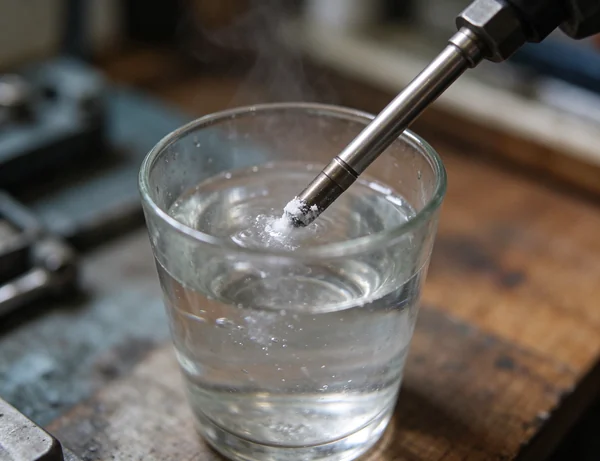
The nozzle crystallises because the engine stops while the system is mid-dose, or because the truck does many short runs. After a short run, let the system complete its purge before switching off where the routine allows it.
Check the nozzle at every service and clean it as part of the schedule rather than after a fault. A clean nozzle lasts a long time; a neglected one blocks within a season of stop-start work.
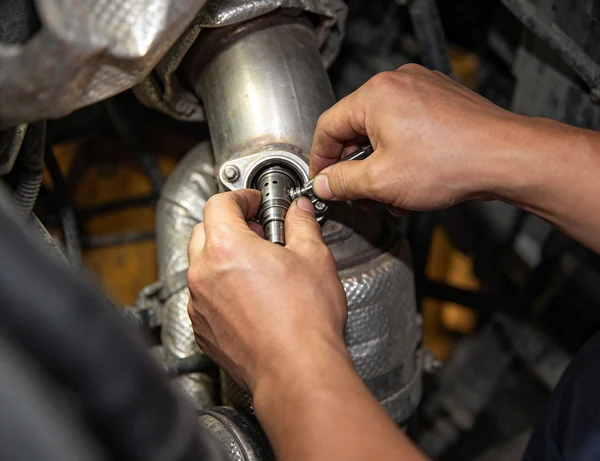
Nozzle part numbers and service intervals are system specific. Confirm them in the OEM manual.
Please contact our team for personalized maintenance guidance and technical support for your Sinotruk HOWO, A7, or T7 trucks. We provide professional advice and recommendations for genuine parts to help ensure the reliable operation of your fleet.
Contact Us

Whenever your truck needs repair, you don’t know how to buy the right parts?
Don’t worry, we have already done this job for you. We have a complete parts list catalog for different models of each truck assembly, you can choose the right catalog to download and collect according to your truck configuration.
When you have a need, you can send us your required list based on this catalog.
Obtain the complete Howo truck parts catalog PDF file and pricing.
Contact Us
2001-2026 Shandong Yimo Auto Sales Co., Ltd. © All rights reserved.


