

Short answer: The rail pressure relief valve is a safety device that opens above a set pressure and, once it has opened, it is not supposed to open again at normal pressures. A valve that weeps uses the fuel the pump is trying to pressurise, so the engine loses power at load and the ECU logs a pressure deviation. It is confirmed by measuring return flow from the valve, not by swapping parts.
Two symptoms point at this valve: a full load power loss with no smoke and no boost fault, and a rail pressure that will not hold at high demand. Both mean fuel is escaping past a seat that should be closed.
The valve is also a one-shot part on most systems. Once it has lifted and dumped fuel, its seat can be damaged by the pressure and debris, and a valve that has lifted is replaced rather than reset.
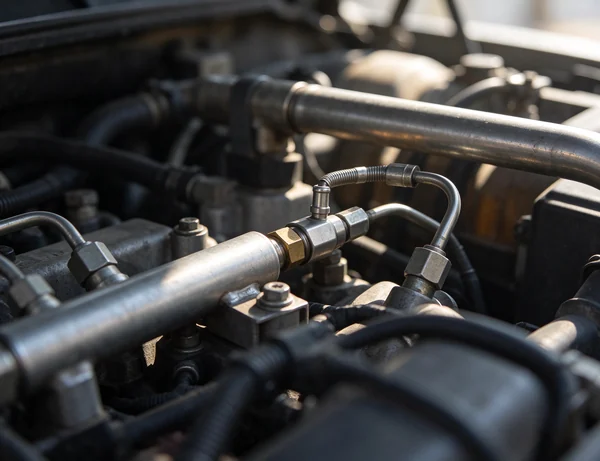
Connect a measuring container to the valve return with the engine warm and idling. A correct valve returns nothing, or a few drops. A steady stream at idle means the seat is not closed, and the valve is finished.
Then repeat at a steady mid load. Flow that only appears under load indicates a valve opening early, which is the same repair but a different symptom to explain to the driver.
Fit a new valve, torque it to the specified value and never reuse one from another engine. A valve that has lifted once carries the marks of that event on its seat, and those marks are the leak path.
After replacement, clear the pressure codes and run the engine at full load on a road test. If the deviation returns, the pump is the next suspect, not the valve.
| Measurement | Correct | Fault |
|---|---|---|
| Valve return at idle | None to a few drops | Continuous stream |
| Valve return at load | None | Flow rises with load |
| Rail pressure at full load | Tracks target | Short of target |
| Injector return per cylinder | Within limit | One cylinder excessive |
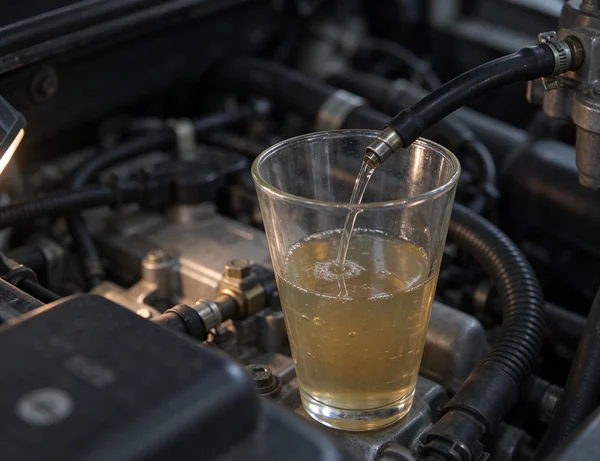
The valve opens because rail pressure exceeded its set point, and that happens for a reason: a stuck metering unit, a failed pressure sensor reading low, or a driver who keeps resetting a fault instead of repairing it. Replace the valve and fix the cause, or the new valve will lift too.
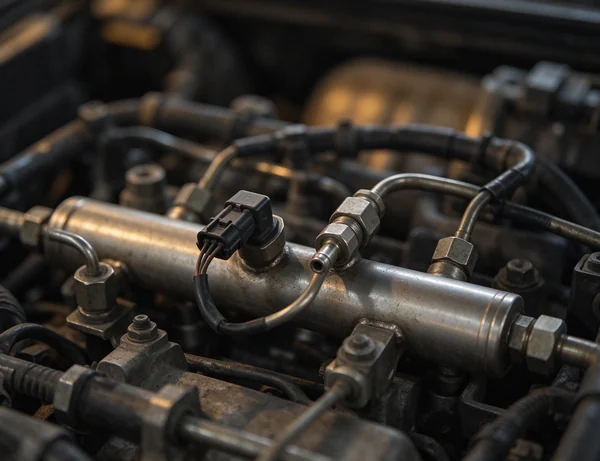
Valve set pressures and torque values are system specific. Confirm them in the OEM manual before replacement.
Please contact our team for personalized maintenance guidance and technical support for your Sinotruk HOWO, A7, or T7 trucks. We provide professional advice and recommendations for genuine parts to help ensure the reliable operation of your fleet.
Contact Us

Whenever your truck needs repair, you don’t know how to buy the right parts?
Don’t worry, we have already done this job for you. We have a complete parts list catalog for different models of each truck assembly, you can choose the right catalog to download and collect according to your truck configuration.
When you have a need, you can send us your required list based on this catalog.
Obtain the complete Howo truck parts catalog PDF file and pricing.
Contact Us
2001-2026 Shandong Yimo Auto Sales Co., Ltd. © All rights reserved.


