

Short answer: The NOx sensor is the only feedback the SCR system has, so when it drifts the whole strategy is built on a wrong number. A sensor that reads high when the catalyst is working triggers efficiency faults and derates; one that reads low hides a real failure and lets the system dose badly. Because the reading is plausible, drift is harder to catch than a dead sensor, and it is proven by cross checking, not by replacing the part.
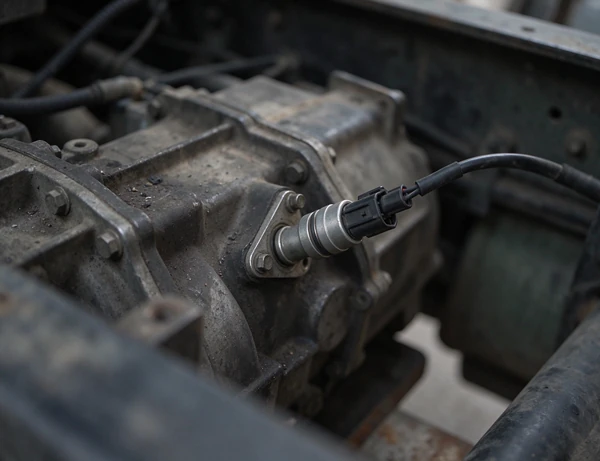
Drift usually appears after contamination: oil, coolant, soot or a failed seal letting exhaust past the sensor tip. It can also follow a sensor that has been fitted with a damaged seal or a wrong thread insert.
Unlike a failed sensor, which reports a fixed implausible value or nothing, a drifting sensor reports something believable, which is why the fault is chased in the catalyst first.
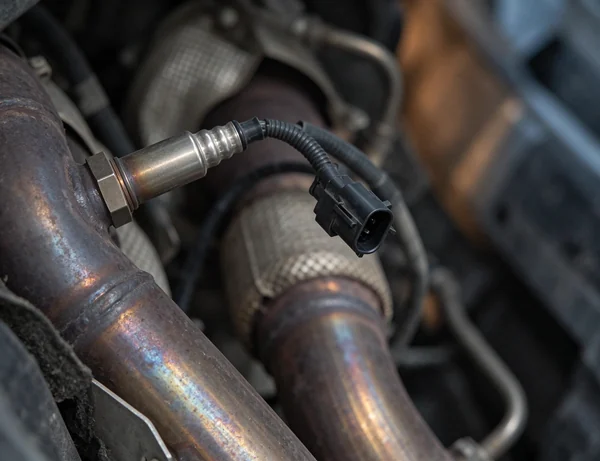
With a diagnostic tool, log the upstream and downstream NOx readings over a steady duty cycle that includes a dosing period. If the downstream value follows the upstream value too closely, the catalyst is not being credited for the conversion it is actually doing, and a drifting sensor is likely.
Then check reagent consumption against the NOx mass the engine should be producing. A system with a genuine catalyst failure usually consumes the reagent it is commanded to dose and still fails efficiency.
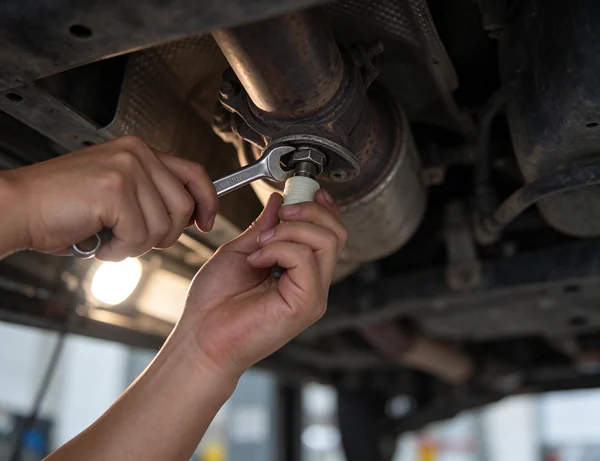
Use the specified sensor and the specified thread insert. A sensor fitted into a damaged or wrong insert does not reach the gas stream properly and reads low, which hides a real failure.
Do not reuse a sensor that has been removed from a failed system without checking it, and never clean a NOx sensor tip with anything abrasive.
| Evidence | Interpretation | Action |
|---|---|---|
| Downstream follows upstream closely | Sensor may be drifting | Cross check and consider replacement |
| Tip sooted or wet with oil | Contamination | Replace, find the source |
| Reading implausible or fixed | Sensor failed | Replace the sensor |
| Efficiency fault with normal dosing | Catalyst or sensor | Prove which before replacing |
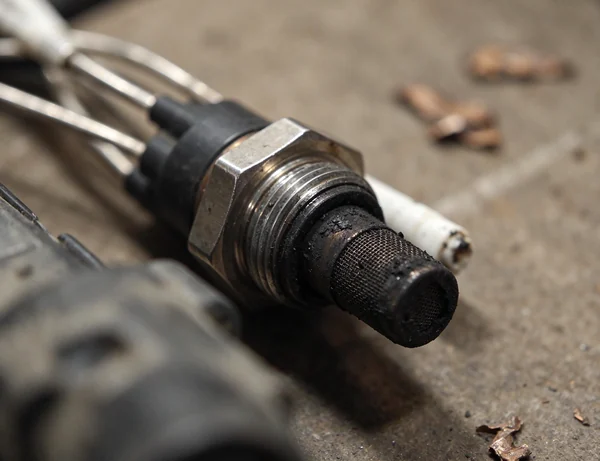
A sensor that has been contaminated by oil from the turbo or by coolant from a leaking gasket will drift again after replacement. Fix the contamination source at the same time or the new sensor fails within a few thousand kilometres.
After replacement, run a regeneration and then a dosing cycle and confirm the readings converge to values that make sense for the duty. Do not hand the truck back on a single idle reading.
Sensor types, part numbers and diagnostic procedures are system specific. Confirm them in the OEM manual.
Please contact our team for personalized maintenance guidance and technical support for your Sinotruk HOWO, A7, or T7 trucks. We provide professional advice and recommendations for genuine parts to help ensure the reliable operation of your fleet.
Contact Us

Whenever your truck needs repair, you don’t know how to buy the right parts?
Don’t worry, we have already done this job for you. We have a complete parts list catalog for different models of each truck assembly, you can choose the right catalog to download and collect according to your truck configuration.
When you have a need, you can send us your required list based on this catalog.
Obtain the complete Howo truck parts catalog PDF file and pricing.
Contact Us
2001-2026 Shandong Yimo Auto Sales Co., Ltd. © All rights reserved.


