

Short answer: A catalyst efficiency fault means the system believes the conversion across the catalyst is below what the model expects. The catalyst can be at fault, but far more often the cause is upstream: insufficient dosing, poor mixing, a blocked nozzle, a drifting sensor or a diluted solution. Replacing the catalyst without proving those four items produces a new catalyst and the same code.
The catalyst is poisoned by sulphur, oil and coolant, and it degrades with age, but it is also the most expensive single part in the exhaust system. The diagnostic order matters more here than anywhere else because the wrong decision is costly.
The proof is a comparison: correct dosing, correct solution, verified mixing and a trusted sensor should produce a large NOx reduction across the catalyst. If they do and the fault remains, the catalyst is genuinely at fault.
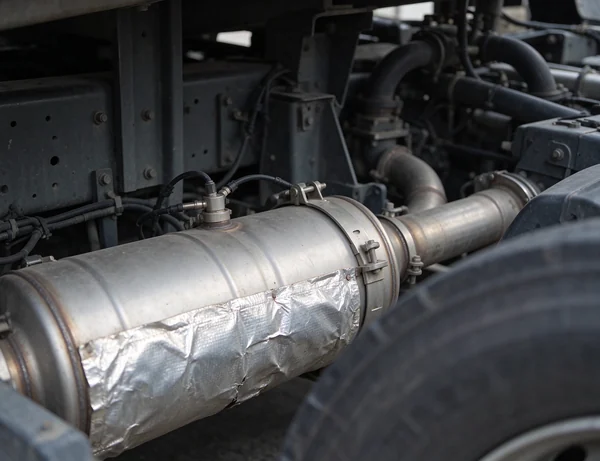
Confirm the dosing quantity matches the command, the solution concentration is within specification, the nozzle spray reaches the catalyst rather than the pipe wall, and the NOx readings are consistent between cold and hot.
Each of these is a cheap check. Together they account for most efficiency faults, and none of them requires removing the catalyst.
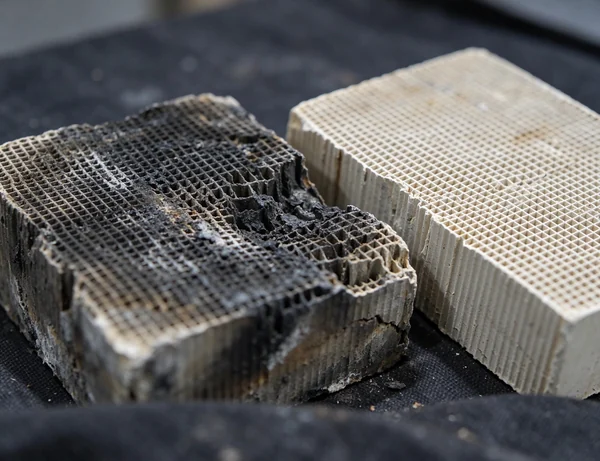
The catalyst is genuinely at fault when the upstream items are proven correct and the NOx reduction across it is still small. Two common causes are poisoning from coolant or oil and thermal damage from an uncontrolled regeneration.
Physical damage is visible on removal: a melted or cracked substrate, or a coating that is discoloured. A catalyst that has been poisoned by coolant often shows a white deposit at the inlet face.
| Evidence | Cause | Decision |
|---|---|---|
| Correct dosing, low NOx reduction | Catalyst degraded | Replace |
| White deposit at inlet face | Coolant poisoning | Replace and fix the coolant leak |
| Melted or cracked substrate | Thermal damage | Replace and check regeneration control |
| Dosing shortfall found | Dosing system | Repair, do not replace the catalyst |
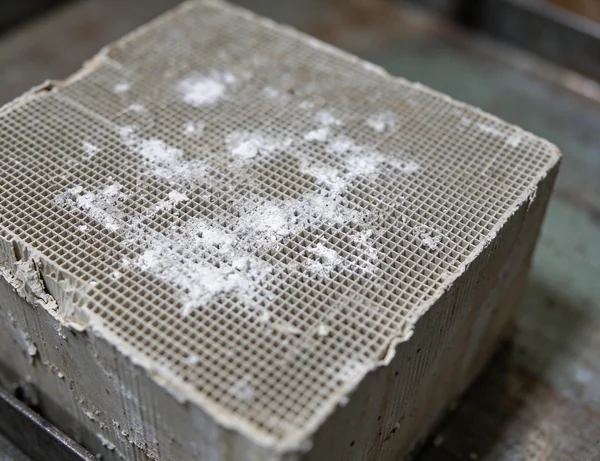
Clear the adaptations as the procedure requires, run a dosing cycle and confirm the efficiency monitor accepts the new catalyst. Then check the coolant and oil consumption over the first weeks, because a new catalyst will follow the same fate as the old one if the engine is still consuming either.
Keep the old catalyst until the repair is proven. If the fault returns, the history of the part and the readings are the evidence you need.
Catalyst part numbers, adaptation procedures and efficiency limits are system specific. Confirm them in the OEM manual.
Please contact our team for personalized maintenance guidance and technical support for your Sinotruk HOWO, A7, or T7 trucks. We provide professional advice and recommendations for genuine parts to help ensure the reliable operation of your fleet.
Contact Us

Whenever your truck needs repair, you don’t know how to buy the right parts?
Don’t worry, we have already done this job for you. We have a complete parts list catalog for different models of each truck assembly, you can choose the right catalog to download and collect according to your truck configuration.
When you have a need, you can send us your required list based on this catalog.
Obtain the complete Howo truck parts catalog PDF file and pricing.
Contact Us
2001-2026 Shandong Yimo Auto Sales Co., Ltd. © All rights reserved.


