

Short answer: A head gasket on an MC11 fails along one of three paths, and each one looks different from the cab. Gas into the water jacket pushes coolant out of the reservoir and leaves bubbles. Coolant into a cylinder produces white steam at the exhaust and a hard start. Gas between two adjacent cylinders drops compression on both and sets two misfire codes side by side. Identify the path with three cheap tests before you plan a cylinder head job.
The usual story starts with a driver reporting that the coolant level drops and the reservoir has bubbles after a climb. Sometimes the report is a cold start with white smoke that clears in a minute. Both are gasket symptoms, but they point at different failures and one of them can be repaired without removing the head.
The mistake to avoid is topping up the coolant and sending the truck back out. Combustion gas pressurises the system, the cap vents, the level falls again, and by the third top-up the head has been heat cycled enough that a warped deck turns a gasket job into a machining job.
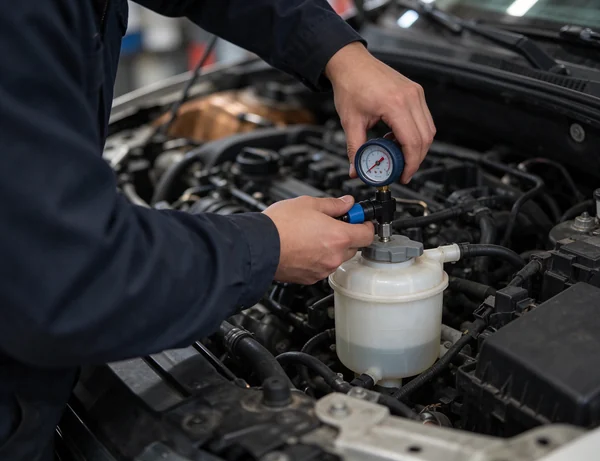
Pressurise the cooling system cold, with the engine stopped, to the cap rating and watch the gauge for fifteen minutes. A gauge that falls while the engine is cold and nothing is dripping outside means the leak is internal, and the two internal destinations are a cylinder or the oil circuit.
While the system is held under pressure, walk the head and block joint with a light and a mirror. A gasket that seeps externally usually shows a thin trail of coolant at the rear of the block or under the exhaust side where the joint is hardest to see.
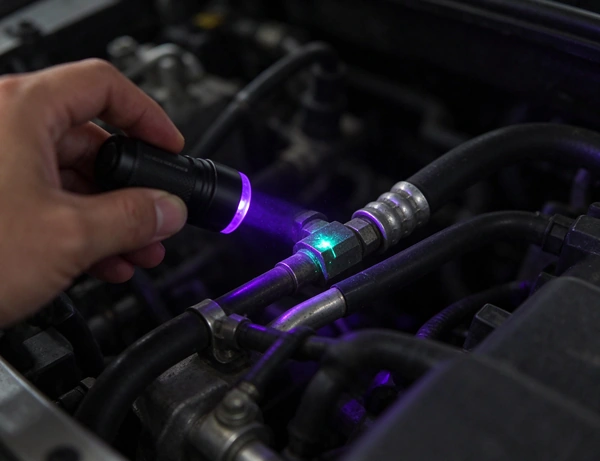
With the engine warm and running, a chemical gas detector held over the reservoir neck changes colour in the presence of combustion gas, and a bubble test shows a steady stream of small bubbles that never stop. Both tests have to be done with the engine at operating temperature and with a reasonable load, because a small breach only opens when the head is hot.
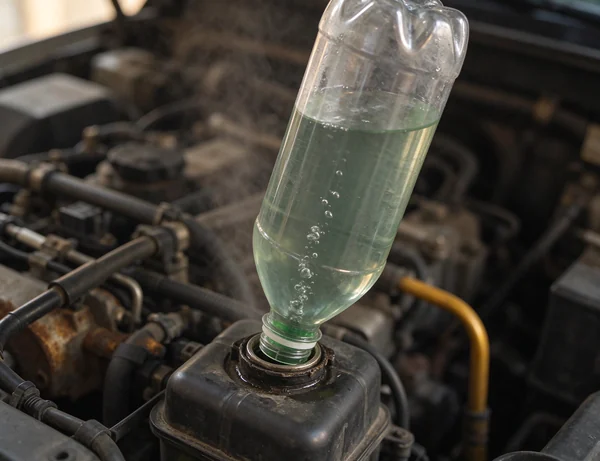
The bubble test is the one that is easy to do in the yard: fill a clear bottle with coolant, invert it over the reservoir neck and watch. Bubbles that continue for minutes are gas. Bubbles that stop after the system settles are air from a recent top-up.
| Test | Positive result | What it means |
|---|---|---|
| Cold pressure hold | Gauge falls with no external leak | Internal breach: cylinder or oil circuit |
| Bubble test, warm under load | Continuous small bubbles | Combustion gas in the jacket |
| Gas detector | Colour change within a minute | Confirms combustion gas |
| Coolant level after a climb | Falls and returns when cool | System being pressurised and venting |
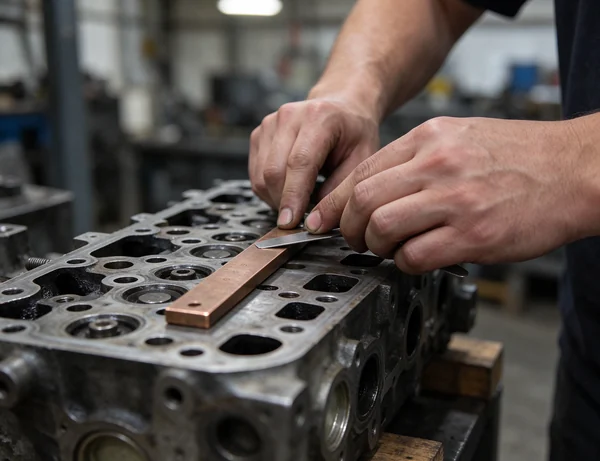
Two things decide whether this is a gasket replacement or a head repair. The first is the deck: check for flatness with a straight edge and a feeler gauge along both axes, and check for cracks between the injector bores and the water passages. The second is the history: an engine that has overheated once may have a warped deck, and fitting a new gasket to a warped deck will leak again in a few thousand kilometres.
Drain the coolant into a clean container and look at it. A grey or oily coolant tells you the oil circuit is involved, which means the oil cooler needs checking while the engine is open, not later.
Pressure ratings, torque sequences and flatness limits are engine specific. Use the OEM workshop manual for the engine number you are working on.
Please contact our team for personalized maintenance guidance and technical support for your Sinotruk HOWO, A7, or T7 trucks. We provide professional advice and recommendations for genuine parts to help ensure the reliable operation of your fleet.
Contact Us
Whenever your truck needs repair, you don’t know how to buy the right parts?
Don’t worry, we have already done this job for you. We have a complete parts list catalog for different models of each truck assembly, you can choose the right catalog to download and collect according to your truck configuration.
When you have a need, you can send us your required list based on this catalog.
Obtain the complete Howo truck parts catalog PDF file and pricing.
Contact Us
2001-2026 Shandong Yimo Auto Sales Co., Ltd. © All rights reserved.


