

Short answer: The exhaust temperature sensors decide whether a regeneration is allowed to start and whether it is progressing. If one reads low, implausible or intermittent, the ECU refuses to regenerate and the filter loads up until a blockage code appears. The workshop then sees a blocked DPF and a filter that will not clean, when the fault is one thermocouple in the exhaust. Read all four channels before touching the filter.
A regeneration is a controlled burn that needs the filter above a set temperature for a set time. The ECU uses the sensor readings to decide both, so a sensor reading the wrong value blocks the process at the first condition check.
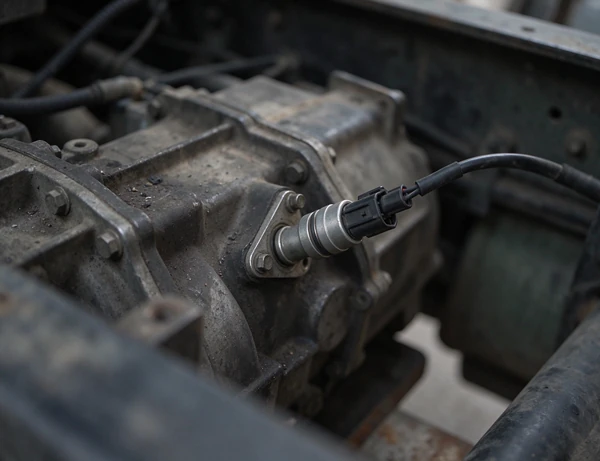
The common faults are an open circuit in the sensor or its wiring, a sensor shorted by heat, and a sensor that reads plausibly but too low because it has been contaminated or fitted in the wrong position.
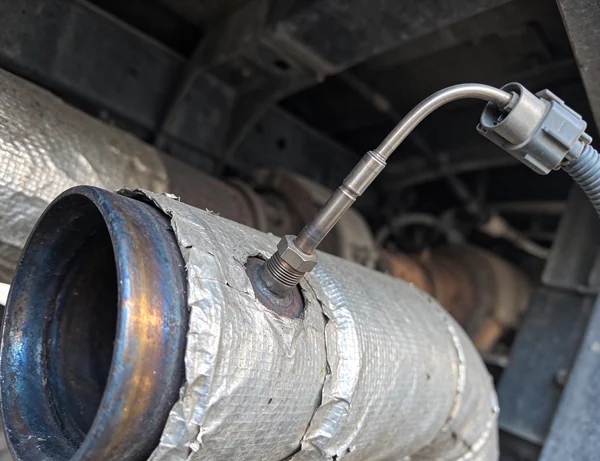
With the engine cold, all temperature channels should read close to ambient and close to each other. A channel reading far from ambient, or far from its neighbours, is a fault before the engine even starts.
Then run to operating temperature and compare again. Channels that track together are healthy, and a channel that lags or jumps is the one to investigate.
The ECU will not start a regeneration unless every temperature channel is plausible and within range. A single low reading makes the model believe the exhaust is too cold to burn soot safely, so it refuses.
If the sensor reads high, the ECU may over-estimate the burn and stop early, leaving soot in the filter. Both directions produce a filter that loads up while the driver sees no obvious fault.
| Reading | Meaning | Result |
|---|---|---|
| Fixed at ambient when hot | Open circuit | No regeneration allowed |
| Far above neighbours | Sensor or wiring fault | Regeneration aborted early |
| Erratic and jumping | Intermittent wiring | Regeneration aborts mid-cycle |
| All channels plausible | Sensors healthy | Look at the filter and dosing |
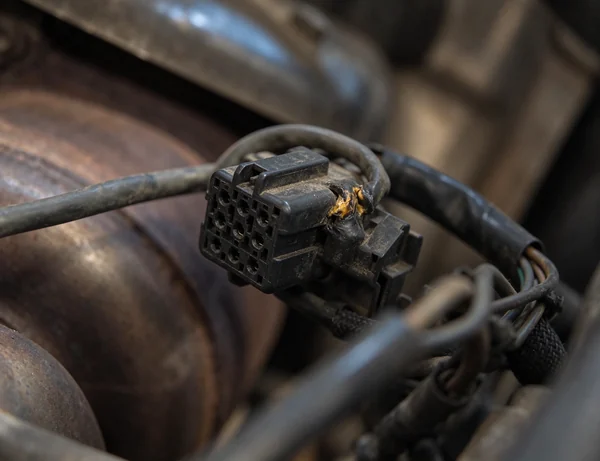
Fit the correct sensor type for that position, because positions are calibrated differently and swapping them produces implausible readings. Torque to the specified value and do not overtighten a sensor into a hot boss.
After replacement, run a forced regeneration only when the conditions allow it, and confirm the temperature rises as the model expects. A regeneration that cannot reach temperature has another cause, usually dosing or a restriction.
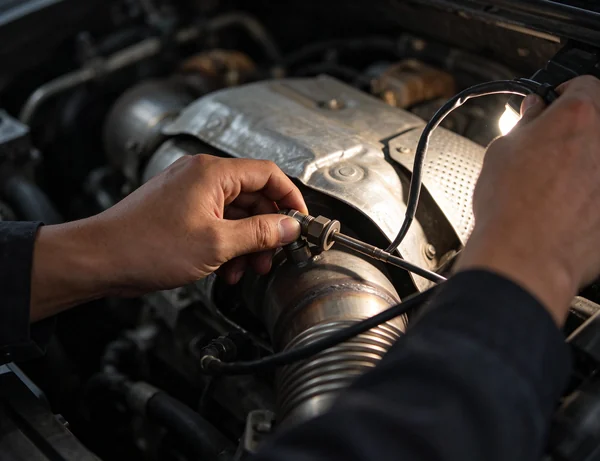
Sensor types, positions and regeneration conditions are system specific. Confirm them in the OEM manual.
Please contact our team for personalized maintenance guidance and technical support for your Sinotruk HOWO, A7, or T7 trucks. We provide professional advice and recommendations for genuine parts to help ensure the reliable operation of your fleet.
Contact Us

Whenever your truck needs repair, you don’t know how to buy the right parts?
Don’t worry, we have already done this job for you. We have a complete parts list catalog for different models of each truck assembly, you can choose the right catalog to download and collect according to your truck configuration.
When you have a need, you can send us your required list based on this catalog.
Obtain the complete Howo truck parts catalog PDF file and pricing.
Contact Us
2001-2026 Shandong Yimo Auto Sales Co., Ltd. © All rights reserved.


