

Short answer: The automated manual transmission learns the clutch bite point and the full travel of the release mechanism by running a calibration routine. When the routine aborts, the transmission usually refuses to shift properly afterwards, and the driver is left with a truck that will not pull away smoothly. The causes are mechanical: a release mechanism that cannot reach its limits, a worn clutch, air in the hydraulic system, or a sensor whose reference has drifted.
The calibration is a measurement, not a repair. If the mechanism cannot physically reach the positions the routine expects, no amount of retrying will make it complete.
Read the abort reason first. The control unit usually reports which limit was not reached, and that points directly at the mechanical fault.
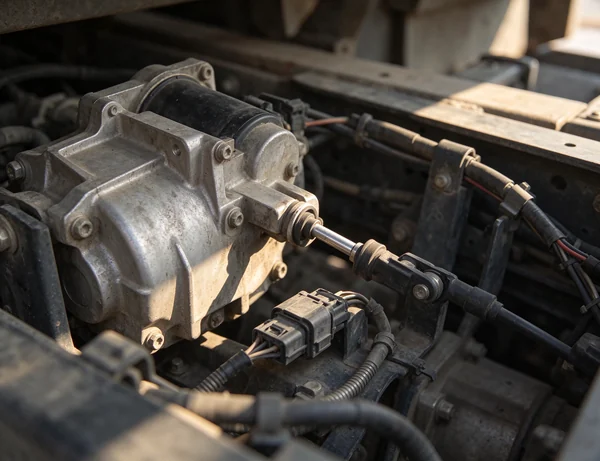
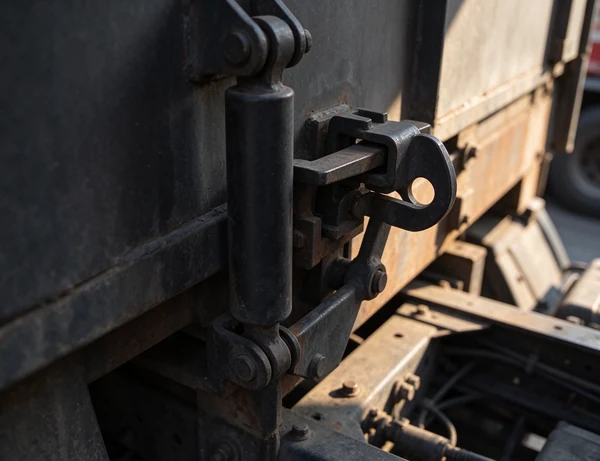
Check clutch release travel, the hydraulic system for air, and the release bearing for binding. Then confirm the clutch itself is within its wear window, because a clutch at the end of its life cannot produce the travel the routine expects.
Battery voltage matters too: a calibration started with a low battery can abort when the actuator draws current.
A calibration cannot compensate for a worn clutch beyond its range, a leaking actuator or a binding release mechanism. Every retry adds heat and wear without changing the outcome.
Where a sensor reference has drifted, replacing the sensor is often the only reliable answer, because the routine will keep learning the same wrong value.
| Abort pattern | Likely cause | Action |
|---|---|---|
| Aborts immediately | Actuator or travel limit | Check travel and actuator |
| Aborts after moving | Clutch wear limit | Inspect clutch |
| Aborts when hot | Hydraulic or seal fault | Pressure test and seal check |
| Accepts, then poor shifts | False bite point | Mechanical check, then recalibrate |
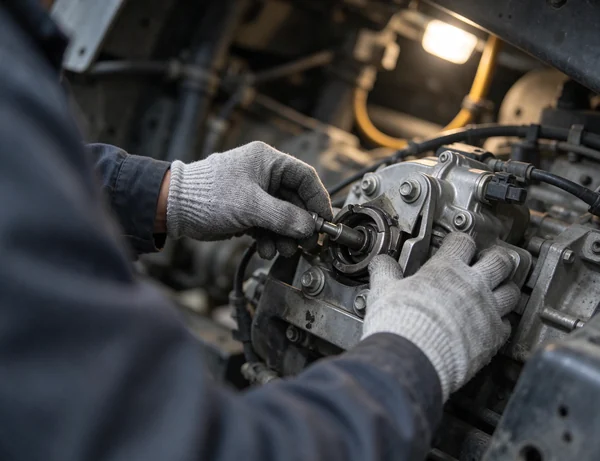
After a successful calibration, drive the truck through loaded starts, a hill start and several upshifts and downshifts. Smooth engagement is the real proof, not a completed routine.
If engagement is harsh, do not simply recalibrate again. Check the mechanism, because a second calibration on a faulty mechanism usually produces a worse result.
Calibration procedures and limits are transmission specific. Follow the OEM diagnostic procedure.
Please contact our team for personalized maintenance guidance and technical support for your Sinotruk HOWO, A7, or T7 trucks. We provide professional advice and recommendations for genuine parts to help ensure the reliable operation of your fleet.
Contact Us

Whenever your truck needs repair, you don’t know how to buy the right parts?
Don’t worry, we have already done this job for you. We have a complete parts list catalog for different models of each truck assembly, you can choose the right catalog to download and collect according to your truck configuration.
When you have a need, you can send us your required list based on this catalog.
Obtain the complete Howo truck parts catalog PDF file and pricing.
Contact Us
2001-2026 Shandong Yimo Auto Sales Co., Ltd. © All rights reserved.


