banner-news1
REPAIR FAQ
Back

HOWO T7H Fan Clutch Not Engaging: Air, Sensor or Clutch

Short answer: if the fan on a HOWO T7H never locks up, the symptom will be temperature that climbs whenever the truck is working slowly and settles as soon as road speed rises — because at speed the ram air is doing the cooling the fan should be doing. Before replacing the viscous clutch, prove two things: that air is reaching the clutch, and that the signal telling it to engage is arriving. A blocked air line, a failed solenoid or a sensor that never calls for engagement all produce the same symptom as a dead clutch, and all are cheaper.

The fan on this engine is driven through a clutch that engages on command rather than on temperature alone. That means the diagnosis is half pneumatic and half electrical, and the mechanical unit is the last thing to suspect rather than the first.
QUICK DIAGNOSIS — when the temperature climbs
  1. 1Hot at low speed and normal at highway speed — the fan is not engaging. Air supply, solenoid or signal.
  2. 2Hot all the time, even at speed — not the fan. Radiator air side blocked, thermostat, or coolant flow.
  3. 3Fan runs continuously and the engine is overcooled — clutch stuck engaged; fuel consumption rises and the fan roars at idle.
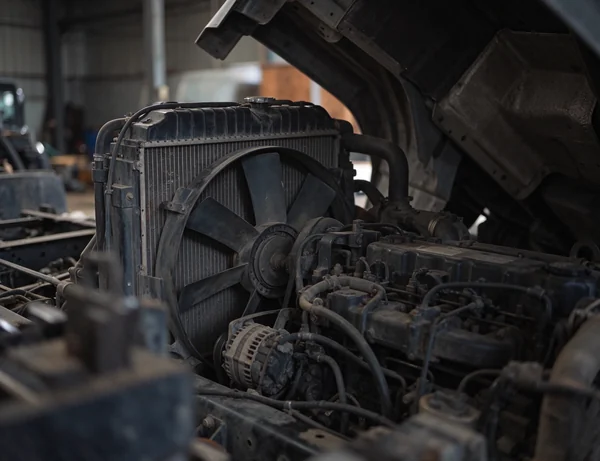
HOWO T7H cab tilted forward exposing the cooling fan and radiator assembly in a workshop

Cab tilted, fan exposed. This is where you can watch the clutch engage and hear it lock.

1. Watch the fan before you test anything

Start the engine cold and watch the fan from a safe distance while a helper brings the temperature up. Three behaviours tell you three different things:
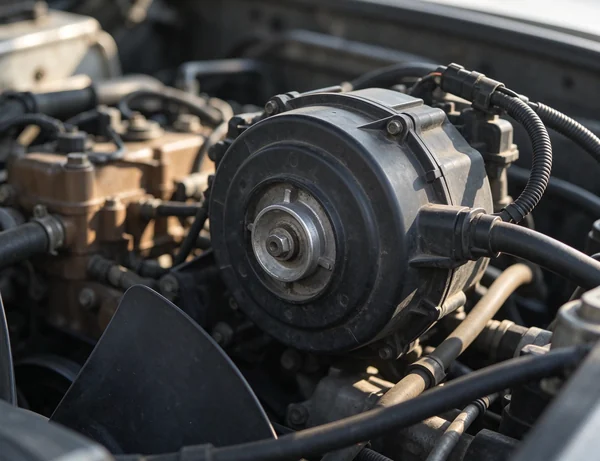
  • Fan turns slowly and never speeds up. The clutch is not engaging — continue with the air and signal tests below.
  • Fan turns fast from the first second and stays fast. The clutch is stuck engaged. That is not an overheating fault but it explains high fuel use and constant fan noise.
  • Fan speeds up briefly then drops back. The clutch is engaging and the control is releasing it too early — check the sensor and the control strategy.

2. Test the air side first

  1. Find the clutch control line and disconnect it at the clutch. With the engine running and the system at pressure, a helper operates the control; you watch for air at the open line. No air here means the fault is upstream.
  2. Check the supply at the solenoid. If air does not reach the clutch, work backwards: solenoid, then the line, then the reservoir supply. A pinched or heat-hardened line is common on trucks that have had the cab tilted many times.
  3. Test the solenoid by hand. Most are simple on/off valves. If applying air directly at the clutch makes the fan lock, the clutch is good and the fault is the valve or the signal.
  4. Inspect the line for oil and water. A line that carries oil from a tired compressor will swell the seals inside the clutch and produce a slow, lazy engagement that looks like a worn clutch.
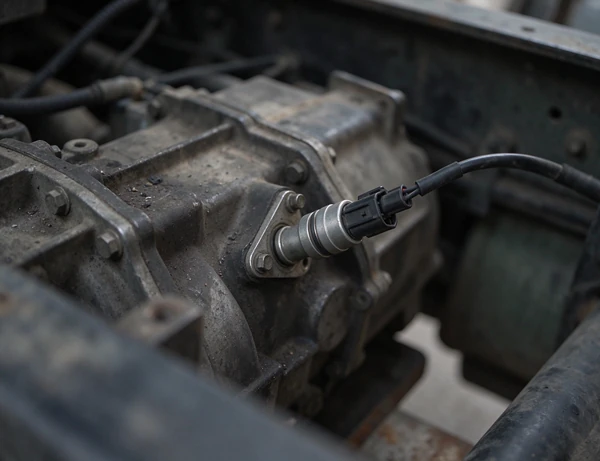
Fan clutch assembly on a HOWO T7H with the air control line and sensor connector visible

Clutch with its air line and signal connector. Prove air and signal here before condemning the unit.
Never reach into a running fan. Even at idle the blades are invisible when moving and the clearance to the radiator is small. Do all fan checks with the engine off and the system pressurised, or from a distance with the engine running and your hands outside the guard.

3. The signal side

Test Normal result If abnormal
Coolant temperature sensor reading on the tool Follows the gauge closely Sensor or wiring; the clutch never gets the call
Control voltage at the solenoid Switches when the tool commands the fan Harness, relay or ECU output
Air pressure at the clutch inlet Full system pressure when engaged Line, solenoid, or a reservoir that is not holding pressure
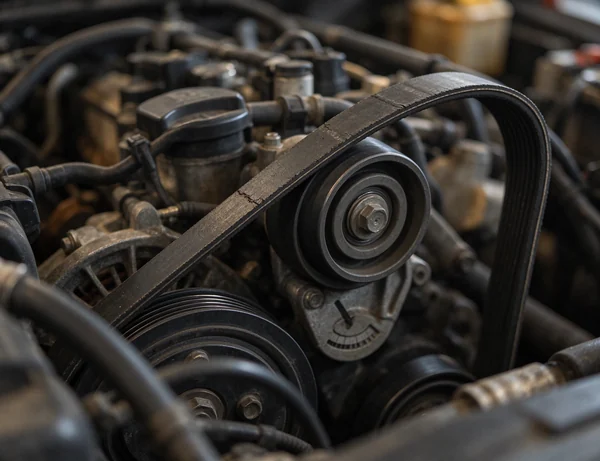
Serpentine belt and tensioner on a HOWO T7H engine showing belt tracking and tensioner pointer

While you are here: check the belt and the tensioner. A slipping belt also takes the fan and the alternator down together.

4. Why a new clutch sometimes fixes nothing

Because the fault that caused the old one to stop engaging is still there. A blocked line that starved the clutch of air, or oil from the compressor that swelled its seals, will do the same to a new unit within a season. When a clutch is replaced, the line should be blown through and the air dryer checked, otherwise the repair is cosmetic.

5. Questions drivers ask most

Can I drive with a fan that never engages?
At highway speed, usually yes, because ram air carries the load. In traffic, on a climb, or with a heavy load at low speed, no — the temperature will climb with no way to bring it down.
Does the fan clutch affect fuel consumption?
Yes, and visibly. A fan stuck engaged can add a measurable load at cruising speed. A fan that never engages saves fuel and costs you an engine, so neither extreme is acceptable.
How do I know if the clutch is viscous or pneumatic?
Follow the hardware: a pneumatic clutch has an air line and a solenoid; a viscous unit has no air connection and engages by internal fluid coupling. The test procedure differs, but the “air first, signal second” logic applies to both.
What else causes overheating at low speed only?
A radiator whose air side is blocked with dust and insects, or a shroud that has been damaged so the fan pulls air around instead of through the core. Both are visible and both are cheaper than a clutch.
Need a fan clutch, fan blade, solenoid or belt and tensioner for your T7H? Send the engine number and we will confirm the correct assembly. Send your request

Fan control strategies, engagement temperatures and clutch part numbers vary by engine build and market. Confirm them in the OEM manual for your chassis.

Need Help or Want More Detailed Maintenance Information?

Please contact our team for personalized maintenance guidance and technical support for your Sinotruk HOWO, A7, or T7 trucks. We provide professional advice and recommendations for genuine parts to help ensure the reliable operation of your fleet.

Contact Us
More Articles

Howo Sinotruk Parts & Catalog PDF

Whenever your truck needs repair, you don’t know how to buy the right parts?

Don’t worry, we have already done this job for you. We have a complete parts list catalog for different models of each truck assembly, you can choose the right catalog to download and collect according to your truck configuration.

When you have a need, you can send us your required list based on this catalog.

Obtain the complete Howo truck parts catalog PDF file and pricing.

Contact Us
Hot-Selling Replacement Parts

whatsapp-4