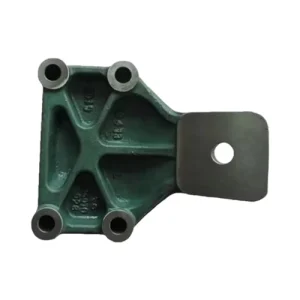
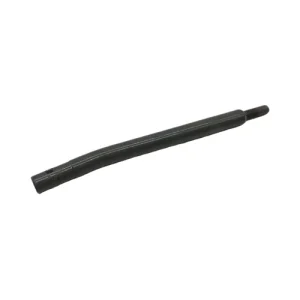
Short answer: when a HOWO T7H only overheats under a full load and cools down the moment the driver lifts off the throttle, the engine is usually fine and the cooling package is not. In field service the order of causes is almost always the same: a radiator core with blocked air passages, a thermostat that opens late or never reaches full lift, and air trapped in the circuit after a top-up. Work the six checks below in order and most trucks are diagnosed before a single part is removed.
This guide is written for the MC11 and MC13 powered T7H tractors used on long-haul and tipper work, and the same logic applies to T5G and TX MAX tractors with the same cooling layout. It deliberately puts the cheap checks first.
QUICK DIAGNOSIS — the three causes that account for most cases
- 1Radiator air side blocked. Dust, chaff, insects and oil film sit between the fins. Coolant flow is perfect, but the core cannot dump heat into air.
- 2Thermostat not fully open. It cracks open early enough to stop the gauge pegging, so the fault hides until the truck is loaded.
- 3Air pocket or low system pressure. After a top-up or a hose repair, air stays in the head and the circuit runs below its design pressure.
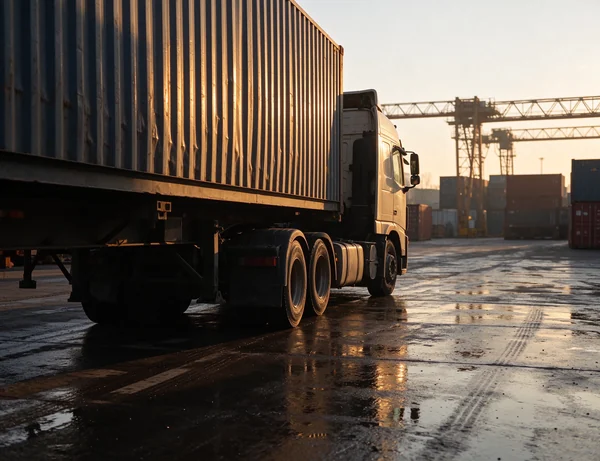
Overheating that only appears under a full load is a heat rejection problem, not an engine problem.
1. Read the symptom properly before opening the bonnet
Two trucks can both show 100 °C on the gauge and need completely different repairs. Write down three readings before you touch anything, because they separate a cooling fault from a combustion fault:
- Idle or light load: does the temperature settle back to normal within about two minutes of stopping?
- Loaded climb: how fast does it climb, and does it stop climbing at a ceiling value or keep going?
- Cool-down: does it drop when the fan cuts in, or only when the engine is switched off?
A temperature that rises quickly, plateaus, and drops as soon as the fan engages points to the air side. A temperature that keeps climbing regardless of fan speed and is accompanied by a hard upper hose and bubbles in the expansion tank points to combustion gas entering the circuit. Those are different jobs, and mixing them up is how a head gasket gets replaced on a truck that only needed a radiator wash.
2. How the T7H cooling circuit is laid out
The circuit is conventional but has three features worth remembering when you diagnose it:
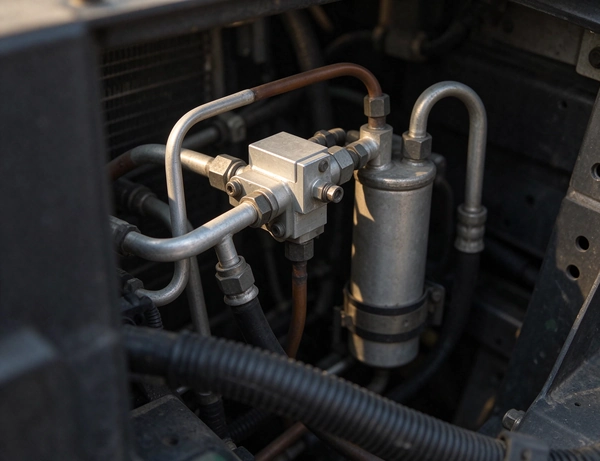
- A pressurised expansion tank with a pressure cap. The cap holds roughly 0.9–1.0 bar on most T7H builds, which raises the boiling point and stops cavitation at the pump. A cap that no longer holds pressure lets the coolant boil locally inside the head even when the gauge looks acceptable.
- A wax-pellet thermostat that starts to open around 82 °C and should be fully open by the mid-90s. A partly stuck thermostat is the most common “invisible” fault on this engine family.
- A viscous or electronically controlled fan with a shroud. The fan only matters above a certain engine speed and heat load, which is exactly why the fault appears under load and not in the yard.
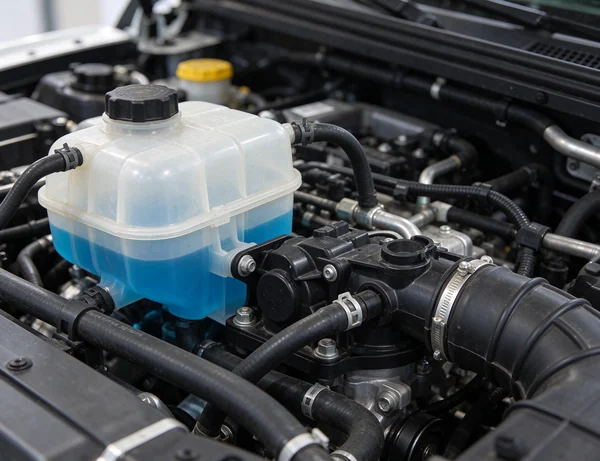
Expansion tank and pressure cap. A cap that will not hold pressure lets coolant boil locally inside the head.
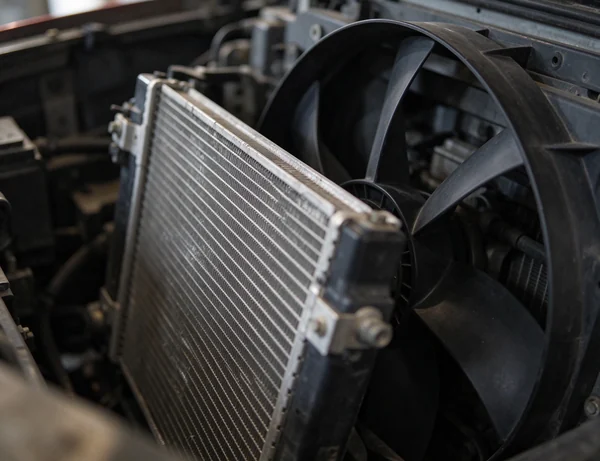
The radiator and fan shroud seen from the engine side. Look at the fin depth, not just the surface.
3. The six-step check order
- Cold baseline. With the engine cold, check the level against the cold mark and look for a wet seam, a chalky residue or a swollen hose. Then pressure test the system at its cap rating and hold it for 30 minutes. A slow, steady pressure drop with no external leak means gas is getting in or coolant is going out through the exhaust — stop here and treat it as a combustion-side fault.
- Air side of the core. Shine a torch through the core from the engine bay and count how much light comes through. If you cannot see light across most of the face, the fins are bridged with dust or oil film. Blow compressed air backwards through the core first, then a low-pressure water rinse from the same direction. Never bend the fins with a high-pressure jet held close.
- Thermostat behaviour. Compare the upper and lower hose temperatures with an infrared gun while the engine warms from cold. The upper hose should stay cold until the thermostat starts to open, then rise sharply while the lower hose stays noticeably cooler. If both hoses warm up together from a cold start, the thermostat is leaking past its seat.
- Water pump and belt. Check belt tension and pulley alignment, then look for a weeping seal, coolant trails behind the pulley, or bearing rumble with the belt off. A pump that still turns can still have a corroded impeller; that only shows on strip-down.
- Airflow control. With the engine hot and the AC on, confirm the fan engages. On viscous fans, check for a silicone leak at the hub and for a fan that freewheels when hot. Check the shroud-to-fan clearance and any missing baffles, because air that bypasses the core is air that never cooled anything.
- Combustion side, only now. Bubbles in the tank at idle, a pressure reading that climbs faster than the cap rating, or a radiator that smells of exhaust confirm gas ingress. At this point the head gasket, liner seals and EGR cooler become the suspects.
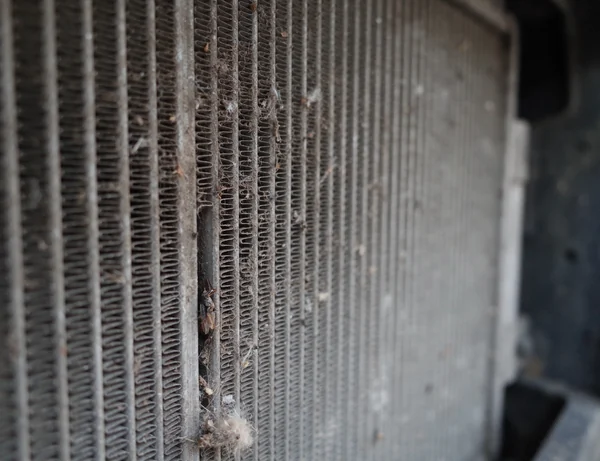
Fins bridged by dust and fibre. Coolant flow is fine here — the air side is doing the damage.
4. Symptom to cause, in one table
5. Where money gets wasted
Do not start with the water pump. A weeping pump is obvious and worth replacing, but a dry pump that turns freely is rarely the reason a loaded truck overheats. Replacing it before washing the core is the single most common wasted repair on this engine.
- Topping up instead of bleeding. Adding coolant without opening the bleed point at the highest part of the circuit leaves air in the head, and the gauge then reads high while the block runs dry in places.
- Using tap water or a mismatched coolant. Hard water scales the core from the inside; mixing incompatible coolant types creates gel that plugs the heater matrix and the EGR cooler.
- Ignoring a half-engaged fan. A viscous fan that only half locks gives enough airflow to satisfy a yard test and not enough for a climb.
- Replacing the radiator for an external blockage. A core that is blocked on the air side and clean inside is a wash, not a part.
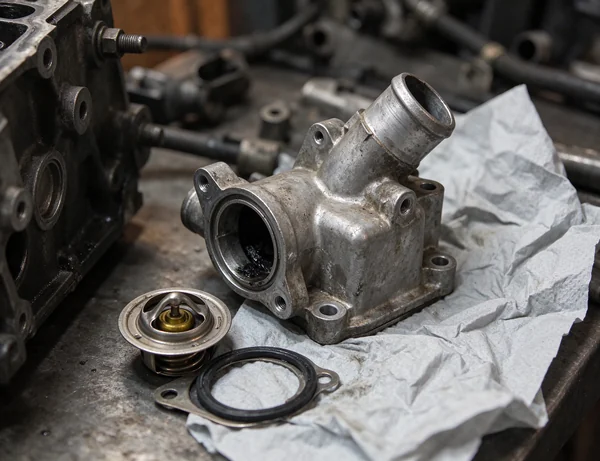
Thermostat housing and seal on the bench. Confirm the opening temperature before condemning the part.
6. Repair or replace
Rule of thumb: if the core passes the torch test, the thermostat opens fully, the system holds pressure cold, and the fan locks up when hot, the problem is no longer in the cooling package. Stop buying parts and move to the combustion side.
7. Questions drivers ask most
Why does my T7H only overheat with a trailer on?
Because heat rejection scales with engine load while airflow does not. A partly blocked core or a thermostat that opens late has enough margin at 40 % load and none at 100 %. The fault was there in the yard — the load simply exposed it.
Can I drive without the thermostat to get home?
It will stop the gauge climbing, but it also removes the restriction that keeps coolant in the block long enough to cool the liners, and it slows warm-up. Treat it strictly as a limp-home measure and fit a correct thermostat before the truck goes back to work.
Which coolant should a HOWO T7H run?
Use the coolant specified in the workshop manual for your build year — typically a nitrite-free OAT or hybrid OAT premix at the recommended concentration. Never mix two different chemistries, and never top up a loaded cooling system with straight tap water.
How do I know it is the head gasket and not the radiator?
Three signals: pressure in the system rises beyond the cap rating while the engine idles, bubbles keep appearing in the expansion tank after full bleeding, and the coolant smells of exhaust. A blocked core gives none of those.
Need the exact thermostat, pump, cap or radiator for your T7H build? Send the chassis number and we will match the part number.
Send your requestValues quoted here are typical for the MC11/MC13 T7H family and are given as diagnostic reference points, not as a substitute for the OEM workshop manual. Always confirm capacity, pressure rating and torque figures against the manual for your specific chassis.