

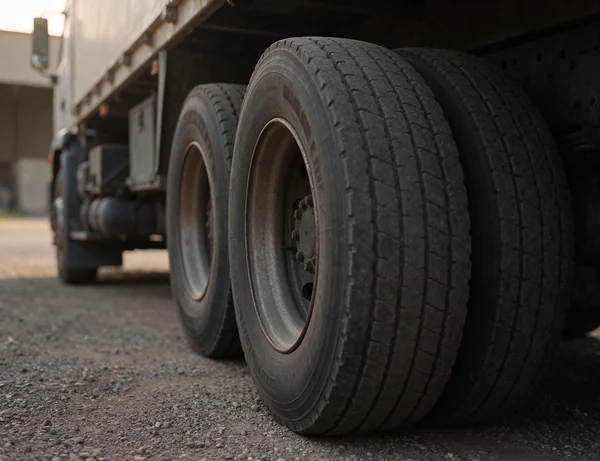
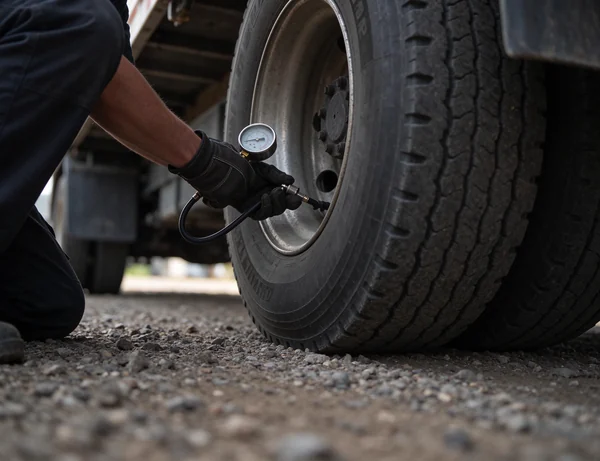
Short answer: on a dual-tyre axle, the two tyres in a pair must be matched in size and pressure, and most failures blamed on the tyres come from unequal pressure. Ten psi difference between the two tyres in a pair puts most of the load on the one with more air, and that tyre then wears, overheats and eventually fails while the other still looks new. Measure cold, fit a matched pair, and check the gap between the tyres for stones and rubbing.
Dual tyres exist because the axle rating exceeds what a single tyre can carry. The consequence is that the pair must share the load, and load sharing depends on pressure, diameter and condition. When one of those differs, the load does not share and the weaker tyre works outside its design.
| Problem | Effect on the pair | Correction |
|---|---|---|
| Pressure difference inside the pair | The higher-pressure tyre carries more load and runs hotter | Set both to specification when cold, and find out why one lost air |
| Diameter difference from wear or a retread | The larger tyre scuffs and drags; on a drive axle it fights the differential | Fit matched casings and tread depths within the specified tolerance |
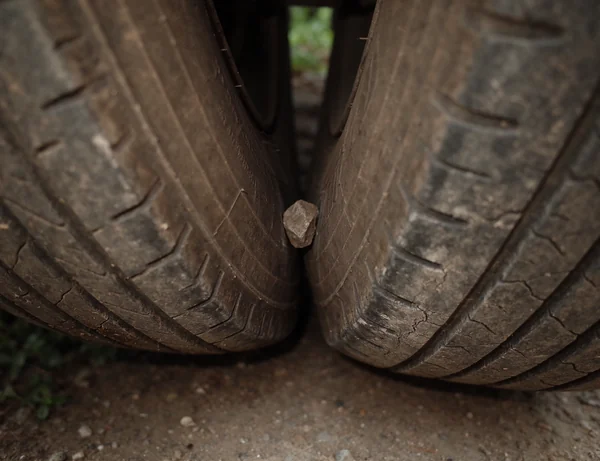
| Tyres touching | Sidewall damage from the inside, invisible until failure | Correct the pressure, check the axle load, inspect the sidewalls |
| Debris between the tyres | Cuts and punctures in the inner sidewall | Clear the gap at every check and fit mud flaps that work |
| Mixed tread patterns on one axle | Uneven traction and wear, worse in the wet | Match patterns axle by axle |
Under-inflation is the single largest cause of truck tyre failure, and on a dual axle it is worse because the partner masks the problem. A tyre that is 20 percent under-inflated flexes far more per revolution, and the heat that generates is what destroys the casing. The driver feels nothing until the tyre fails, because the other tyre in the pair is carrying the load and the truck still tracks straight. That is the reason pressure checks are a daily item on a working truck rather than a weekly one.
Pressure specifications, diameter tolerances and axle load ratings are build- and tyre-specific. Confirm them in the OEM manual and the tyre manufacturer’s data book.
Please contact our team for personalized maintenance guidance and technical support for your Sinotruk HOWO, A7, or T7 trucks. We provide professional advice and recommendations for genuine parts to help ensure the reliable operation of your fleet.
Contact Us

Whenever your truck needs repair, you don’t know how to buy the right parts?
Don’t worry, we have already done this job for you. We have a complete parts list catalog for different models of each truck assembly, you can choose the right catalog to download and collect according to your truck configuration.
When you have a need, you can send us your required list based on this catalog.
Obtain the complete Howo truck parts catalog PDF file and pricing.
Contact Us
2001-2026 Shandong Yimo Auto Sales Co., Ltd. © All rights reserved.


