

Short answer: Automated manual transmissions shift with air, using cylinders for gear selection, shift and range change. Seals in these cylinders wear, and the first sign is not a fault code but air consumption: the compressor runs more often, shifts become slow, and eventually a shift is refused because the cylinder cannot reach its commanded position in time.
Because the transmission is electronic, the fault is often blamed on the control unit or the software. In practice most slow shift complaints trace to a leaking cylinder, a restricted line or a worn seal kit.
The test is a leak-down check on the cylinder ports with the transmission stationary and the air system charged.
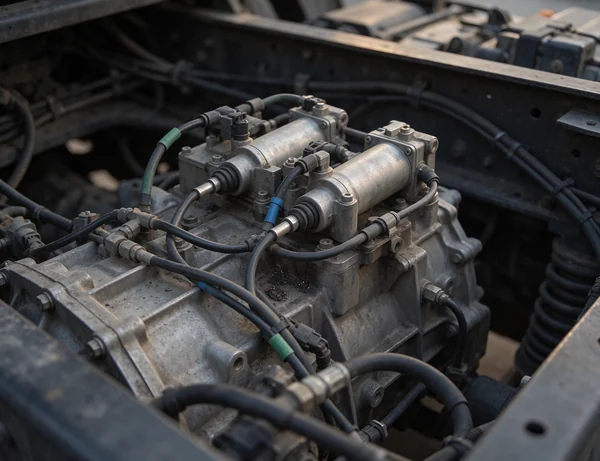
With the engine off and the system charged, listen at each cylinder and at the valve block. A continuous hiss is a leak, and it will be audible within a minute on a quiet workshop floor.
Then compare shift times. A cylinder with worn seals still shifts, but it takes longer, and the control unit compensates until it cannot.
Cylinder seals wear with contaminated air, and bores score when debris passes. A scored bore will not hold new seals for long, so inspect the bore before fitting a seal kit.
Restricted or kinked lines produce the same slow shift symptom without any leak, so check line condition as well as pressure.
| Symptom | Cause | Action |
|---|---|---|
| Hiss at cylinder, engine off | Seal or valve leak | Seal kit or cylinder |
| Slow shift, no leak | Restricted line | Replace or clean line |
| Shift fails under load only | Worn seal, low force | Cylinder overhaul |
| Repeated seal failure | Scored bore or dirty air | Replace cylinder, service dryer |
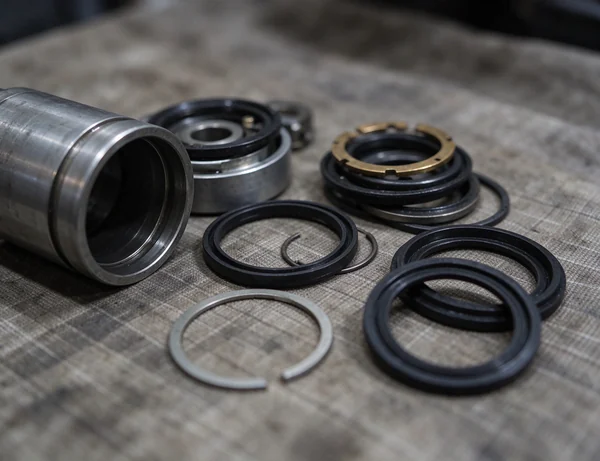
After repair, run a full shift cycle through every gear with the truck stationary, then a loaded road test. Confirm shift times and air consumption returned to normal, and check for fault codes that were stored during the fault.
Clear codes only after the repair is verified, so the history remains available if the fault returns.

Cylinder and seal part numbers are transmission specific. Confirm them in the OEM manual.
Please contact our team for personalized maintenance guidance and technical support for your Sinotruk HOWO, A7, or T7 trucks. We provide professional advice and recommendations for genuine parts to help ensure the reliable operation of your fleet.
Contact Us

Whenever your truck needs repair, you don’t know how to buy the right parts?
Don’t worry, we have already done this job for you. We have a complete parts list catalog for different models of each truck assembly, you can choose the right catalog to download and collect according to your truck configuration.
When you have a need, you can send us your required list based on this catalog.
Obtain the complete Howo truck parts catalog PDF file and pricing.
Contact Us
2001-2026 Shandong Yimo Auto Sales Co., Ltd. © All rights reserved.


