

Short answer: A charge air leak between the turbo and the inlet manifold loses boost, raises exhaust temperature and produces a whistle that drivers describe as a turbo fault. The leak is usually a split hose, a loose clamp or a cracked intercooler end tank, and it is found by pressurising the system with the engine stopped. This test takes twenty minutes and it prevents a turbocharger being replaced for a hose.
The symptoms are consistent: full load power loss, black smoke on acceleration, a whistle that changes with boost and sometimes a boost pressure code. The turbo may be working perfectly and simply be unable to deliver pressure into a system that leaks.
Because the leak is on the pressure side, it does not show as an oil leak or a noise at idle. It only appears when boost is high, which is why a road test with live data is part of the diagnosis.
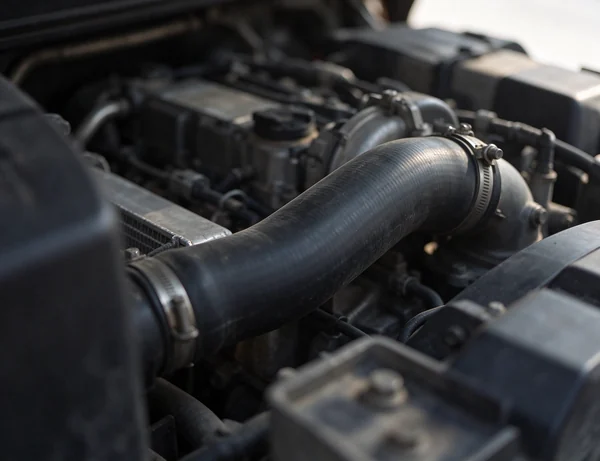
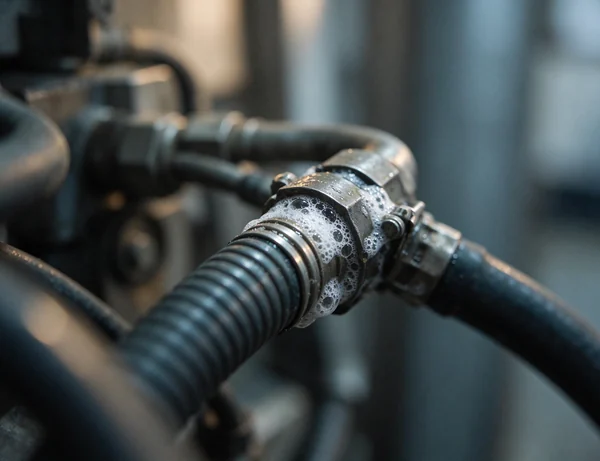
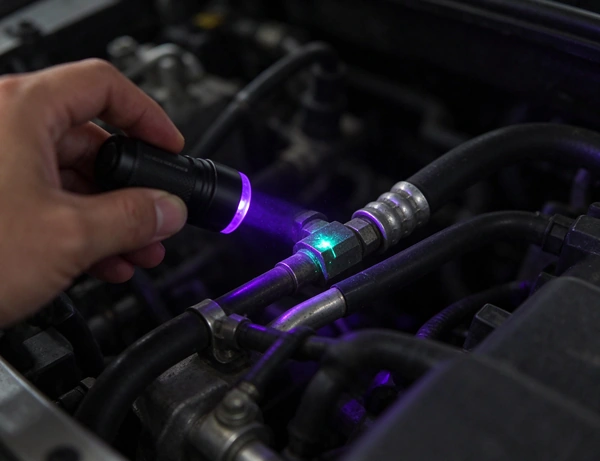
With the engine stopped, remove the intake pipe at the manifold and fit a pressure test cap. Pressurise to a low value, well below operating boost, and listen and look. Soapy water at every joint shows a leak as bubbles within seconds.
Do not pressurise above the value in the manual, and do not use full workshop air pressure. A charge air system that is over-pressurised can split an intercooler core, turning a cheap repair into an expensive one.
Hoses fail at the ends where they are clamped, and they fail from the inside out when oil from the turbo softens the rubber. Clamps fail when they are overtightened and cut the hose, or when they are left loose after a service.
Intercooler end tanks crack at the mounting points and at the inlet, and the core splits where it has been over-pressurised or frozen. A core with an oil film on the outside is almost always leaking.
| Finding | Most likely | Action |
|---|---|---|
| Bubbles at a hose end | Split hose or loose clamp | New hose, correct clamp |
| Bubbles at intercooler tank | Cracked end tank | Replace or repair the intercooler |
| Oil film on the core | Core split | Replace the intercooler |
| No leak found, boost still low | Turbo or control fault | Check actuator and compressor |
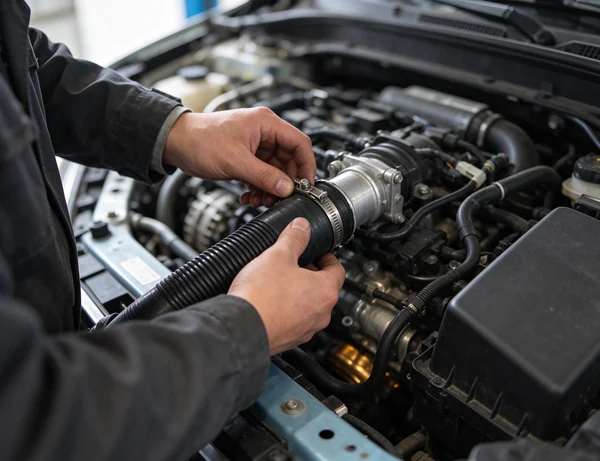
Refit with clean joints, correct clamps and no twisting. A hose that is fitted twisted will fail at the same point again, usually within a month.
Run a road test at load and confirm boost reaches target, then check the exhaust for black smoke. A leak that has been present for weeks leaves soot in the manifold and may need a regeneration cycle afterwards.
Test pressures and hose part numbers are engine specific. Confirm them in the OEM manual before pressurising.
Please contact our team for personalized maintenance guidance and technical support for your Sinotruk HOWO, A7, or T7 trucks. We provide professional advice and recommendations for genuine parts to help ensure the reliable operation of your fleet.
Contact Us
Whenever your truck needs repair, you don’t know how to buy the right parts?
Don’t worry, we have already done this job for you. We have a complete parts list catalog for different models of each truck assembly, you can choose the right catalog to download and collect according to your truck configuration.
When you have a need, you can send us your required list based on this catalog.
Obtain the complete Howo truck parts catalog PDF file and pricing.
Contact Us
2001-2026 Shandong Yimo Auto Sales Co., Ltd. © All rights reserved.


