

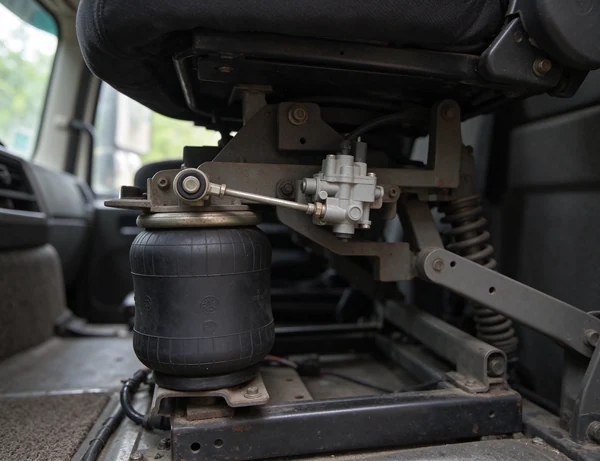
Short answer: Heavy duty truck clutches use an air assist booster to reduce pedal effort. The booster is commanded by a small valve as the pedal moves, and it provides force proportional to pedal travel. When the valve sticks or the air supply fails, the driver experiences one of two opposite symptoms: the pedal becomes extremely heavy because there is no assist, or it becomes dangerously light and the clutch engages abruptly because the booster applies full force at the wrong moment.
Both symptoms are safety relevant. A pedal that is too heavy causes partial releases and dragging, and one that is too light removes the feel the driver needs for a smooth pull away.
The fault is in the booster, its control valve, the air supply or the pedal linkage that commands it, and all of these are outside the clutch itself.
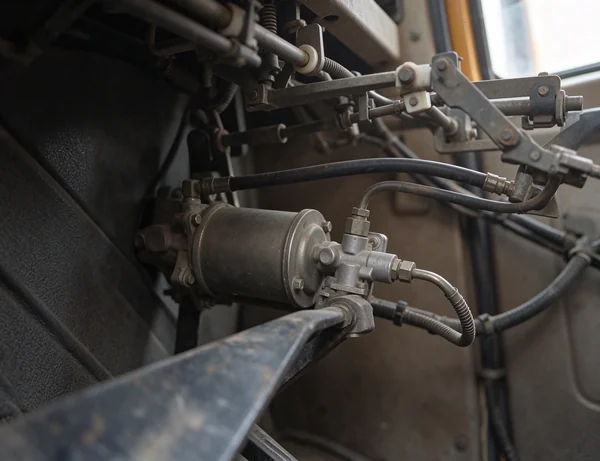
Confirm system air pressure and check the supply line to the booster for restriction. Then operate the pedal and listen at the booster: it should respond smoothly and release without delay.
A booster that holds pressure after the pedal is released keeps the clutch partly disengaged, which produces slip and heat.
The control valve is a small precision part and it is the most common failure. Dirt from a poorly maintained air system jams the valve spool, and moisture freezes it in winter.
Pedal free play adjustment matters: too much free play delays the assist and the driver presses harder than intended, too little applies assist before the driver expects it.
| Symptom | Suspect | Check |
|---|---|---|
| No assist, heavy pedal | Supply or booster | Pressure at booster port |
| Assist applied too early | Valve or linkage adjustment | Pedal free play |
| Assist sticks on | Valve spool jammed | Release behaviour |
| Works cold, fails hot | Seal clearance | Hot test after a loaded run |
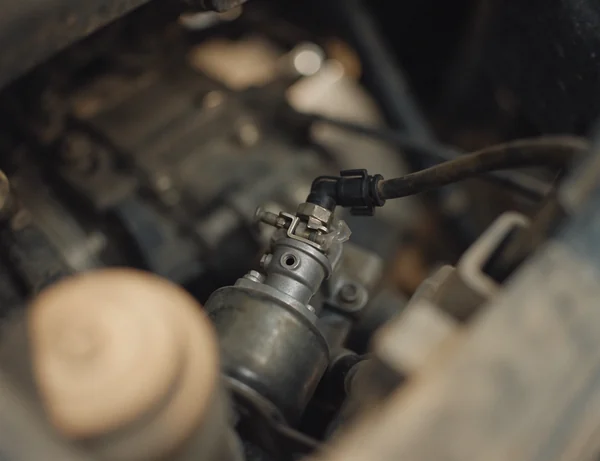
A booster fed with wet, dirty air fails early and unpredictably. Air dryer maintenance and regular draining of the reservoirs is the cheapest reliability improvement available on these trucks.
After any repair, test the pedal cold and hot, and confirm the clutch engages progressively rather than in a single abrupt step.
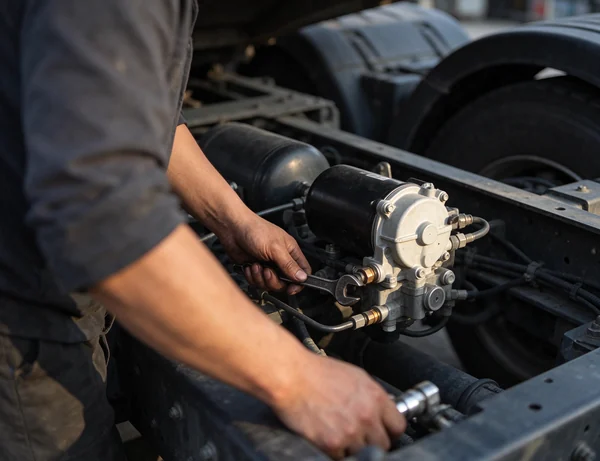
Booster part numbers and adjustment values are model specific. Confirm them in the OEM manual.
Please contact our team for personalized maintenance guidance and technical support for your Sinotruk HOWO, A7, or T7 trucks. We provide professional advice and recommendations for genuine parts to help ensure the reliable operation of your fleet.
Contact Us

Whenever your truck needs repair, you don’t know how to buy the right parts?
Don’t worry, we have already done this job for you. We have a complete parts list catalog for different models of each truck assembly, you can choose the right catalog to download and collect according to your truck configuration.
When you have a need, you can send us your required list based on this catalog.
Obtain the complete Howo truck parts catalog PDF file and pricing.
Contact Us
2001-2026 Shandong Yimo Auto Sales Co., Ltd. © All rights reserved.


