

Short answer: The clutch release system is a chain of geometry: pedal, master cylinder, slave cylinder, release fork and release bearing. Each link has a designed travel and angle, and if any of them is out of position the clutch either never fully disengages or never fully engages. Both faults feel like a worn clutch, and both can be present on a clutch with plenty of lining left.
The symptom tells you which end: dragging makes gear selection difficult with the engine running and the truck stationary, and slipping shows as engine speed rising without road speed on a climb.
The cause is often a fork that sits at the wrong angle after a repair, a pedal that has lost travel, or a release bearing that is being held in contact by a misadjusted linkage.
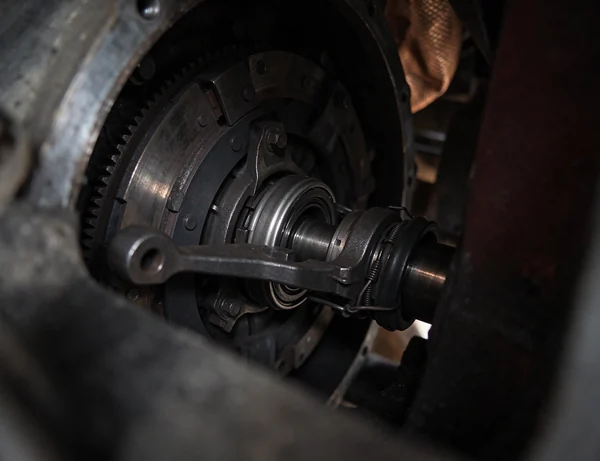
Measure pedal travel and slave cylinder stroke against the specification. Then watch the fork move as an assistant presses the pedal: the fork should travel its full arc and return fully, without binding.
A hydraulic system that is losing travel internally can feel normal at the pedal and still fail to move the fork the full distance, so the stroke at the slave is the number that matters.
After fitting a clutch, the fork angle, the bearing height and the release setting must match the specification. A bearing that is too tall holds the clutch partly disengaged, which slips; one that is too short never releases fully, which drags.
Fitting a clutch without checking the flywheel face and the release mechanism is the most common cause of a complaint that appears within the first week.
| Symptom | Check | Result if wrong |
|---|---|---|
| Drag with correct pedal | Slave stroke and fork arc | Insufficient release travel |
| Slip with new clutch | Bearing height and fork angle | Bearing preloaded against the plate |
| Pedal sinks slowly | Master or slave internal leak | Travel lost under load |
| Fork does not return | Pivot wear or return spring | Bearing stays in contact |
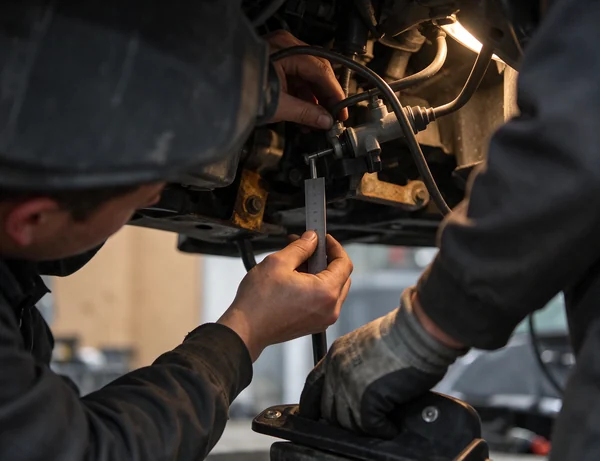
The fork pivot, the release bearing carrier and the return spring all wear and all reduce the effective travel. They are cheap compared with a clutch, and replacing them with the clutch is normal practice on a high mileage truck.
A release bearing that is always in contact fails early and can damage the pressure plate, so check that the bearing retracts fully before returning the truck.
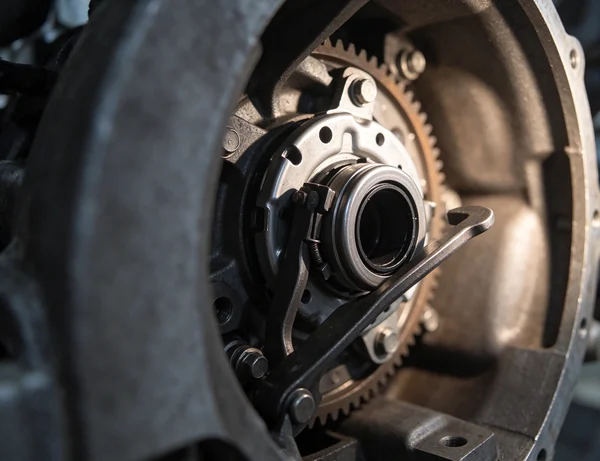
Travel values, bearing heights and fork angles are model specific. Confirm them in the OEM manual.
Please contact our team for personalized maintenance guidance and technical support for your Sinotruk HOWO, A7, or T7 trucks. We provide professional advice and recommendations for genuine parts to help ensure the reliable operation of your fleet.
Contact Us
Whenever your truck needs repair, you don’t know how to buy the right parts?
Don’t worry, we have already done this job for you. We have a complete parts list catalog for different models of each truck assembly, you can choose the right catalog to download and collect according to your truck configuration.
When you have a need, you can send us your required list based on this catalog.
Obtain the complete Howo truck parts catalog PDF file and pricing.
Contact Us
2001-2026 Shandong Yimo Auto Sales Co., Ltd. © All rights reserved.


