

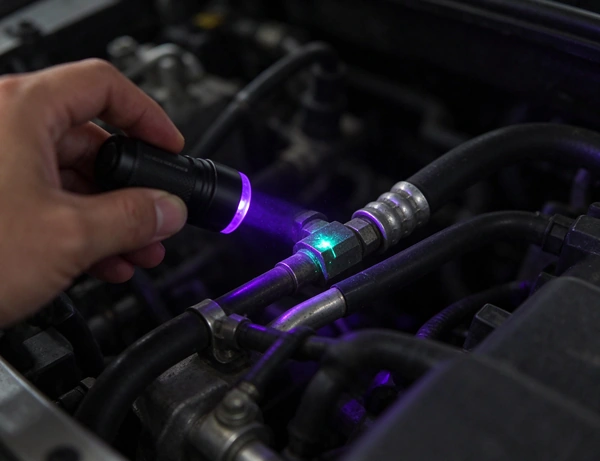
Short answer: The air flow meter measures air before the turbo, and the ECU fuels for exactly that quantity. Any air that enters after the meter through a split pipe, a loose gasket or a cracked manifold is unmetered: the engine runs lean, idles unevenly and can log a mixture or boost plausibility fault. A smoke test fills the intake with visible smoke and shows the leak immediately, without disturbing any sensor.
This is the intake side, not the boost side. A leak here does not show as low boost in the same way, and a boost pressure test with the intake capped will not find it, which is why the fault is often chased in the sensors.
The smoke test works because the intake is normally under vacuum. Anything that lets air in will let smoke out.
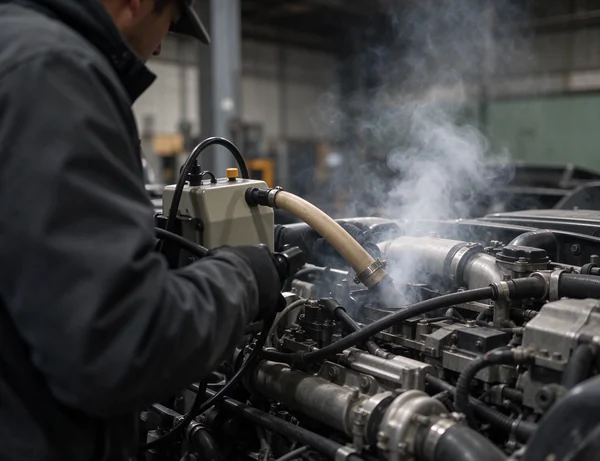
Disconnect the intake at the air filter outlet and connect the smoke generator there, so the whole intake path after the meter is included. Seal the intake at the manifold only if the machine requires it, and follow the machine’s instructions for pressure.
Then look, in order: the intake pipe joints, the charge air hose ends, the manifold gaskets, the intake manifold itself and any vacuum or breather connection that feeds the intake.
The common places are the intake pipe between the filter and the turbo, the gasket at the intake manifold, the intercooler pipe ends and any small hose that has been disturbed during a service.
A leak that only appears when the engine moves on its mounts suggests a pipe that is stretched or cracked at a joint, which a static test may not reveal. In that case, test again with the engine idling and the mount loaded.
| Location | Typical cause | Repair |
|---|---|---|
| Filter to turbo pipe | Cracked rubber or loose clamp | Replace the pipe |
| Intake manifold gasket | Hardened gasket or loose bolt | New gasket, sequence torque |
| Intercooler pipe end | Split under the clamp | New hose and clamp |
| Small vacuum hose | Disconnected or perished | Replace the hose |
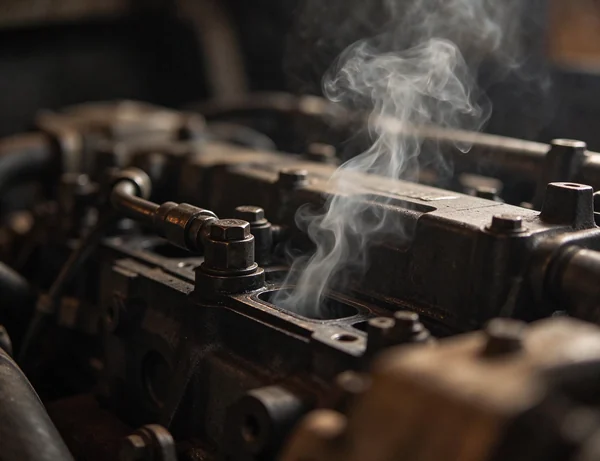
Clear the codes, run the engine to operating temperature and check the idle quality and the fuel trims at idle. Trims that were adding fuel should return towards zero within a short drive.
If the leak was at the manifold gasket, check the bolts for preload again after the first heat cycle. A gasket that was fitted to a warped face will leak again.
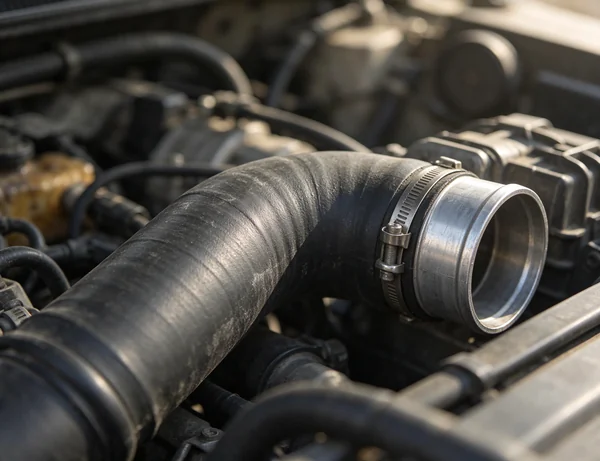
Smoke test pressures and part numbers are model specific. Follow the equipment maker and OEM guidance.
Please contact our team for personalized maintenance guidance and technical support for your Sinotruk HOWO, A7, or T7 trucks. We provide professional advice and recommendations for genuine parts to help ensure the reliable operation of your fleet.
Contact Us

Whenever your truck needs repair, you don’t know how to buy the right parts?
Don’t worry, we have already done this job for you. We have a complete parts list catalog for different models of each truck assembly, you can choose the right catalog to download and collect according to your truck configuration.
When you have a need, you can send us your required list based on this catalog.
Obtain the complete Howo truck parts catalog PDF file and pricing.
Contact Us
2001-2026 Shandong Yimo Auto Sales Co., Ltd. © All rights reserved.


