

Short answer: An intercooler can be half blocked inside and still pass a pressure test, because the restriction is a flow problem, not a leak. The symptom is a charge air temperature that does not drop across the cooler, a loss of power when hot and a higher exhaust temperature than the same truck used to show. Measure the temperature drop across the cooler, not just the boost.
The fouling is oil mist from the turbo combined with dust, and it builds up in the core passages over tens of thousands of kilometres. It reduces the cooler’s ability to remove heat, so the engine receives hotter, less dense air and the ECU derates it.
Because there is no leak, no code and no noise, the fault is usually found late, and often after a turbo has been replaced for the wrong reason.
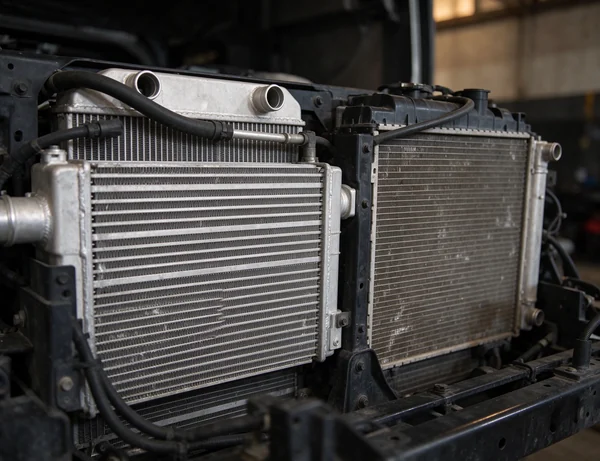
With the engine at operating temperature and a steady load, measure the charge air temperature at the cooler inlet and at the outlet with a contact probe. A healthy cooler removes a clear amount of heat. A cooler whose outlet is only slightly cooler than its inlet is not doing its job.
Also measure the ambient air passing through the core. A core blocked externally by mud or debris behaves the same way, and cleaning the outside is much cheaper than replacing the cooler.
External cleaning is straightforward: low pressure water or air from the front, never high pressure against the fins. Internal cleaning is limited, because the oil and dust mixture hardens in the passages and solvent rarely reaches the whole core.
Where internal fouling is confirmed and cleaning does not restore the temperature drop, the cooler is replaced. Fitting a used cooler with unknown history usually repeats the fault.
| Measurement | Healthy | Suspect |
|---|---|---|
| Inlet to outlet drop | Clear drop at load | Small drop |
| Boost pressure | At target | At target, power still low |
| Core external condition | Clear fins | Blocked with debris |
| Oil at inlet | Minimal | Heavy oil mist from turbo |
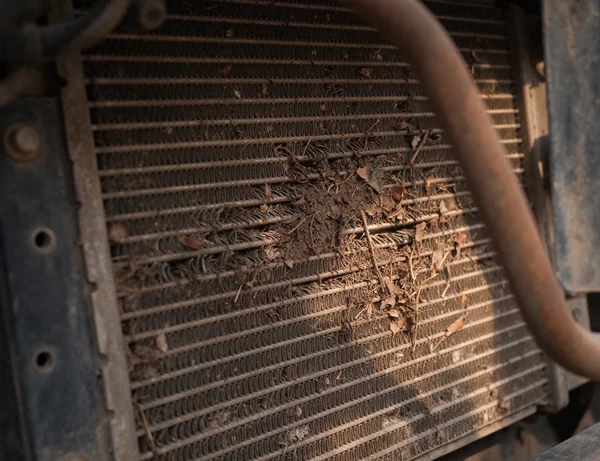
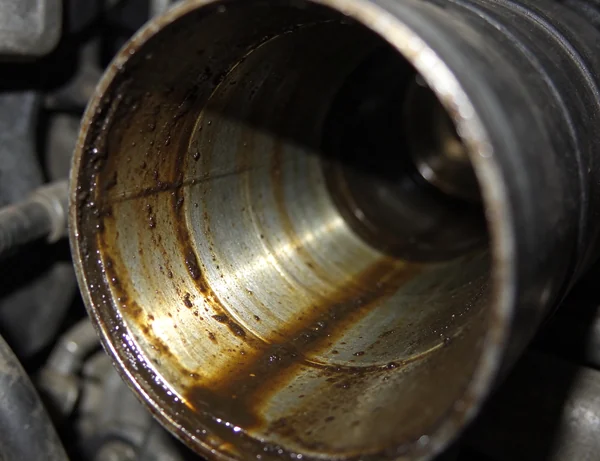
Oil in the intercooler comes from the turbo seal or the crankcase breather. Cleaning or replacing the cooler without addressing the source means it fouls again within a season, and the turbo continues to degrade.
Check the breather circuit and the turbo axial play at the same time. Both are quick checks and both explain oil in the charge air system.
Temperature expectations and part numbers are model specific. Confirm them in the OEM manual.
Please contact our team for personalized maintenance guidance and technical support for your Sinotruk HOWO, A7, or T7 trucks. We provide professional advice and recommendations for genuine parts to help ensure the reliable operation of your fleet.
Contact Us

Whenever your truck needs repair, you don’t know how to buy the right parts?
Don’t worry, we have already done this job for you. We have a complete parts list catalog for different models of each truck assembly, you can choose the right catalog to download and collect according to your truck configuration.
When you have a need, you can send us your required list based on this catalog.
Obtain the complete Howo truck parts catalog PDF file and pricing.
Contact Us
2001-2026 Shandong Yimo Auto Sales Co., Ltd. © All rights reserved.


