banner-news1
REPAIR FAQ
Back

Sinotruk Long Descent Brake Fade: Using Retarders Correctly

Short answer: brake fade on a long descent is not a brake failure — it is the brake doing exactly what heat does to friction material. The pads or linings glaze, the friction coefficient drops, and the pedal goes longer while the retardation goes away. The remedy is a technique, not a part: descend in a gear low enough that the engine and the retarder hold the truck, use the service brakes in short firm applications rather than continuous light pressure, and never ride the pedal down a mountain. Fade that does not recover after the brakes cool is a replacement.

The physics is simple and unforgiving. Brakes convert motion into heat, and heat has to go somewhere. On a long descent, continuous light braking gives the drums no time to cool and the linings no chance to recover their surface. Once the surface glazes, the same pedal pressure produces less braking, which tempts the driver to press harder, which adds more heat. That is the loop that ends with no brakes at all.
QUICK DIAGNOSIS — fade, or something else?
  1. 1Pedal stays firm, retardation fades — classic thermal fade. Cool down and change technique.
  2. 2Pedal goes long or soft — fluid boiling or a leak. Pull over and do not continue; this is not fade.
  3. 3Brakes pull to one side or smell hot at one wheel — a dragging brake on that wheel, not system-wide fade.
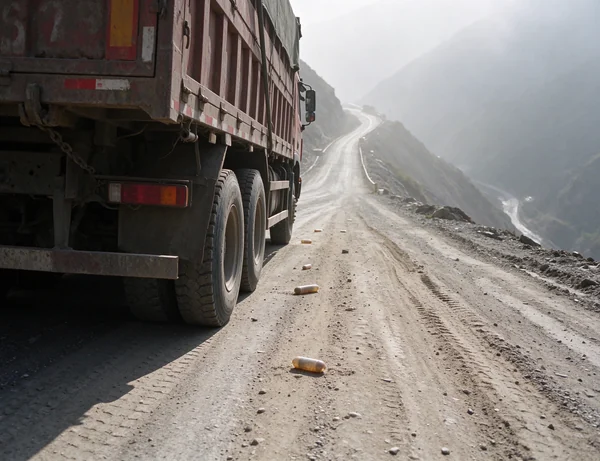
Heavy truck descending a steep long mountain road seen from above with mist in the valley

A descent like this is a heat management problem from the top of the grade, not from the first corner.

1. The technique that prevents fade

  1. Choose the gear at the top of the descent, not halfway down. Select a gear that holds the truck without braking, even if it means high engine speed. Brakes are for controlling, not for holding.
  2. Use the retarder and exhaust brake first. Those systems dissipate energy through the engine, which has a cooling system; the service brakes have only air.
  3. Brake firmly and briefly, then release. Short firm applications let the drums cool between applications. Continuous light pressure is the technique that destroys them.
  4. Watch the speed, not the pedal. If the truck is accelerating with the retarder on and no service brake, the gear is too high. Fix it before the speed is high.
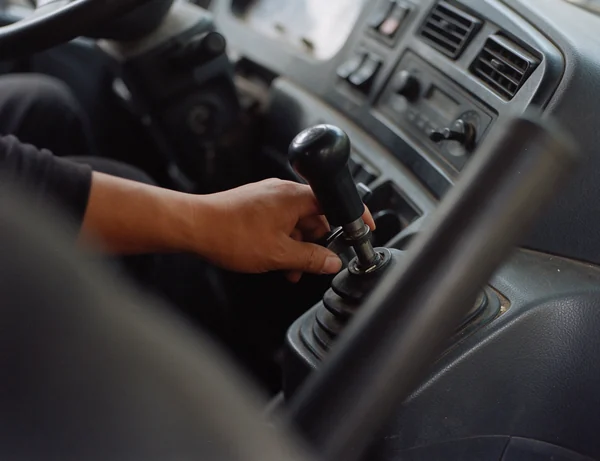
Retarder control and hand brake lever on the dashboard of a heavy truck cab operated by hand

Retarder control. The safest descent is the one that never needs the service brakes.

2. What heat does to friction material

Condition What happens After cooling
Glazing Surface hardens and the coefficient drops Often recovers, sometimes needs light sanding
Fading during use Resin in the lining vaporises Recovers when cool; indicates the wrong technique
Blue drums or discs Overheated metal, hardness changed Does not recover — replace
Cracked drums or discs Thermal shock Replace immediately, this is a safety failure
Boiled fluid Moisture vaporised, pedal spongy Bleed and replace fluid; find why it boiled
Never continue a descent on fading brakes hoping they will recover. Fade that has progressed to a soft pedal or a long pedal is a brake that may not stop the truck at all at the bottom. Stop, let the brakes cool, and check them before moving again.
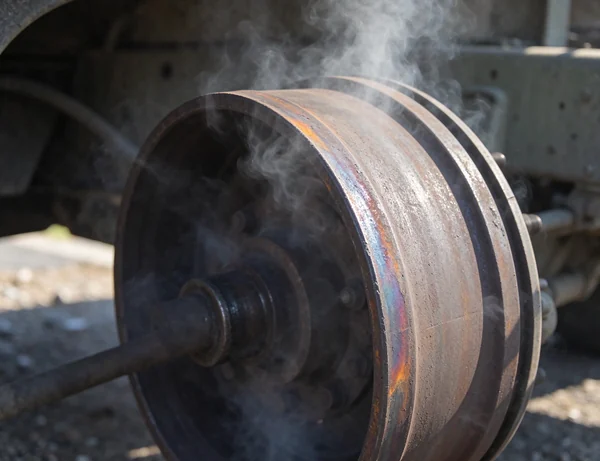
Truck brake drum with heat discolouration and light smoke after a long descent

Heat-coloured drums after a long descent. The colour tells you how much margin was used.

3. Maintenance that protects the margin

Fade resistance depends on the friction material being correct and on the brake being able to release. A dragging brake, a seized caliper or a partly applied park brake generates heat continuously and leaves the wheel already hot before the descent begins. Checking for even drum temperatures after a normal run, and confirming that every wheel rolls freely when jacked, is how you find a dragging brake before it costs you a set of drums. Fluid condition matters too: brake fluid absorbs moisture, and wet fluid boils at a lower temperature.

4. Questions drivers ask most

Is engine braking enough on a long descent?
On a loaded truck, engine braking plus a retarder usually is, in the right gear. If the truck keeps accelerating, the gear is too high and the brakes will pay for it.
Does a heavier load make fade worse?
Yes, directly. More mass means more energy to dissipate for the same descent, so the heat input rises and the margin falls.
Can faded brakes be reused after cooling?
Glazing often recovers, but the drums and the fluid have been stressed. After a significant fade event, inspect the friction surfaces and the fluid before the next descent.
Why do brakes fade more when wet?
Water on the friction surface reduces the coefficient and the drum cools unevenly. Dry the brakes gently with light applications at low speed before a descent.
Need brake drums, discs, pads, linings, calipers or brake fluid for your Sinotruk truck? Send the chassis number and axle configuration and we will confirm the correct brake parts. Send your request

Brake specifications, fluid types and retarder operation are model-specific. Confirm them in the OEM manual, and treat any brake defect as a safety issue that stops the truck.

Need Help or Want More Detailed Maintenance Information?

Please contact our team for personalized maintenance guidance and technical support for your Sinotruk HOWO, A7, or T7 trucks. We provide professional advice and recommendations for genuine parts to help ensure the reliable operation of your fleet.

Contact Us
More Articles

Howo Sinotruk Parts & Catalog PDF

Whenever your truck needs repair, you don’t know how to buy the right parts?

Don’t worry, we have already done this job for you. We have a complete parts list catalog for different models of each truck assembly, you can choose the right catalog to download and collect according to your truck configuration.

When you have a need, you can send us your required list based on this catalog.

Obtain the complete Howo truck parts catalog PDF file and pricing.

Contact Us
Hot-Selling Replacement Parts

whatsapp-4