

Short answer: Air in the low pressure fuel circuit shows up as a hard start after the truck has stood overnight, a slight hunt at idle and a loss of power on the first climb. The air is drawn in through a joint that is not pressure tight, and the only reliable way to find it is a clear hose in the return line plus a systematic isolation of each joint between the tank and the high pressure pump.
The common rail pump cannot compress air. A small bubble entering on the suction side is carried to the pump, where it causes a pressure drop and a long crank before the engine fires. Once running, the air is pushed through and the engine behaves normally, which is why the fault only appears after a stop.
Most of these faults are at the tank end, not at the filter head. Suction lines pull air in through a joint that would never leak fuel out.
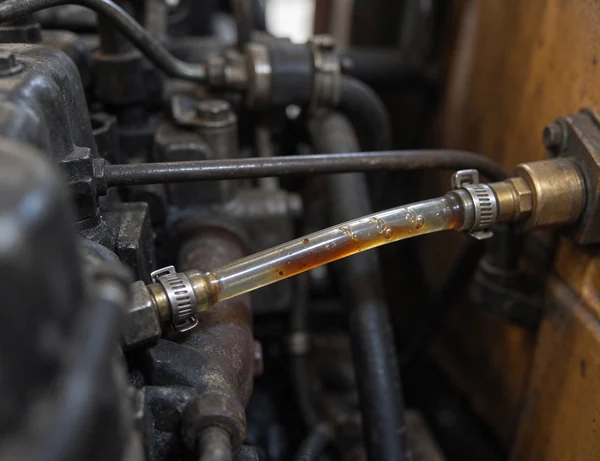
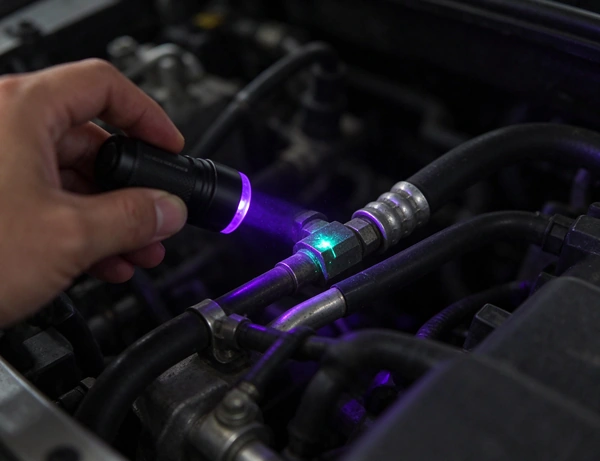
Fit a length of clear fuel-proof hose in the return line and run the engine at idle. Continuous small bubbles confirm air ingress. No bubbles at idle but a hard start after standing means the air enters while the engine is stopped, which points at the tank end or at a joint that closes when warm.
Repeat the test with the tank at half level and again at a quarter. A pickup pipe that is cracked above the half level will only show when the fuel drops below the crack.
In practice four joints account for most air ingress: the tank pickup seal, the water separator bowl seal, the filter head O-ring and the hand primer diaphragm. All four are seals that are disturbed during service, and all four close under pressure but leak under vacuum.
A fifth, less obvious cause is a partially blocked suction line. A restriction raises the vacuum in the line and pulls air through a joint that would otherwise stay sealed.
| Location | Typical fault | Test |
|---|---|---|
| Tank pickup | Cracked standpipe, hardened seal | Drain below the joint and inspect |
| Water separator bowl | Bowl seal distorted or missing | Reseat with a new seal, retest |
| Filter head | O-ring cut or wrong size | New O-ring, do not reuse |
| Hand primer | Diaphragm or check valve leak | Cap the outlet and pump, watch for drop |
| Suction hose | Internal collapse under vacuum | Replace, do not repair |
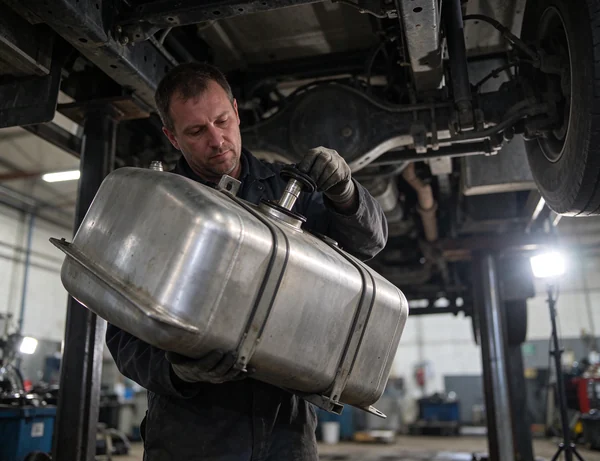
Replace seals rather than reseating them, and never use sealant on a fuel joint that is meant to be sealed by an O-ring. Sealant debris travels to the pump and the injectors.
After the repair, prime the system with the hand primer until resistance is felt, then crank. Do not crank for long periods to pull fuel through, because a dry high pressure pump is damaged by cranking.
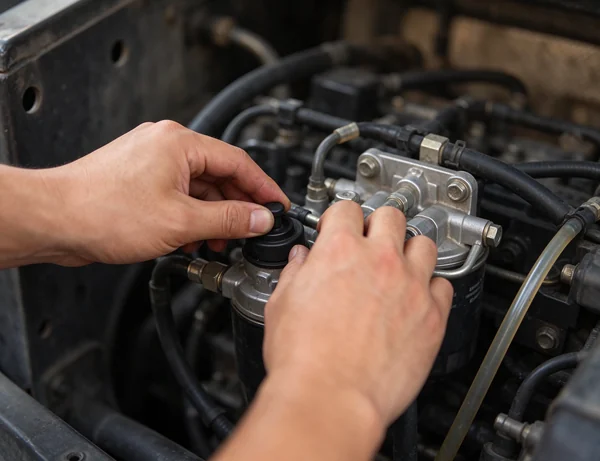
Fuel line pressures, seal part numbers and priming procedures are model specific. Confirm them in the OEM manual.
Please contact our team for personalized maintenance guidance and technical support for your Sinotruk HOWO, A7, or T7 trucks. We provide professional advice and recommendations for genuine parts to help ensure the reliable operation of your fleet.
Contact Us
Whenever your truck needs repair, you don’t know how to buy the right parts?
Don’t worry, we have already done this job for you. We have a complete parts list catalog for different models of each truck assembly, you can choose the right catalog to download and collect according to your truck configuration.
When you have a need, you can send us your required list based on this catalog.
Obtain the complete Howo truck parts catalog PDF file and pricing.
Contact Us
2001-2026 Shandong Yimo Auto Sales Co., Ltd. © All rights reserved.


