

Short answer: A cylinder that misfires on an MC11 is a compression question before it is a fuel question. Measure cranking compression dry, repeat with a spoonful of oil, then read the smoothness values from the engine ECU. Dry low and wet high is a piston or ring path; dry normal with a poor smoothness number is a fuel or valve path. Getting that split right before you touch a single injector is the difference between one repair and three.
The MC11 is a six cylinder common rail engine, and it is quiet enough at idle that a single weak cylinder is easy to miss on a road test. The driver usually reports a light shake at idle, a small loss of power on a climb, and sometimes a puff of white smoke when the engine is cold. None of those three symptoms identifies which cylinder is at fault, so the work has to start with measurement.
Compression testing on a modern diesel is often skipped because the injectors are assumed guilty first. On this engine that assumption is expensive: an injector set costs far more than a compression gauge and an hour of labour, and a low cylinder will destroy a new injector set if the root cause was mechanical.
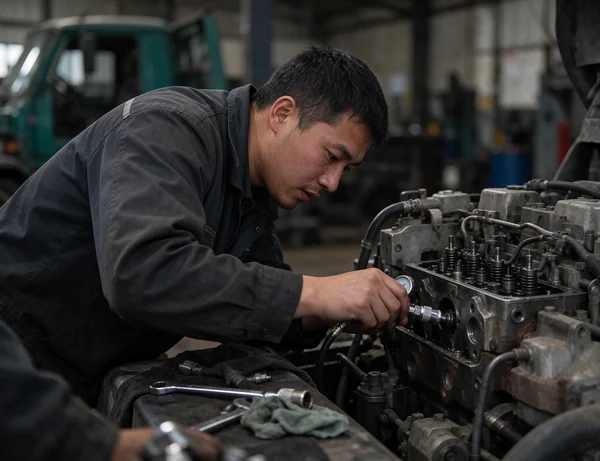
Compression numbers are only comparable when every cylinder is tested the same way. Four rules decide whether the test is worth doing:
On an MC11 a healthy warm engine typically reads in the mid twenties to low thirties in bar, with the highest and lowest cylinders inside about ten percent of each other. The absolute figure matters less than the spread, because gauge calibration, cranking speed and battery condition all shift the whole set up or down together.
One cylinder sitting clearly below its neighbours, and a second reading that barely changes when you add oil, is the finding you are looking for. Record the values in a small table so the wet test can be compared side by side.
| Result | Dry reading | Wet reading | Most likely cause |
|---|---|---|---|
| Healthy cylinder | Reference | Rises slightly | No fault |
| Worn rings or polished liner | Low | Rises clearly | Piston, ring pack, liner |
| Burned exhaust valve | Low | Stays low | Valve or seat, check clearance too |
| Head gasket between two cylinders | Two neighbours low | Both stay low | Gasket, check coolant for gas |
| Cracked piston | Very low | Rises partly | Piston replacement, inspect liner |
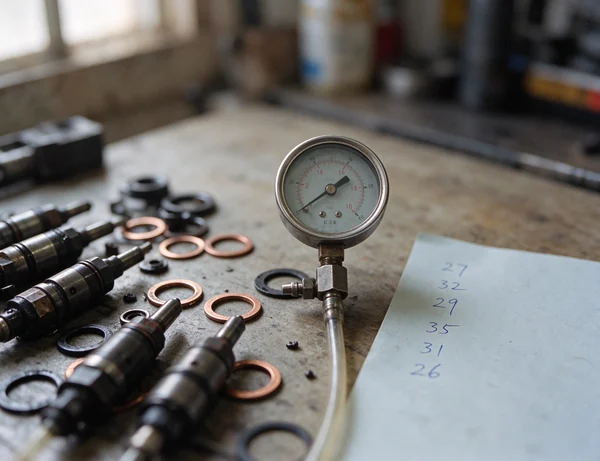
The ECU already measures cylinder balance continuously. On a diagnostic tool the smoothness or balance values show how much fuel each cylinder needs to keep the crankshaft speed even. A cylinder asking for noticeably more or less than its neighbours is contributing badly, and the cause is usually on the fuel side rather than the mechanical side.
Two cautions on those values. First, they are only meaningful at a steady idle with the engine warm and all accessories off. Second, a value at the limit of the correction range does not tell you whether the injector is weak or the compression is down, which is exactly why the compression test comes first.

Compression figures, torque values and injector part numbers are engine variant specific. Confirm them in the OEM manual for your engine number before ordering parts.
Please contact our team for personalized maintenance guidance and technical support for your Sinotruk HOWO, A7, or T7 trucks. We provide professional advice and recommendations for genuine parts to help ensure the reliable operation of your fleet.
Contact Us

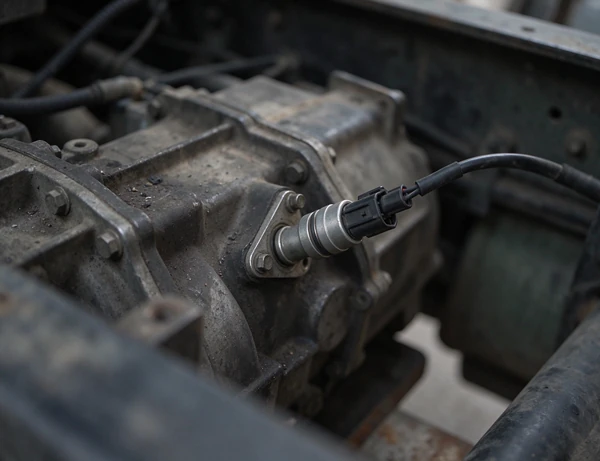
Whenever your truck needs repair, you don’t know how to buy the right parts?
Don’t worry, we have already done this job for you. We have a complete parts list catalog for different models of each truck assembly, you can choose the right catalog to download and collect according to your truck configuration.
When you have a need, you can send us your required list based on this catalog.
Obtain the complete Howo truck parts catalog PDF file and pricing.
Contact Us
2001-2026 Shandong Yimo Auto Sales Co., Ltd. © All rights reserved.


