

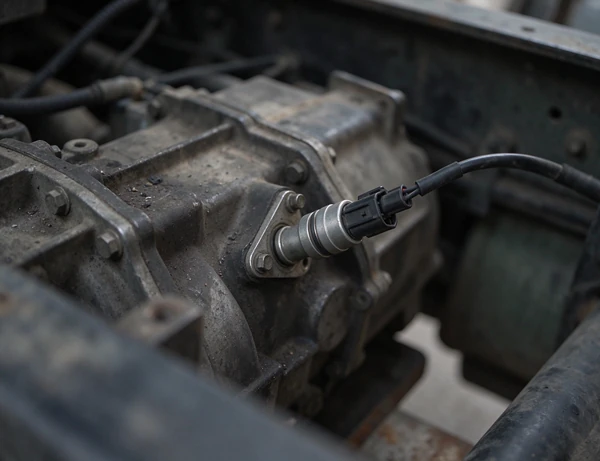
Short answer: The metering unit sits on the inlet of the high pressure pump and controls how much fuel is allowed in, which is how the ECU regulates rail pressure. When it sticks, the rail pressure swings, the idle becomes rough, the engine can be hard to start and the ECU logs a pressure control deviation. The diagnosis is a pressure deviation test against a commanded value, not a parts guess.
Two faults look identical from the cab: a worn high pressure pump that cannot build pressure, and a metering unit that will not close or open fully. The difference is visible in the live data, because a pump fault shows as pressure that never reaches the target while a metering fault shows as pressure that overshoots and oscillates.
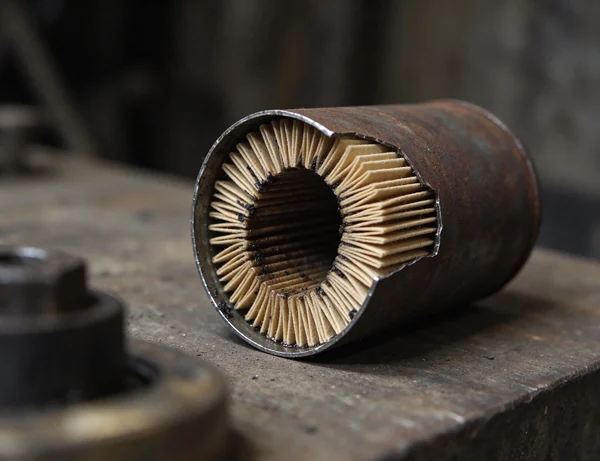
The metering unit is also sensitive to dirty fuel. Most failures start with contamination that scored the valve, so the fuel filter history matters as much as the part.
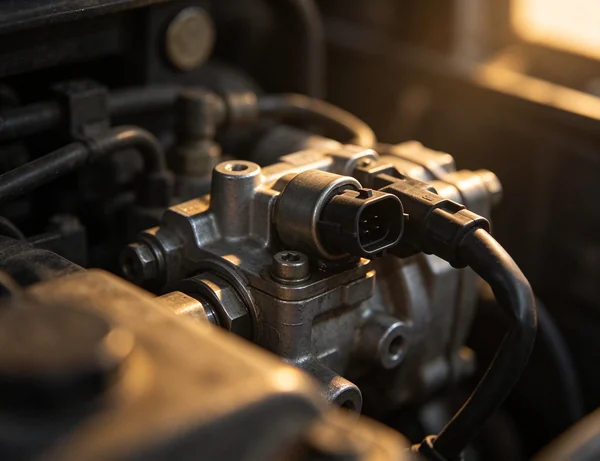
Compare commanded rail pressure with actual rail pressure in live data, at idle and at a steady mid load. A healthy system tracks within a small band. A metering unit that is sticking shows a saw-tooth pattern: pressure overshoots the target, the ECU pulls the valve back, pressure undershoots, and the cycle repeats several times a second.
Then check the control current or duty cycle to the valve. A command that is at its limit while the pressure still does not follow tells you the valve is not responding, and a command that is mid range with pressure oscillating tells you the valve is sticking rather than seized.
With the engine stopped, measure the valve resistance or its coil circuit as specified, and check the connector for corrosion and pushed-back pins. A connector fault produces exactly the same symptoms as a failed valve, and it is the cheaper finding.
If the electrical side is good and the deviation pattern is confirmed, replace the metering unit rather than the whole pump. Fit a new fuel filter at the same time, and inspect the old filter for metal or water.
| Live data pattern | Most likely cause |
|---|---|
| Pressure overshoots and oscillates at idle | Metering unit sticking |
| Pressure never reaches target at load | Pump wear or inlet restriction |
| Pressure drops when the engine is hot only | Worn pump, fuel viscosity related |
| Control current at limit, no pressure response | Valve seized or circuit open |
| Pressure collapses at shutdown | Relief valve or a leaking injector return |

Every metering unit failure should be followed by a look at the fuel that killed it. Water, rust and fine debris all score the valve seat. Drain the water separator daily on a truck working in humid conditions, and change the filter at the specified interval rather than when it blocks.
After fitting, run the engine and re-check the deviation. A new valve that still oscillates means the problem is upstream: air, restriction or a rail component.
Valve resistance values, pressures and part numbers are system specific. Confirm them in the OEM manual for your pump.
Please contact our team for personalized maintenance guidance and technical support for your Sinotruk HOWO, A7, or T7 trucks. We provide professional advice and recommendations for genuine parts to help ensure the reliable operation of your fleet.
Contact Us

Whenever your truck needs repair, you don’t know how to buy the right parts?
Don’t worry, we have already done this job for you. We have a complete parts list catalog for different models of each truck assembly, you can choose the right catalog to download and collect according to your truck configuration.
When you have a need, you can send us your required list based on this catalog.
Obtain the complete Howo truck parts catalog PDF file and pricing.
Contact Us
2001-2026 Shandong Yimo Auto Sales Co., Ltd. © All rights reserved.


