banner-news1
REPAIR FAQ
Back

Sinotruk Euro V SCR Faults: AdBlue Quality, Pump and NOx Checks

Short answer: most SCR complaints on Euro V and Euro VI Sinotruk trucks come from three things — diesel exhaust fluid that is not 32.5 % urea, a dosing nozzle that has crystallised or is not sealing, and a downstream NOx sensor reporting the result of those two. The sensor is frequently replaced first and is frequently not the fault. Check the fluid, then the nozzle, then the sensor.

When the system derates the engine, drivers describe it as “loss of power” and the workshop sees a NOx efficiency code. The code tells you the system failed its own self-check; it does not tell you where.
QUICK DIAGNOSIS — the three causes that cover most derate events
  1. 1Fluid quality. Diluted, contaminated or non-specification DEF. The system meters by volume and cannot compensate for weak concentration.
  2. 2Nozzle crystallised or leaking. Poor spray pattern means poor mixing, and leaking means ammonia slip and deposits.
  3. 3NOx sensor reading wrong because of the first two, or because the sensor itself has aged.
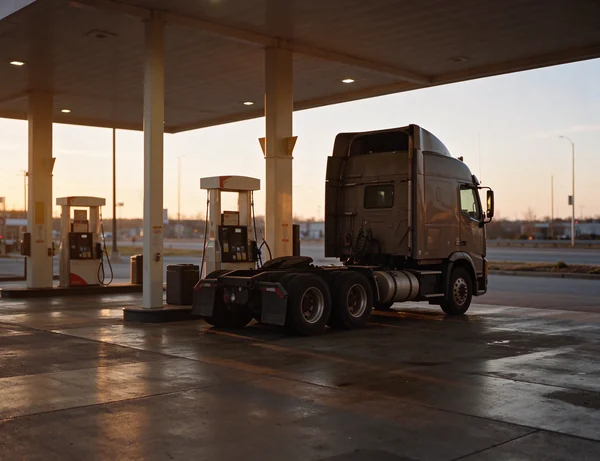
Sinotruk tractor at a fuel station pump island at dusk, where DEF is usually purchased

Fuel and DEF purchased on the road. Fluid quality is the first thing to verify, not the last.

1. Verify the fluid before anything else

Diesel exhaust fluid is a controlled product: 32.5 % urea in deionised water. Anything else changes the chemistry the catalyst was designed for.
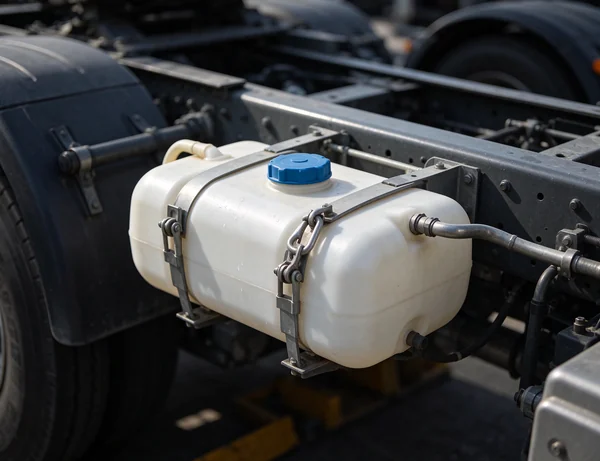
DEF tank with blue filler cap on a Sinotruk Euro V truck, checked for contamination and level

The DEF tank. Contamination here is invisible until the system derates.
  • Refractometer check. A drop on the prism gives the concentration in seconds. This is the only reliable field test and it is cheap.
  • Look at the fluid. It should be clear and colourless. Blue, cloudy or with sediment means contamination — drain and flush.
  • Ask where it was bought. Agricultural-grade urea and diluted product are common causes of repeat SCR faults on trucks that fill up at several different places.
  • Never top up with water to stretch a drum. That changes concentration and the controller cannot correct for it.

2. The nozzle and the mixing path

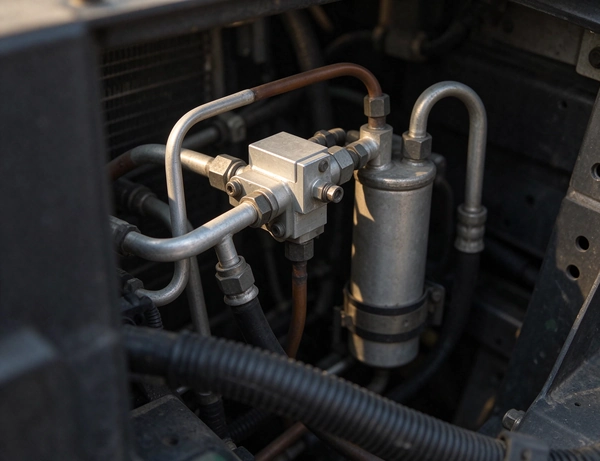
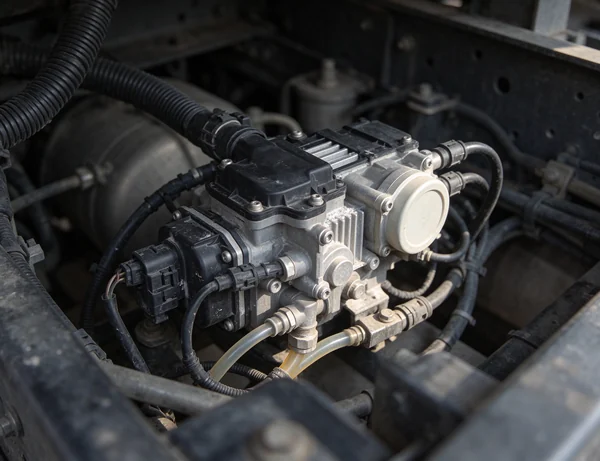
DEF metering pump module on a Sinotruk truck with visible crystallisation around the fittings

Metering pump and fittings. White deposits here mean the system is not purging properly.
  1. Remove the nozzle and inspect the tip. A white crust around the orifice means crystallisation. Clean with warm deionised water — never with a wire or a scraper.
  2. Check spray pattern during a commanded dose. It should be a fine cone into the exhaust stream, not a dribble or a solid jet.
  3. Look for leakage after shutdown. A nozzle that does not seal drains fluid into the pipe, which creates deposits and ammonia slip.
  4. Check the purge cycle. The system blows the line clear after shutdown to prevent freezing and crystallisation. If the pump does not purge, expect repeat nozzle faults.
  5. Inspect the mixer and the decomposition pipe for deposits that disturb the flow. A partly blocked mixer produces a poor spray even with a good nozzle.
Winter note: DEF freezes at about −11 °C. The tank and lines are heated, but a system that is not purging properly will still crystallise at the nozzle. If the fault appears only in the first cold snap, suspect purge and heating rather than the catalyst.

3. NOx sensors and the catalyst

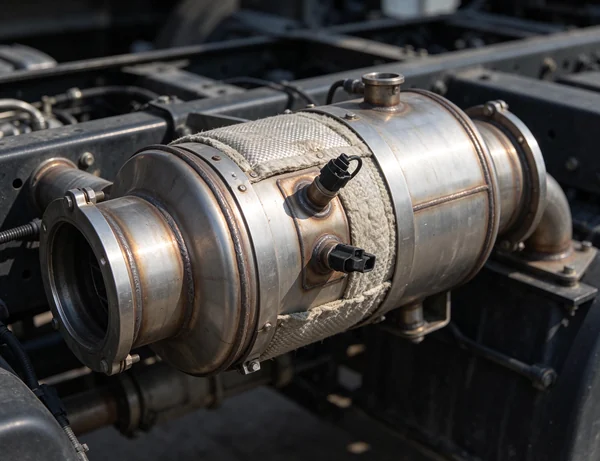
SCR catalyst unit with temperature and NOx sensor connections on a Sinotruk Euro V truck

SCR catalyst and sensor bosses. Compare upstream and downstream readings before condemning either sensor.
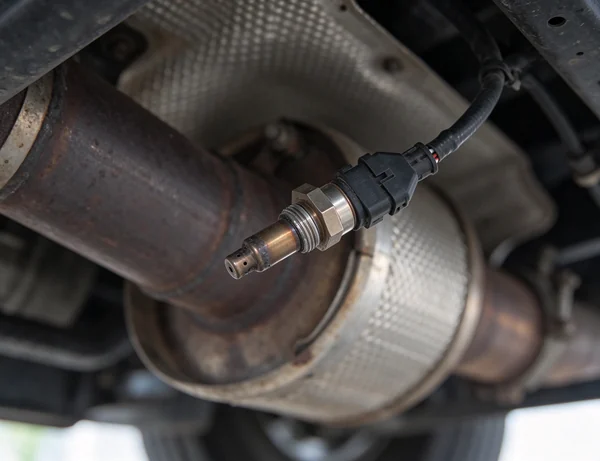
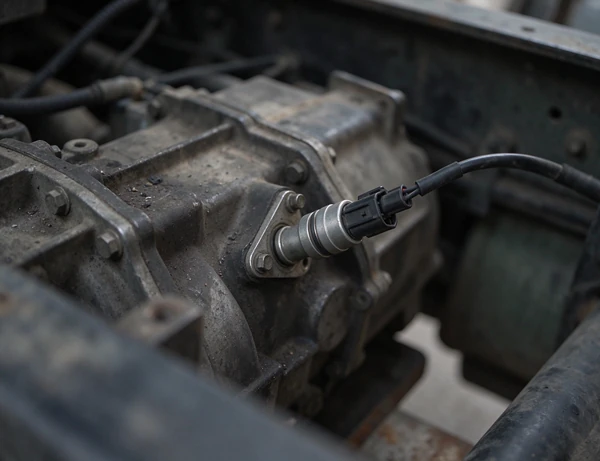
NOx sensor probe and connector on a Sinotruk SCR exhaust system, checked for soot and correct reading

A NOx sensor probe. Soot build-up and connector corrosion both produce a plausible but wrong reading.
  • Upstream sensor measures engine-out NOx. A wrong reading here makes the system dose incorrectly, which then looks like a catalyst fault.
  • Downstream sensor measures conversion efficiency. A high reading downstream with a normal upstream reading means the catalyst is not converting — but only if the dosing is proven correct.
  • Sensor ageing is real: readings drift over time. A sensor that reports a plausible but slightly wrong value is harder to catch than one that fails outright, and it usually shows as a repeat efficiency code with no physical fault.
  • Temperature sensors must be right too. The system only doses above a minimum exhaust temperature; a wrong reading stops dosing and the catalyst then has nothing to work with.
Do not disable, bypass or “delete” the SCR system. It is a legally required emission control device in every market where these trucks are sold, removal is illegal, and it will fail inspection and void warranty. Diagnose and repair the system instead.

4. Symptom to cause

What you observe Most likely cause Confirmation
Derate with NOx efficiency code Fluid quality, nozzle, sensor Refractometer first, then nozzle inspection
High DEF consumption Over-dosing from a wrong upstream sensor Compare commanded dose against sensor readings
No DEF consumption at all Dosing inhibited, blocked line or pump Command a test dose and observe the nozzle
White deposits in the pipe Poor spray, leaking nozzle, low exhaust temperature Inspect the nozzle and the mixer
Fault only in freezing weather Purge or heating fault Check purge cycle and heater circuit
Ammonia smell at idle Over-dosing or a leaking nozzle Dose test and nozzle seal check

5. Repairs that hold

Item Action Prevent repeat failure
Contaminated fluid Drain, flush with deionised water, refill with certified DEF Fix the buying source, use a refractometer at each delivery
Crystallised nozzle Clean or replace, verify spray pattern Confirm the purge cycle works
Failed pump Replace, then run a full dose and purge test Check for contamination that killed the old pump
Aged sensor Replace and clear adaptations Verify the dosing path first so the new sensor is not blamed for an old fault
Deposits in the mixer Clean or replace Correct spray and temperature are the only real prevention

6. Questions drivers ask most

Why did my truck lose power with no obvious fault?
That is the derate strategy working. When the SCR system cannot prove it is converting NOx, the engine is limited to reduce emissions. The power loss is a symptom of the emission system, not a separate engine fault.
Can I use agricultural urea?
No. It is not refined to the same specification and contains impurities that deposit in the catalyst and the nozzle. Use certified DEF to the ISO 22241 standard.
Is it normal to use more DEF in winter?
Consumption does rise in cold weather and on heavy duty, but a large jump usually points to over-dosing from a drifted upstream sensor. Compare against your normal seasonal figure.
How do I stop the nozzle crystallising?
Make sure the purge cycle completes after every shutdown and let the system finish it before switching off the battery isolator. Cutting power during purge is the most common cause of crystallisation.
Need a DEF pump, dosing nozzle, NOx sensor or SCR catalyst for your Sinotruk truck? Send the engine and emission build details. Send your request

Emission control configuration differs between Euro V and Euro VI builds. Confirm component part numbers and test procedures against the OEM documentation for your chassis.

Need Help or Want More Detailed Maintenance Information?

Please contact our team for personalized maintenance guidance and technical support for your Sinotruk HOWO, A7, or T7 trucks. We provide professional advice and recommendations for genuine parts to help ensure the reliable operation of your fleet.

Contact Us

More Articles

Howo Sinotruk Parts & Catalog PDF

Whenever your truck needs repair, you don’t know how to buy the right parts?

Don’t worry, we have already done this job for you. We have a complete parts list catalog for different models of each truck assembly, you can choose the right catalog to download and collect according to your truck configuration.

When you have a need, you can send us your required list based on this catalog.

Obtain the complete Howo truck parts catalog PDF file and pricing.

Contact Us
Hot-Selling Replacement Parts

whatsapp-4