

Short answer: The SCR system is calibrated for a defined urea concentration, and it detects when the solution is outside that range. Water added to the tank, a contaminated drum or the wrong product produces efficiency and reagent quality faults that are easy to mistake for a failed catalyst or a failing pump. A refractometer test on a sample from the tank settles the question in a minute and costs almost nothing.
Dilution lowers the ammonia available for the reaction, so the catalyst cannot convert the NOx it should and the efficiency monitor reports a fault. The system may also detect the concentration directly through its quality monitoring.
Contamination is a different problem: oil, diesel or soap in the tank damages the pump and poisons the catalyst, and no amount of correction of concentration will fix that.
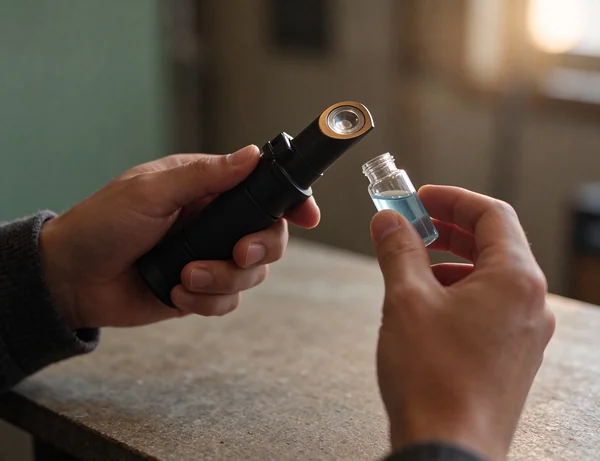
Take a sample from the tank, not from a drum, and test it with a refractometer calibrated for urea. Compare the reading with the specification for the product you are using.
Also look at the sample: a clear blue-green solution is normal, and any oil film, cloudiness or sediment means contamination rather than dilution.
Dilution is a solution problem and the fix is to drain and refill with the correct product. Contamination is a system problem: the pump, filter and lines may need cleaning and the catalyst may already be damaged.
A genuine catalyst failure produces efficiency faults with correct solution, correct dosing and a healthy sensor. Prove the first three before ordering a catalyst.
| Test result | Meaning | Action |
|---|---|---|
| Concentration below spec | Diluted solution | Drain and refill |
| Concentration above spec | Wrong product or evaporation | Drain and refill |
| Oil film or sediment | Contamination | Flush the system, inspect the catalyst |
| Concentration correct, dosing correct | Catalyst or sensor | Efficiency test, then decide |
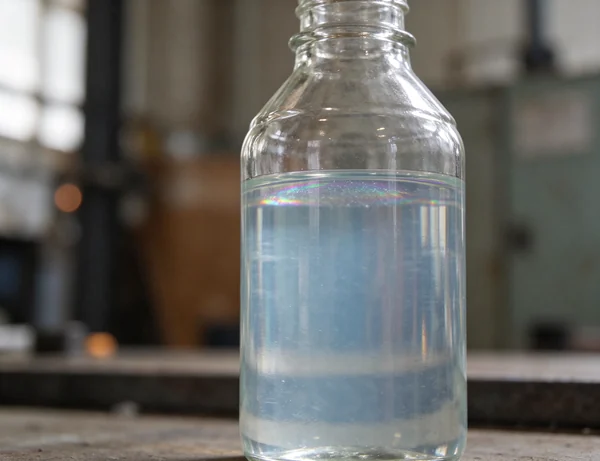
Store urea in a sealed original container, out of sunlight and away from freezing, and never transfer it into an unmarked container that could be mistaken for water. Most contamination events start with an unlabelled drum.
Keep the tank cap and the filler clean, and do not refill from a container that has held anything else. A single litre of diesel in a full tank is enough to produce a fault.
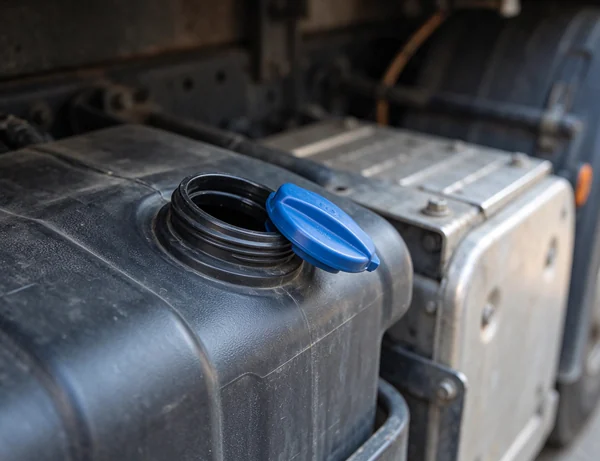
Urea specification and monitoring thresholds are system specific. Confirm them in the OEM manual.
Please contact our team for personalized maintenance guidance and technical support for your Sinotruk HOWO, A7, or T7 trucks. We provide professional advice and recommendations for genuine parts to help ensure the reliable operation of your fleet.
Contact Us

Whenever your truck needs repair, you don’t know how to buy the right parts?
Don’t worry, we have already done this job for you. We have a complete parts list catalog for different models of each truck assembly, you can choose the right catalog to download and collect according to your truck configuration.
When you have a need, you can send us your required list based on this catalog.
Obtain the complete Howo truck parts catalog PDF file and pricing.
Contact Us
2001-2026 Shandong Yimo Auto Sales Co., Ltd. © All rights reserved.


