banner-news1
REPAIR FAQ
Back

SITRAK C7H Rear Axle Noise: Gear, Bearing or Lube

Short answer: rear axle noise on a SITRAK C7H is classified by the load state, not by the volume. A whine that builds only when you are on the power is a gear mesh or pinion depth problem. A whine that appears only on overrun is usually a gear set that has lost its backlash setting or a bearing that is unloading. A rumble that is there all the time and changes with road speed is a bearing. Match the noise to the load state first, then drain the oil and read what comes out with it — the drain plug is the cheapest diagnostic tool on the axle.

Single-reduction hypoid axles in tractor duty run hot and run long. The oil film in a hypoid gear set is the only thing separating two sliding surfaces under enormous pressure, so the two things that destroy these axles are oil that has lost its film strength and oil that has been run low after a leak nobody noticed.
QUICK DIAGNOSIS — load state points at the component
  1. 1Whine only under power, quiet when coasting — gear mesh. Pinion depth, backlash or a worn tooth face.
  2. 2Whine only on overrun, quiet under power — gear set unloading, often with a bearing that is losing preload.
  3. 3Rumble at all speeds, changes with road speed not engine speed — carrier or pinion bearings, or a wheel bearing further out.
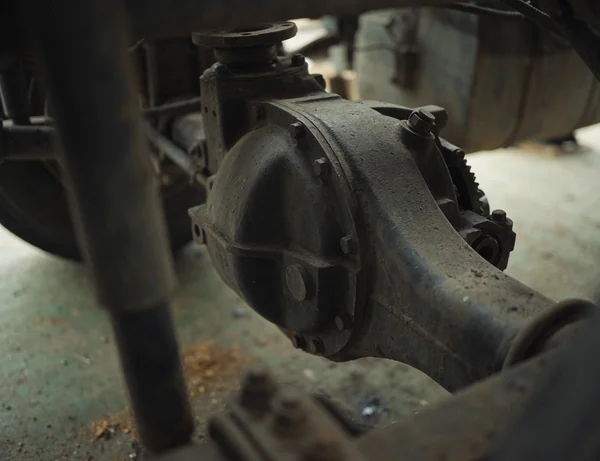
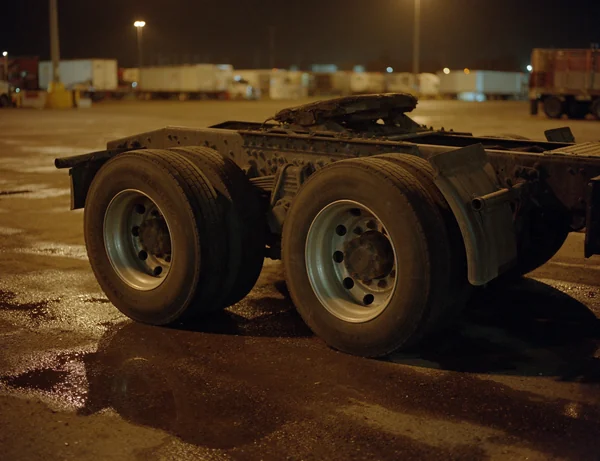
SITRAK C7H rear bogie photographed from a low angle in a night yard, the axle where a whine was reported

Record which axle the noise comes from and whether it changes when the inter-axle differential is locked.

1. Confirm which axle before you open anything

A bogie has two axles, a power divider and an inter-axle differential, and noise from any of them can sound like it is coming from the other. Two quick tests narrow it down:

  • Lock the inter-axle differential and drive a slow figure of eight. If the noise changes character or disappears, the fault is in the divider or in the differential gearing, not in a wheel end.
  • Jack one axle at a time and spin each wheel by hand. A rumble that is present with the wheel spinning free and the driveline still is a wheel bearing or a brake component, not the crown wheel.

2. Drain the oil and read it

What you find Meaning Action
Magnetic plug covered in fine grey paste Normal wear debris for a healthy axle Clean, refill, resample at a shorter interval
Hard metallic flakes or chips on the plug Tooth or bearing spalling Strip and inspect; do not just refill
Oil black and smells scorched Overheated — low level or wrong oil Check for a leak, verify the oil specification
Milky oil Water ingress through the breather or a seal Reseal, replace the breather, flush twice
Oil level low with no external leak Internal transfer through a seal into the hub Check hub oil level; a hub that is overfull with axle oil is the tell
Rear axle differential housing on a SITRAK C7H showing an oil trace around the pinion seal area

A trace at the pinion seal is common and often harmless; a wet, dripping seal on a hot axle is not.

3. The measurements that decide the repair

  1. Backlash at the crown wheel. With the wheels chocked and the driveline locked, measure the rotational play at the pinion flange. Excessive play with a matching whine means the setup has moved, and the cause is usually a collapsed bearing or a loose pinion nut.
  2. Pinion bearing preload. Check for axial play at the flange and for a seal that has been pushed out. A pinion that moves axially is a pinion whose preload is gone, and the gear mesh is being destroyed while you drive.
  3. Tooth contact pattern. If the axle is stripped, the contact pattern on the crown wheel tells the whole story: a pattern at the heel means the pinion is too far in, a pattern at the toe means too far out, and a pattern that has moved up or down the tooth means depth has changed as the bearings wore.
Do not re-shim a noisy axle to “tighten it up”. Backlash and preload are set as a pair with a measured contact pattern. Guessing at one of them destroys the gear set within a few thousand kilometres, and the second repair costs more than the first would have.
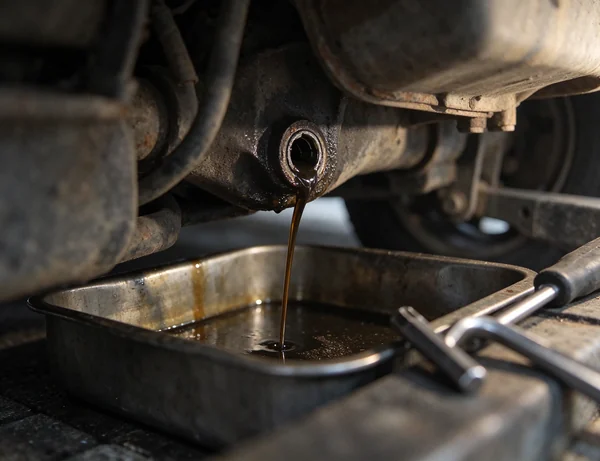
Draining gear oil from a SITRAK C7H rear axle into a tray, the magnetic plug visible with fine debris

Drain into a clean tray and run a magnet through it. What you see decides whether the axle comes apart.

4. Why the same noise returns after a rebuild

Three recurring reasons. The breather was never replaced, so the axle pressurised and pushed oil past a seal until it ran low. The wrong oil went in — a lubricant without the extreme-pressure rating the hypoid set needs will whine within a few thousand kilometres even if the setup was perfect. Or the axle was set up without a contact pattern check, using only a backlash measurement, and the depth was wrong from the first kilometre.

5. Questions drivers ask most

Can I drive with a light whine?
Short term, if the oil level is correct and the plug shows no hard debris, yes — but log it and check the oil again within a week. A whine that gets louder quickly is a bearing on its way out, and that failure usually takes the crown wheel with it.
Does a whine always mean the gear set is finished?
No. A whine under power with correct backlash can be a mesh that was never ideal from new. What matters is change: a noise that has appeared or grown is the signal, not a noise that has always been there.
Why does the axle get so hot?
Hypoid gears slide as well as roll, so they generate more heat than a simple spur set. Heat that rises far above normal, or a housing you cannot hold your hand on after a loaded run, means low oil, the wrong oil or a bearing that is failing.
Should I use a limited-slip additive?
Only if the axle specification calls for it. Adding the wrong additive to a gear set that does not need it reduces the friction the gears rely on and can cause noise and slip in a locking differential.
Need crown wheel and pinion sets, differential bearings, seals or the correct axle lubricant for your C7H? Send the axle model and ratio stamped on the housing and we will confirm the specification. Send your request

Backlash, preload and oil specifications are specific to the axle model and ratio fitted. Confirm them in the OEM workshop manual and use the lubricant grade the axle was designed for.

Need Help or Want More Detailed Maintenance Information?

Please contact our team for personalized maintenance guidance and technical support for your Sinotruk HOWO, A7, or T7 trucks. We provide professional advice and recommendations for genuine parts to help ensure the reliable operation of your fleet.

Contact Us
More Articles

Howo Sinotruk Parts & Catalog PDF

Whenever your truck needs repair, you don’t know how to buy the right parts?

Don’t worry, we have already done this job for you. We have a complete parts list catalog for different models of each truck assembly, you can choose the right catalog to download and collect according to your truck configuration.

When you have a need, you can send us your required list based on this catalog.

Obtain the complete Howo truck parts catalog PDF file and pricing.

Contact Us
Hot-Selling Replacement Parts

whatsapp-4