banner-news1
REPAIR FAQ
Back

SITRAK C7H Wheel Hub Bearing: Early Warning Signs

Short answer: a hot rear hub on a SITRAK C7H is a bearing or a brake, and the two feel very different. Touch the hub and the drum separately: a hub that is hot while the drum is normal points at the wheel bearing or the oil seal; a drum that is hot while the hub is cooler points at a dragging brake. One hot wheel among several on the same axle is the warning that matters, because it always means something in that wheel is working harder than its partners.

Wheel bearings on heavy trucks fail slowly and then completely. The slow stage is a temperature rise, a faint rumble that changes with load, and a seal that starts to seep. The complete stage is a seized bearing that welds the wheel to the axle at road speed. The difference between the two stages is one roadside check with the back of a hand.
QUICK DIAGNOSIS — hub or brake?
  1. 1Hub hot, drum normal, oil seep at the seal — bearing or seal. The grease or oil has been overheated.
  2. 2Drum hot, hub cooler, one wheel only — dragging brake: seized caliper, stuck valve, or a brake that is not releasing.
  3. 3Rumble that changes when you swerve left and right — bearing, because the load on that side changes with the swerve.
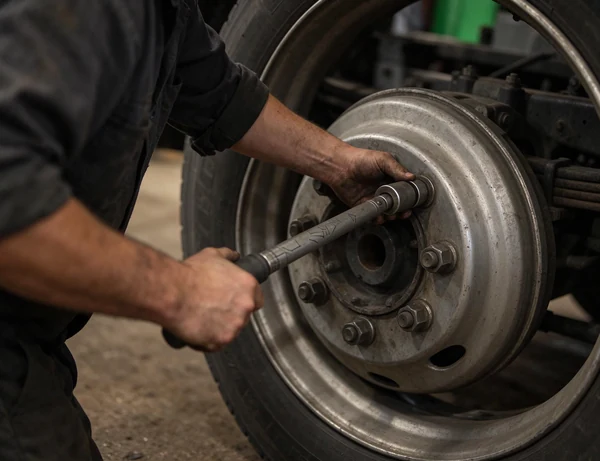
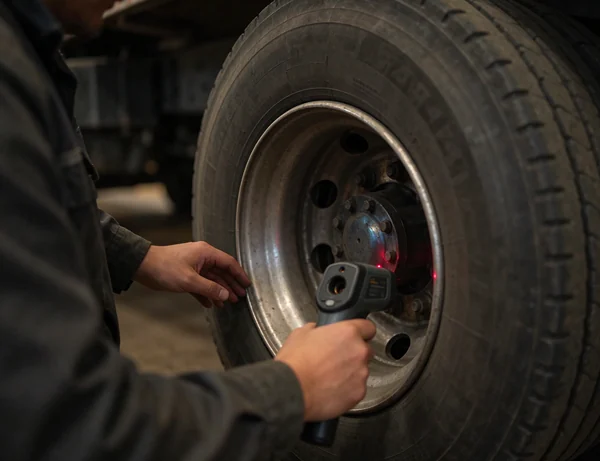
Technician checking the temperature of a truck rear wheel hub with an infrared thermometer after a run

Hub temperature after a run. Compare wheels on the same axle before you judge any single one.

1. The roadside check that finds it early

  1. Stop after a normal run, not after a long descent. Brake heat from a descent makes every wheel hot and hides the comparison. Compare all wheels on the axle with the back of a hand or an infrared thermometer.
  2. Compare, do not judge absolute temperature. One wheel noticeably hotter than its partners is the finding. All wheels equally warm is normal heat from brakes and rolling resistance.
  3. Separate hub from drum. Feel the hub centre and the drum face separately. The hub carries the bearing; the drum carries the brake.
  4. Check for oil at the seal and on the rim. Oil that has escaped the hub means the seal has been running hot, and a bearing running dry is already damaged even if it is still quiet.
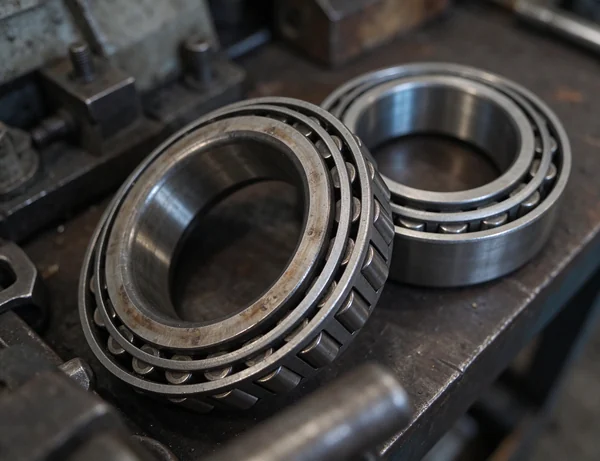
Truck wheel bearing inner race with heat discolouration and pitting beside a new bearing

Discoloured, pitted race beside a new bearing. This is what a hot hub has been doing inside.

2. Rumble, load and swerve

Test Bearing result Other result
Swerve left and right at speed Noise changes with load transfer Tyre noise stays constant
Rumble that grows with speed Bearing wear, wheel end Driveline noise usually peaks at one speed
Noise gone after a bearing repack Confirms bearing If unchanged, look at the tyre and the axle
Wheel rocks when jacked and pried Worn bearing or loose wheel nut If it does not rock, the bearing is not yet loose
Oil seep at the hub Seal damaged by heat Brake fluid leak from a caliper looks different
Never repack or top up a hub that has run hot without inspecting the bearing. Heat discolouration on the race means the bearing has lost its hardness, and a repack will get you a few hundred kilometres before it fails. Heat damage is a replacement, not a service.
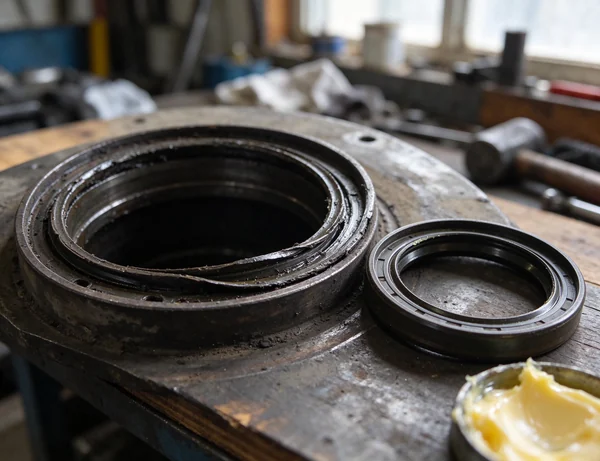
Wheel hub bore with a hardened old oil seal beside a new seal and grease

Hardened seal and worn bore. A seal that has lost its flexibility will leak again even with new grease.

3. Why one wheel runs hot

Four causes account for most single-wheel heat: an over-tight wheel bearing adjustment, an under-lubricated bearing, a dragging brake on that wheel, and a mismatched tyre that is carrying more load than its partner. On a drive axle, a mismatched dual pair also loads one wheel end continuously. The pattern to look for is repetition — a wheel that has been hot before will be hot again, and the cause is usually in the adjustment or in the brake rather than in the bearing itself.

4. Questions drivers ask most

How hot is too hot to touch?
A hub you cannot hold a hand on after a normal run is the threshold to investigate. The comparison between wheels on the same axle is more reliable than any absolute figure.
Can a hot hub be caused by the brake?
Yes, and it is the most common cause of a single hot wheel. Feel the drum separately — a dragging brake heats the drum first and the hub through it.
How often should bearings be serviced?
At the interval in the maintenance schedule for your axle type, and any time a wheel runs hot or seeps. Sealed hubs are not serviced the same way as greased ones.
Does a bearing failure damage anything else?
Yes: the spindle, the hub, the seal bore and often the brake. A caught-early bearing is a bearing and a seal; a seized one is a hub, a spindle and a wheel.
Need wheel bearings, hub seals, wheel nuts or hub assemblies for your C7H? Send the axle model and chassis number and we will confirm the correct parts. Send your request

Bearing adjustment procedures, lubricant specifications and torque figures are axle-specific. Confirm them in the OEM manual, and never judge a bearing by noise alone.

Need Help or Want More Detailed Maintenance Information?

Please contact our team for personalized maintenance guidance and technical support for your Sinotruk HOWO, A7, or T7 trucks. We provide professional advice and recommendations for genuine parts to help ensure the reliable operation of your fleet.

Contact Us
More Articles

Howo Sinotruk Parts & Catalog PDF

Whenever your truck needs repair, you don’t know how to buy the right parts?

Don’t worry, we have already done this job for you. We have a complete parts list catalog for different models of each truck assembly, you can choose the right catalog to download and collect according to your truck configuration.

When you have a need, you can send us your required list based on this catalog.

Obtain the complete Howo truck parts catalog PDF file and pricing.

Contact Us
Hot-Selling Replacement Parts

whatsapp-4